Aztec Pantheon
Coyolxauhqui
Also known as She of the Bells on Her Cheeks, Golden Bells

- moon
- night
- stars
- warfare
The moon goddess, daughter of Coatlicue and leader of the 400 stars. Coyolxauhqui was slain and dismembered by her brother Huitzilopochtli at his miraculous birth, her defeat reenacted at every sunrise.
About Coyolxauhqui
She of the Bells
Coyolxauhqui ("She of the Bells on Her Cheeks") was the Aztec moon goddess and daughter of the earth mother Coatlicue. Her name comes from the golden bells (coyolli) she wore on her face. Her violent dismemberment by her brother Huitzilopochtli is one of the central myths of Aztec religion.
The Attack on Coatepec
When Coatlicue became miraculously pregnant with Huitzilopochtli, Coyolxauhqui rallied her 400 brothers (the Centzon Huitznahua, the stars of the southern sky) to murder their mother for this disgrace. She led the army up the sacred mountain Coatepec (Serpent Hill) to kill Coatlicue before she could give birth.
The Birth of Huitzilopochtli
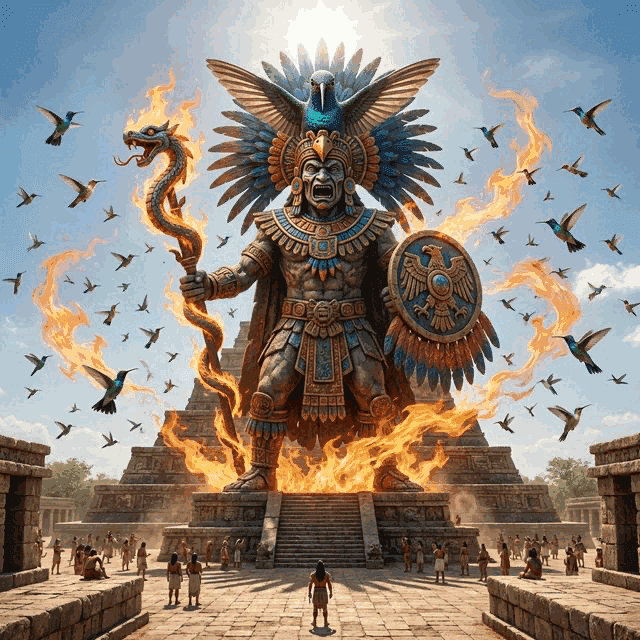
At the moment the attackers reached the summit, Huitzilopochtli sprang fully formed and armed from his mother's womb. Wielding Xiuhcoatl, the fire serpent, he struck off Coyolxauhqui's head and hurled her body down the mountainside, where it shattered into pieces.
The Coyolxauhqui Stone
In 1978, workers discovered the massive Coyolxauhqui Stone at the base of the Templo Mayor in Mexico City. The circular stone shows her dismembered body with severed limbs, bells on her cheeks, and skull at her belt. It lay at the foot of the pyramid exactly as her body lay at the foot of Coatepec.
Cosmic Significance
Coyolxauhqui's defeat by Huitzilopochtli represents the daily victory of the sun over the moon and stars. Each sunrise reenacts the moment of her death. The Aztecs performed human sacrifices at the Templo Mayor and rolled the victims' bodies down the steps, ritually recreating Coyolxauhqui's fall.
Origin story
Coyolxauhqui was born to Coatlicue along with her 400 brothers, the stars. When her mother became pregnant through miraculous means, Coyolxauhqui led her brothers to kill her, but Huitzilopochtli was born at that moment and slew his sister, casting her dismembered body from the mountaintop.
Across traditions
Parallel figures
Figures who play a role like Coyolxauhqui's in other traditions.
 GreekSeleneIllustration
Both are lunar goddesses who traverse the night sky
Compare Coyolxauhqui and Selene side by side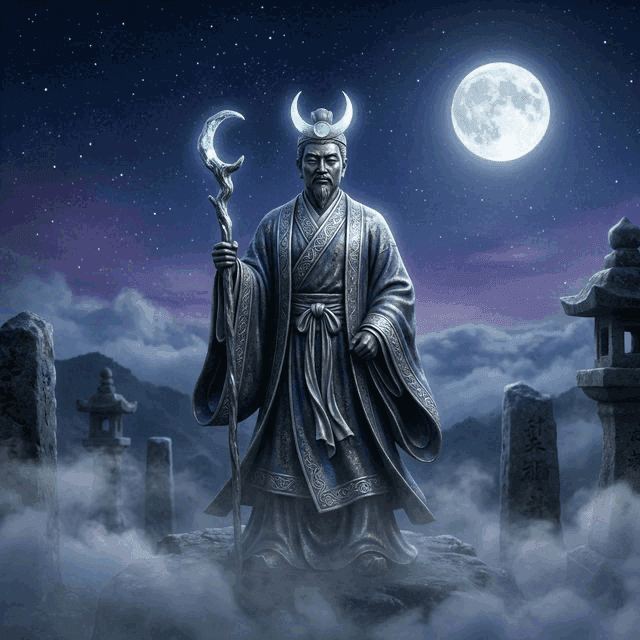 JapaneseTsukuyomiIllustration
Both are moon deities who stand in eternal opposition to their solar siblings
Compare Coyolxauhqui and Tsukuyomi side by side
Worship and cult
Temples, festivals, and practices recorded for Coyolxauhqui
She is the dismembered moon on the stairs, a warning more than a goddess you petition. Cult evidence is the sculpture and the myth of Coatepec, not a living priesthood in her name.
Sacred sites
- The great disk at the foot of Templo Mayor
Family
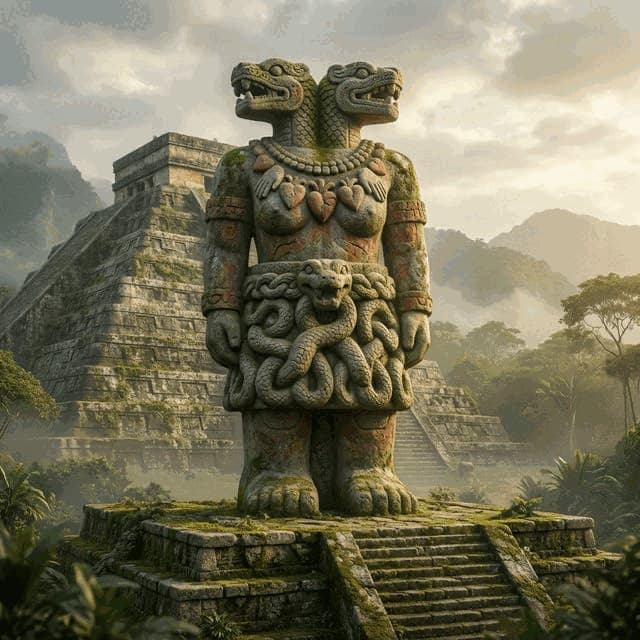
Questions about Coyolxauhqui's family
- Who are Coyolxauhqui's parents?
- The atlas's kinship records name one parent of Coyolxauhqui: Coatlicue. Ancient accounts do not always agree on divine parentage.
In the atlas
Where Coyolxauhqui appears
Artifacts
Sources and further reading
Source notes
These references are recorded in the catalog. Their passage wording and translation have not been checked, so quotations are not displayed here.
- Florentine Codex
About this entry
By Elizabeth Stein for Mythos Atlas. About the author. Editorial notes are grounded in the site's cited sources and can be challenged through the contact page.
Parallels are editorial comparisons across traditions: a shared role does not, by itself, establish a shared origin.
Family relationships come from the atlas's kinship records. Ancient sources often disagree on divine genealogy.
Keep exploring
One myth a week, with its sources in a short email. The sign-up form is just below.
Genealogy
Family tree
Coyolxauhqui's parents, consorts, children and rivals, as recorded in the atlas.