Hindu Pantheon
Durga
Also known as Devi, Shakti, Mahishasuramardini
- war
- protection
- strength
- victory
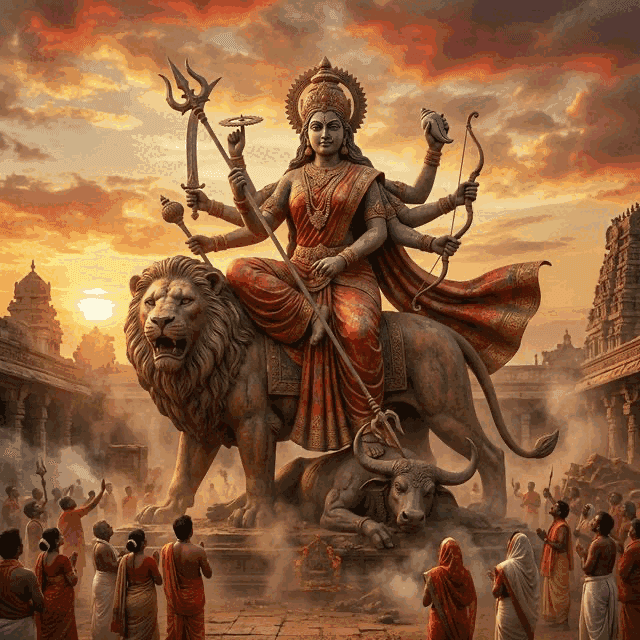
Fierce warrior goddess and protector of dharma. Form of Parvati who slayed the buffalo demon Mahishasura. Depicted riding a lion or tiger with multiple arms wielding divine weapons.
About Durga
The Invincible Warrior Goddess
Durga is the fierce warrior goddess and protector of dharma (cosmic order). Her name means "the invincible" or "she who is difficult to approach." She is a powerful manifestation of Shakti, the divine feminine energy, created to defeat evil that the gods alone could not overcome.
Birth from Divine Light
When the buffalo demon Mahishasura threatened the universe, the gods combined their powers to create Durga. From their collective radiance, she emerged fully formed and armed. Each god contributed a weapon: Shiva's trident, Vishnu's discus, Indra's thunderbolt, and many more.
The Nine-Day Battle
Durga battled Mahishasura and his demon armies for nine days and nights. On the tenth day (Vijayadashami), she slew the demon. She is depicted riding a lion or tiger, with multiple arms wielding divine weapons, symbolizing her unlimited power to protect the righteous.
Navratri and Durga Puja
The nine-night festival of Navratri celebrates her victory and her nine forms. Durga Puja, especially grand in Bengal, honors her annual visit to her parents' home. The mantra "Om Dum Durgayei Namah" invokes her protection.
Origin story
When the buffalo demon Mahishasura threatened the gods, they combined their powers to create Durga. Each god gave her a weapon - Shiva's trident, Vishnu's discus, Indra's thunderbolt. She fought Mahishasura for nine days before defeating him.
Across traditions
Parallel figures
Figures who play a role like Durga's in other traditions.
 EgyptianSekhmetIllustration
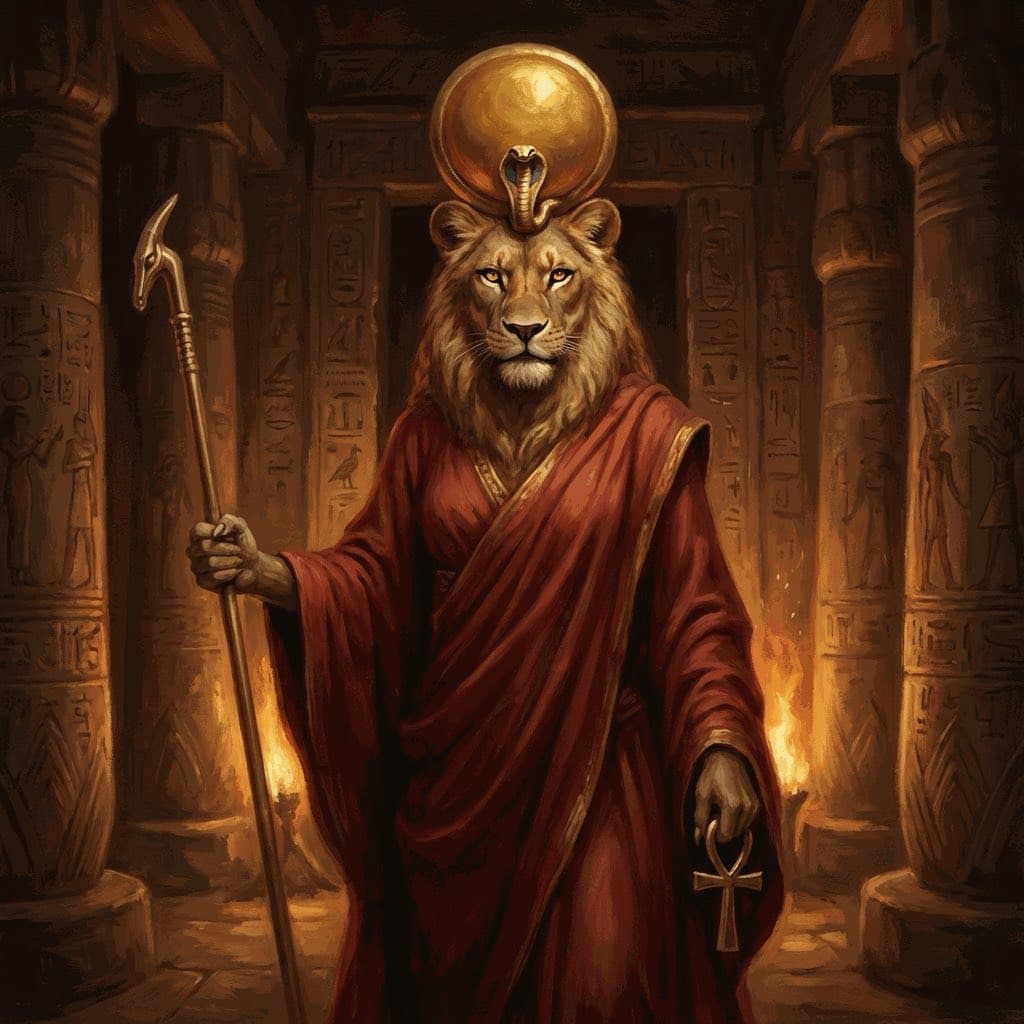
Both are fierce warrior goddesses who unleash destructive violence against enemies of order
Compare Durga and Sekhmet side by side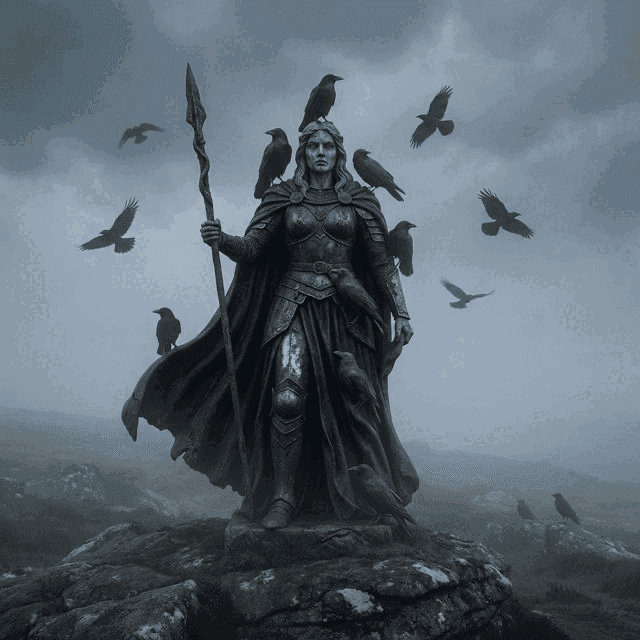 CelticThe MorríganIllustration
Both are goddesses of war and battlefield sovereignty who determine victory
Compare Durga and The Morrígan side by side
Worship and cult
Temples, festivals, and practices recorded for Durga
Nine nights, then the image goes into the river. Kolkata's puja is civic theatre: rented clay, drums, and a goodbye. The rest of the year she is a fierce form of the Goddess, not a quiet parish saint.
Sacred sites
- Dakshineswar and Kalighat in Bengal
- Vaishno Devi
- Pandals raised only for the festival week
Festivals
- Durga Puja
- Navaratri
- Vijayadashami
In the museums
Durga in art
Real objects in public collections, released into the public domain by the museums that hold them. Dates refer to when each object was made. Objects made within the tradition come first, later depictions after.
 (opens the museum record)
Ancient object
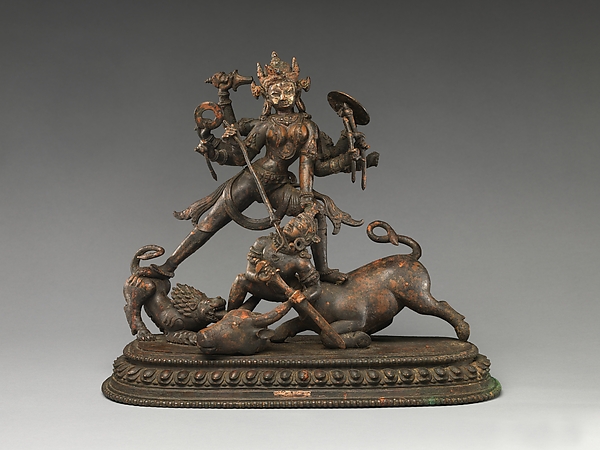
The Goddess Durga Slaying Mahisha (opens the museum record)
A Nepali bronze the museum titles as the goddess Durga slaying Mahisha, the buffalo demon. The subject depicts her defining myth, in which she was created by the gods to defeat a demon none of them could kill alone.
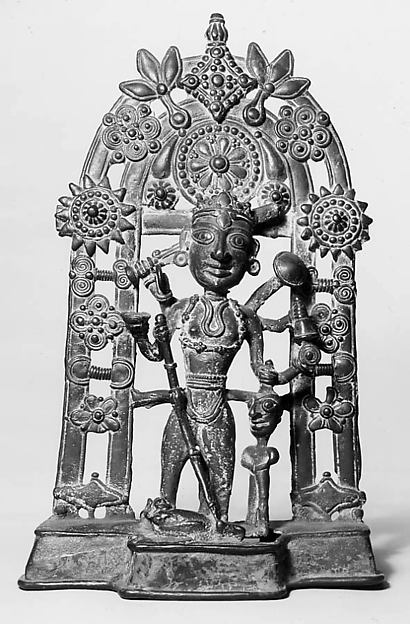 (opens the museum record)
Ancient object
Durga Mahishasura (opens the museum record)
A bronze figure the museum titles Durga Mahishasura, showing the goddess triumphing over the same buffalo demon. Images of this victory were widely produced across medieval India.
Sources and further reading
Source notes
These references are recorded in the catalog. Their passage wording and translation have not been checked, so quotations are not displayed here.
- Markandeya Purana (Devi Mahatmya), Canto XCI (trans. Pargiter)
About this entry
By Elizabeth Stein for Mythos Atlas. About the author. Editorial notes are grounded in the site's cited sources and can be challenged through the contact page.
Parallels are editorial comparisons across traditions: a shared role does not, by itself, establish a shared origin.
Keep exploring
One myth a week, with its sources in a short email. The sign-up form is just below.
Genealogy
Family tree
Durga's parents, consorts, children and rivals, as recorded in the atlas.