Mesoamerican Pantheon
Ek Chuaj
Also known as Black Scorpion, God M, Ek Chuah
- merchants
- cacao
- war
- trade routes
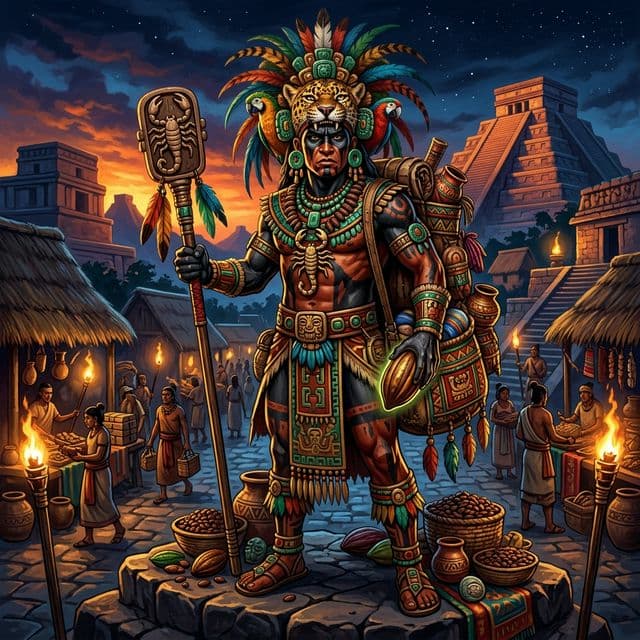
The black-faced Maya god of merchants, cacao, and traveling traders. Ek Chuaj protects those who journey along trade routes and blesses the cultivation of sacred cacao.
About Ek Chuaj
Patron of Merchants
Ek Chuaj appears with a black-painted face and a distinctive drooping lower lip. He carries a merchant's pack on his back and a staff, embodying the traveling traders who connected Maya cities.
Lord of Cacao
Cacao was currency in Mesoamerica, making Ek Chuaj both patron of merchants and lord of wealth. Cacao plantation owners held festivals in his honor, sacrificing dogs with cacao-colored markings.
Dual Nature
Despite his association with peaceful trade, Ek Chuaj also had a warlike aspect. Merchants traveled through dangerous territories, requiring divine protection.
Origin story
Ek Chuaj emerged as the patron of trade when the first merchants traveled between the great Maya cities, carrying cacao and precious goods.
Across traditions
Parallel figures
Figures who play a role like Ek Chuaj's in other traditions.
 GreekHermesIllustration
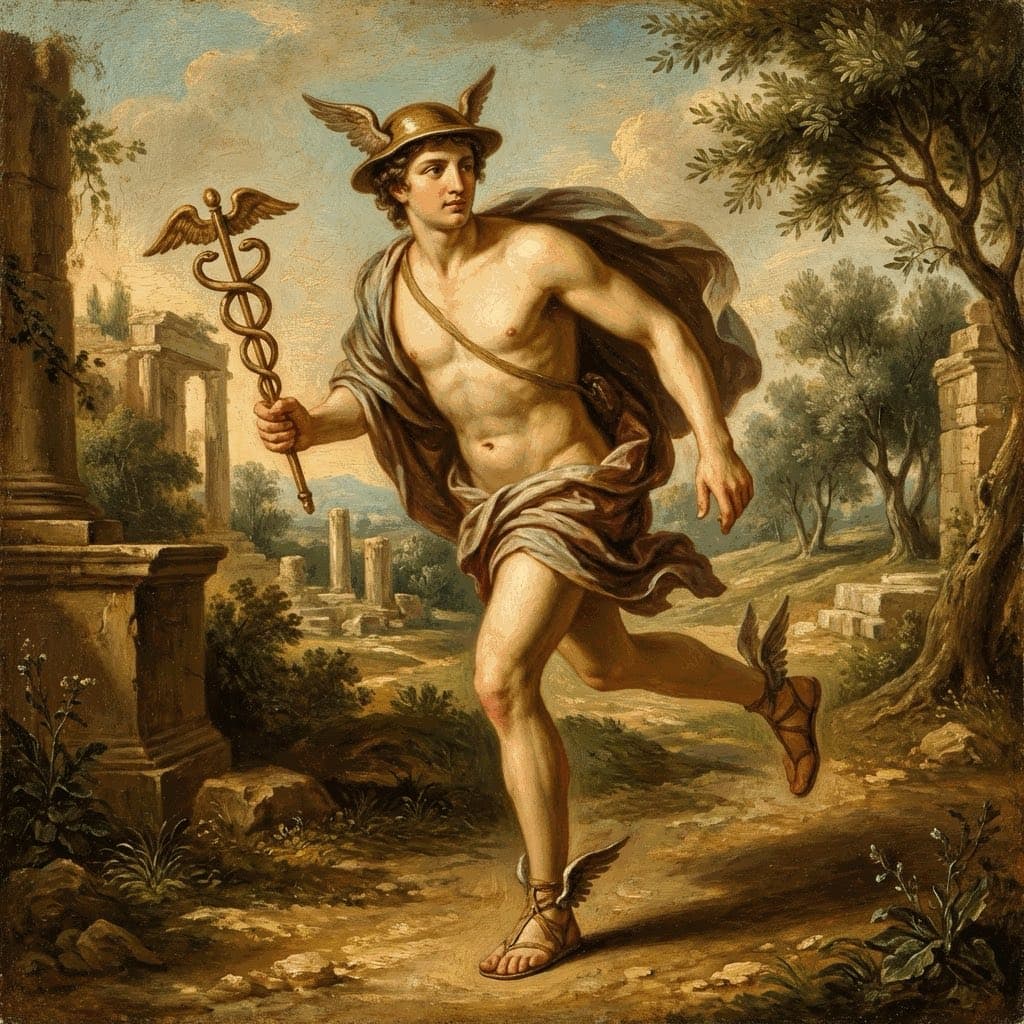
Both are patron gods of merchants, commerce, and the routes traders travel
Compare Ek Chuaj and Hermes side by side
Worship and cult
Temples, festivals, and practices recorded for Ek Chuaj
Black scorpion merchant god in the codices. Cacao and the road. Cult is trade, not a tourist chocolate rite.
Sacred sites
- Merchant and cacao associations in the Maya area
Sources and further reading
Source notes
These references are recorded in the catalog. Their passage wording and translation have not been checked, so quotations are not displayed here.
- Lewis Spence, The Myths of Mexico and Peru (1913)
About this entry
By Elizabeth Stein for Mythos Atlas. About the author. Editorial notes are grounded in the site's cited sources and can be challenged through the contact page.
Parallels are editorial comparisons across traditions: a shared role does not, by itself, establish a shared origin.
Keep exploring
One myth a week, with its sources in a short email. The sign-up form is just below.