Yoruba Tradition
Ibeji
Also known as Ibeyi, Taiwo and Kehinde
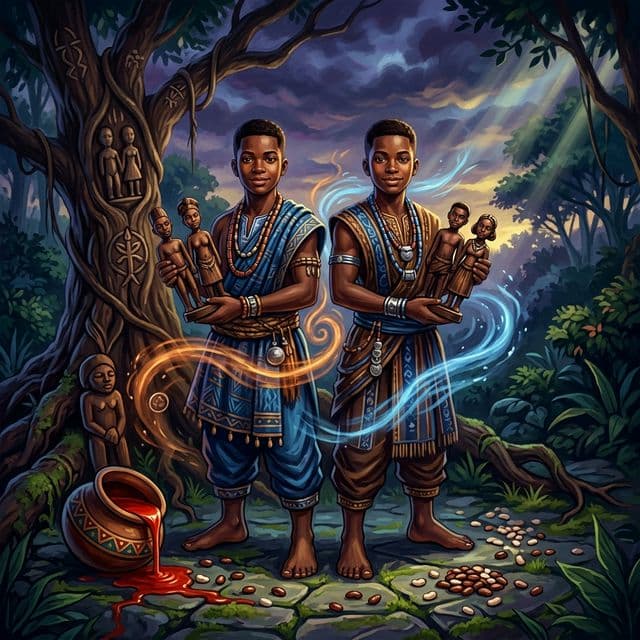
- twins
- childhood
- protection of children
- duality
The divine twins who protect all twins and children. Ibeji represent the sacred duality present throughout existence.
About Ibeji
The Sacred Twins
The Yoruba have one of the highest rates of twin births in the world, and twins (ibeji) are considered sacred. The Orishas Ibeji protect all twins and embody the spiritual significance of duality.
Taiwo and Kehinde
The first-born twin is called Taiwo ('taste the world first'), while the second is Kehinde ('arrive last'). Despite being born first, Taiwo is considered the younger twin—Kehinde sent Taiwo ahead to test whether the world was good.
Ere Ibeji
If a twin dies, a carved wooden figure (ere ibeji) is made to house the departed twin's spirit. The surviving twin and parents care for this figure as if it were alive.
Origin story
The first twins were born to Oya and Shango, blessed with divine protection. From them descended the Orisha Ibeji, who guard all twins.
Across traditions
Parallel figures
Figures who play a role like Ibeji's in other traditions.
 MesoamericanHunahpu and XbalanqueIllustration
Both represent the widespread 'Divine Twins' motif: paired sacred siblings with complementary natures and shared heroic destiny
Compare Ibeji and Hunahpu and Xbalanque side by side
Worship and cult
Temples, festivals, and practices recorded for Ibeji
When one twin dies, the image is fed. The cult is the carved pair and the living child. Yoruba twin rates made this ordinary, not exotic.
Sacred sites
- Twin figures in the house; no need for a stone temple
Family

In the atlas
Where Ibeji appears
Sources and further reading
Source notes
These references are recorded in the catalog. Their passage wording and translation have not been checked, so quotations are not displayed here.
- Yoruba ibeji carving tradition and oriki (oral / material)
Cite this page
No publication date is recorded for this page, so each citation uses n.d. and today's date as the access date.
About this entry
By Elizabeth Stein for Mythos Atlas. About the author. Editorial notes are grounded in the site's cited sources and can be challenged through the contact page.
Parallels are editorial comparisons across traditions: a shared role does not, by itself, establish a shared origin.
Family relationships come from the atlas's kinship records. Ancient sources often disagree on divine genealogy.
Keep exploring
One myth a week, with its sources in a short email. The sign-up form is just below.
Genealogy
Family tree
Ibeji's parents, consorts, children and rivals, as recorded in the atlas.