Hindu Pantheon
Indra
Also known as Shakra, Purandara
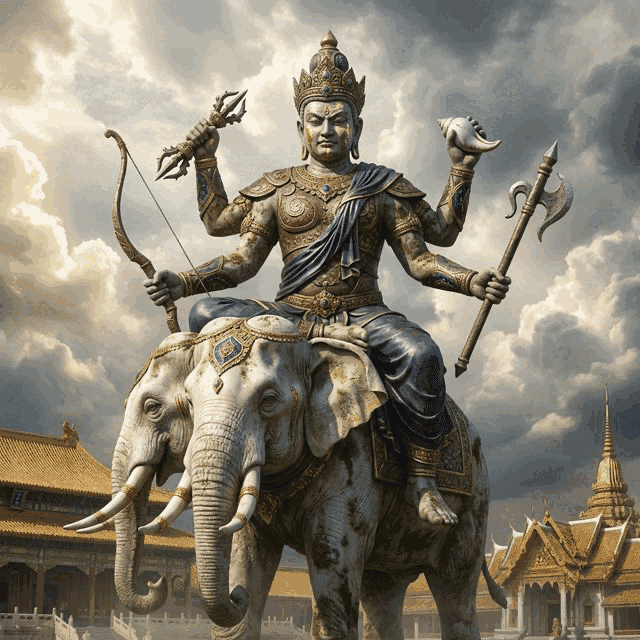
- thunder
- rain
- storms
- heaven
- war
King of the gods (Devas) and lord of heaven (Svarga). God of thunder, rain, and war. Slayer of the dragon Vritra. Rides the white elephant Airavata.
About Indra
King of the Gods
Indra is the king of the Devas (gods) and ruler of Svarga (heaven). God of thunder, rain, and war, he was the most important deity in the Vedic period. He wields the thunderbolt Vajra and rides the white elephant Airavata.
Slayer of Vritra
Indra's greatest feat was slaying the dragon Vritra, who had held back all the waters of the world. With his thunderbolt, crafted by the divine artisan Tvashtr, Indra struck Vritra and released the rivers, bringing life to the parched earth.
Guardian of Order
As king of the gods, Indra maintains cosmic order from his throne in Amaravati, his celestial capital. He commands the Maruts (storm gods) and dispenses the life-giving monsoon rains that sustain agriculture. He rewards warriors who die bravely with residence in heaven.
Humbled by Krishna
In later Hindu mythology, Indra's pride is often checked. When the people of Vrindavan, guided by young Krishna, stopped worshipping him, Indra sent devastating storms. Krishna lifted Mount Govardhana to shelter the people, teaching Indra humility.
Origin story
The Rigveda calls Indra a son of the sky god Dyaus; later texts name different mothers, among them Aditi. He became king of the gods by defeating the dragon Vritra. His weapon is the thunderbolt (Vajra).
Across traditions
Parallel figures
Figures who play a role like Indra's in other traditions.
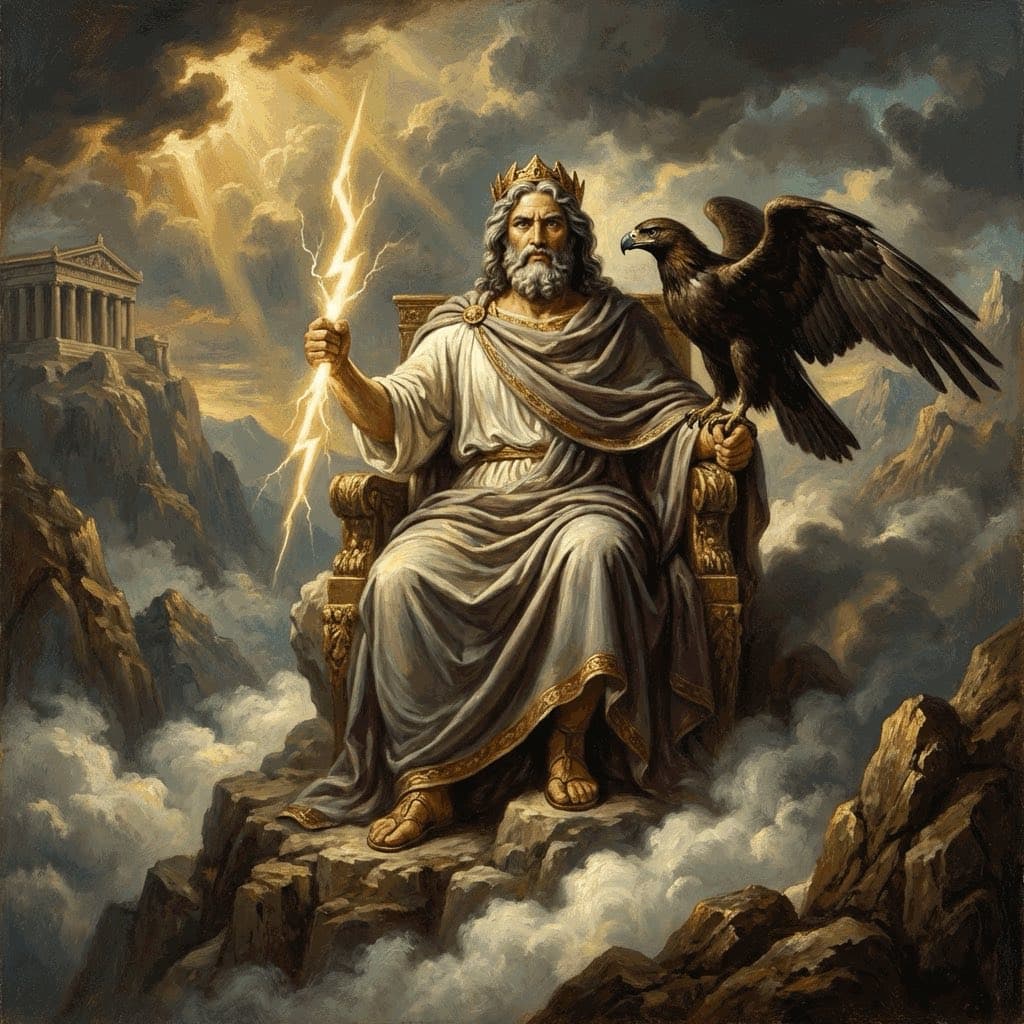 GreekZeusIllustration
Both are storm-and-thunder kings of the gods who wield a signature weapon (thunderbolt/vajra)
Compare Indra and Zeus side by side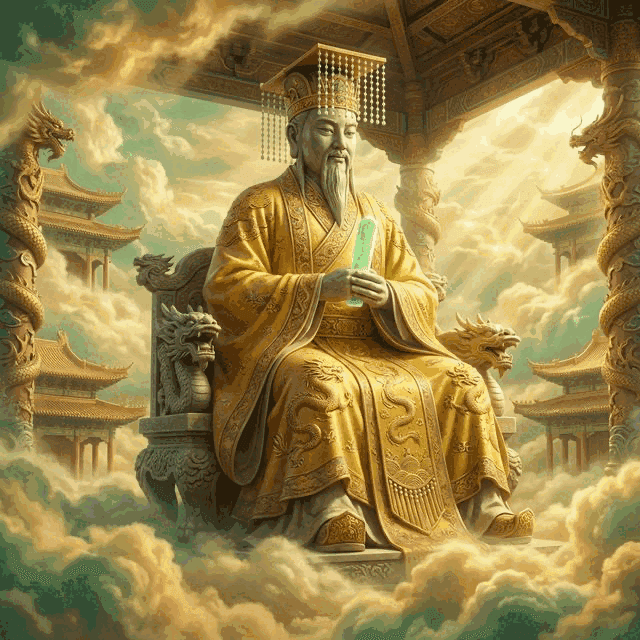 ChineseJade EmperorIllustration
Both are the ruling sky-king who commands the weather and the pantheon
Compare Indra and Jade Emperor side by side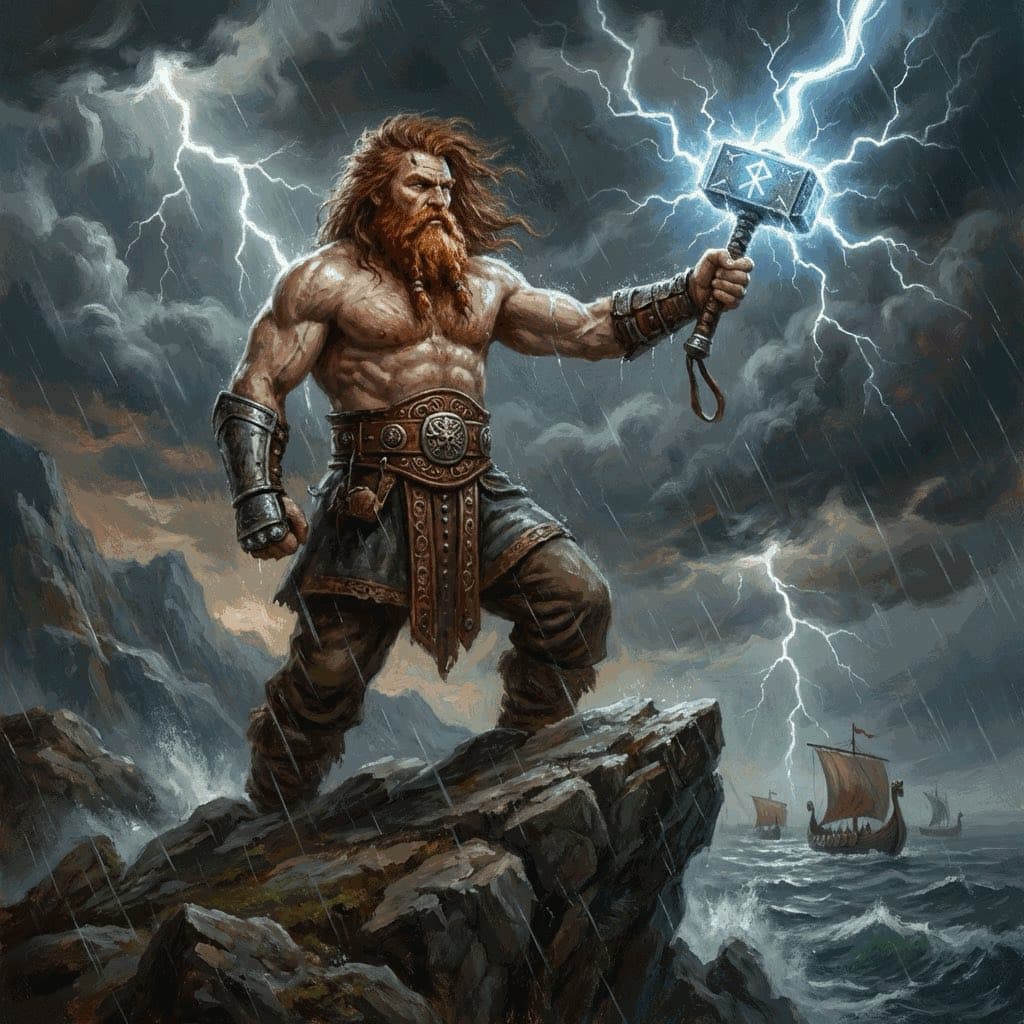 NorseThorIllustration
Both are thunder gods who wield a signature weapon against chaos-monsters, reflecting the shared Indo-European thunder-god motif
Compare Indra and Thor side by side
Worship and cult
Temples, festivals, and practices recorded for Indra
King of the Rigveda, then crowded out by the Trimurti. Nepal still raises his pole. In India the honest note is decline: weather and war moved to other names.
Sacred sites
- Few living Hindu temples; Indra Jatra at Kathmandu
- Vedic fire-altars rather than a house of his own
Festivals
- Indra Jatra in Nepal
- Vedic soma rites in the older layer
In the atlas
Where Indra appears
Artifacts
Sources and further reading
Source notes
These references are recorded in the catalog. Their passage wording and translation have not been checked, so quotations are not displayed here.
- Rig Veda 1.32.1 (trans. Griffith)
Appears in
Ancient and classical works featuring this figure.
Thunder-wielding hero-king of the Devas who drinks soma, hurls the vajra, and releases the captive waters (Hymns 1.32, 2.12, 4.18)
About this entry
By Elizabeth Stein for Mythos Atlas. About the author. Editorial notes are grounded in the site's cited sources and can be challenged through the contact page.
Parallels are editorial comparisons across traditions: a shared role does not, by itself, establish a shared origin.
Keep exploring
One myth a week, with its sources in a short email. The sign-up form is just below.
Genealogy
Family tree
Indra's parents, consorts, children and rivals, as recorded in the atlas.