Hindu Pantheon
Kali
Also known as Mahakali, Bhadrakali, Kalika
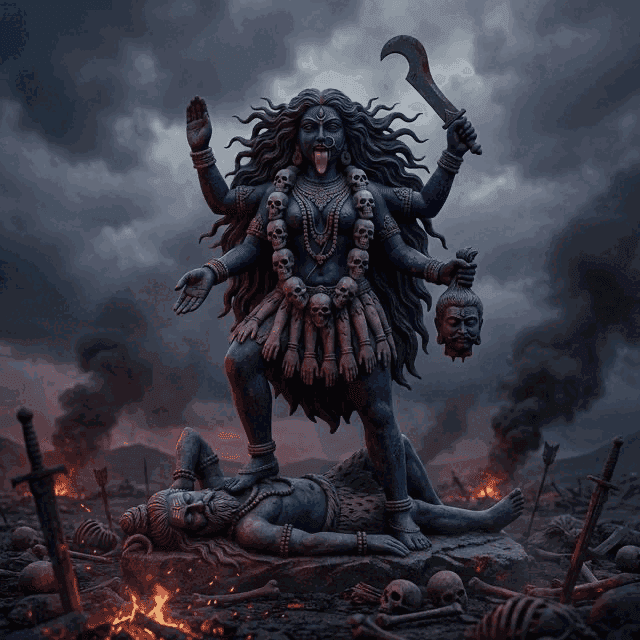
- time
- change
- death
- destruction
- liberation
Fierce goddess of time, change, death, and ultimate reality. A form of Parvati/Durga. Despite her terrifying appearance, she destroys evil and liberates devotees from ego and illusion.
About Kali
The Dark Mother
Kali is the fierce goddess of time, change, destruction, and ultimate reality. Her name derives from kala (time/black), representing the void from which all creation emerges and into which it dissolves. Despite her terrifying appearance, she liberates devotees from ego and illusion.
Emergence from Durga
Kali emerged from Durga's forehead during battle with the demons Chanda and Munda. Her rage was so fierce that she began destroying everything—demons and gods alike. To calm her, Shiva lay beneath her feet; when she realized she was trampling her husband, she stopped.
Iconography
Kali is depicted with black or blue skin, a garland of skulls, a skirt of severed arms, and a lolling tongue. She holds a sword and a severed head. These fearsome symbols represent the destruction of ego and ignorance, not physical violence.
Tantric Worship
In Tantric traditions, Kali is the supreme goddess. She is worshipped for liberation (moksha) and spiritual transformation. The Kalighat temple in Kolkata is one of her most sacred shrines. Her mantra "Om Krim Kalikayei Namah" is chanted for protection and transformation.
Origin story
Kali emerged from Durga's forehead during battle with demons. Her rage was so fierce she began destroying everything. Shiva lay beneath her feet to calm her. Kali is black, representing the void.
Across traditions
Parallel figures
Figures who play a role like Kali's in other traditions.
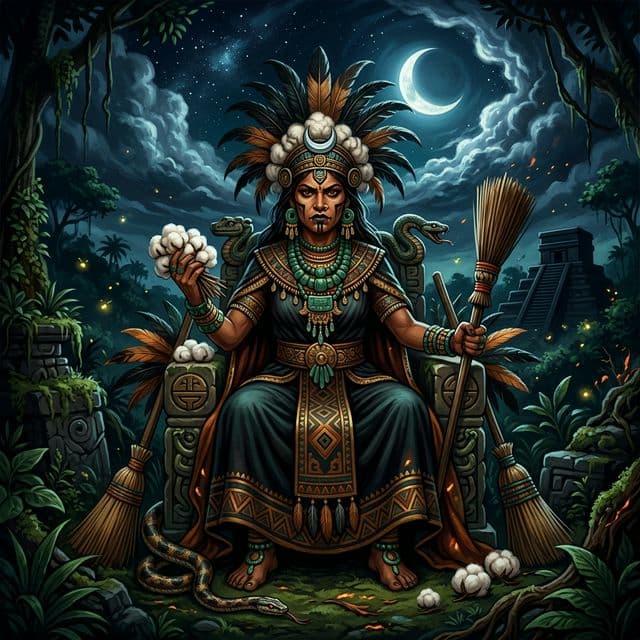 AztecTlazolteotlIllustration
Both are transgressive goddesses tied to purification through consuming filth/destruction
Compare Kali and Tlazolteotl side by side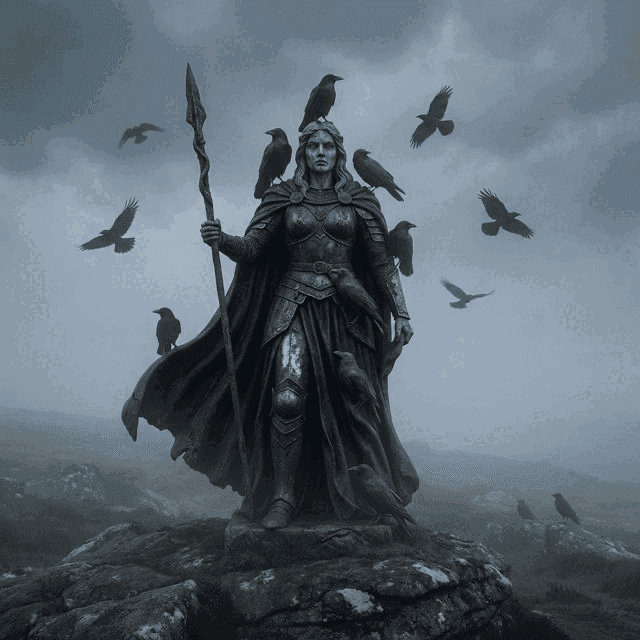 CelticThe MorríganIllustration
Both are goddesses of death, time, and fate who preside over destruction as a path to renewal
Compare Kali and The Morrígan side by side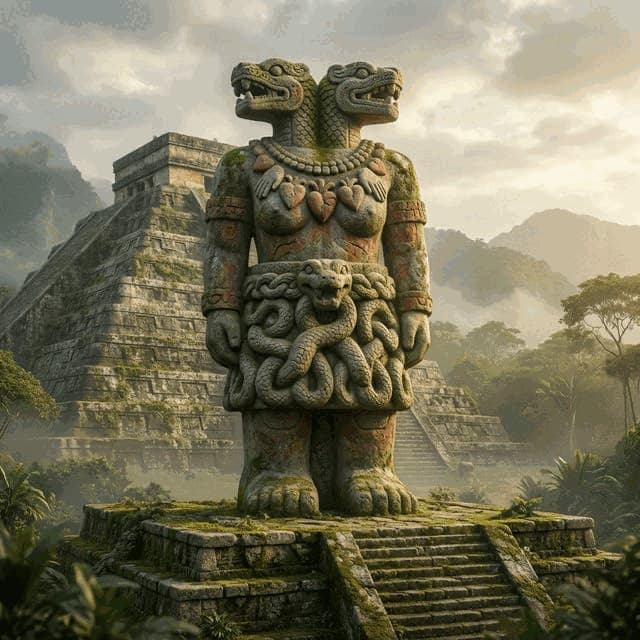 AztecCoatlicueIllustration
Both are 'terrible mother' goddesses adorned with symbols of death (a skull necklace vs. a skirt of serpents and a necklace of hands and hearts) who embody the life-death-rebirth cycle
Compare Kali and Coatlicue side by side
Worship and cult
Temples, festivals, and practices recorded for Kali
Night, red hibiscus, and in older practice blood. Tantric houses keep her close; most public temples now offer gourds or goats under local law. Do not pretty this into a wellness goddess.
Sacred sites
- Kalighat in Kolkata
- Dakshineswar Kali Temple
- Kamakhya
Festivals
- Kali Puja
- Diwali night in Bengal
- Navaratri in her fierce form
Sources and further reading
Source notes
These references are recorded in the catalog. Their passage wording and translation have not been checked, so quotations are not displayed here.
- Markandeya Purana (Devi Mahatmya), Canto LXXXVII (trans. Pargiter)
About this entry
By Elizabeth Stein for Mythos Atlas. About the author. Editorial notes are grounded in the site's cited sources and can be challenged through the contact page.
Parallels are editorial comparisons across traditions: a shared role does not, by itself, establish a shared origin.
Keep exploring
One myth a week, with its sources in a short email. The sign-up form is just below.
Genealogy
Family tree
Kali's parents, consorts, children and rivals, as recorded in the atlas.