Hindu Pantheon
Krishna
Also known as Govinda, Gopala, Vasudeva
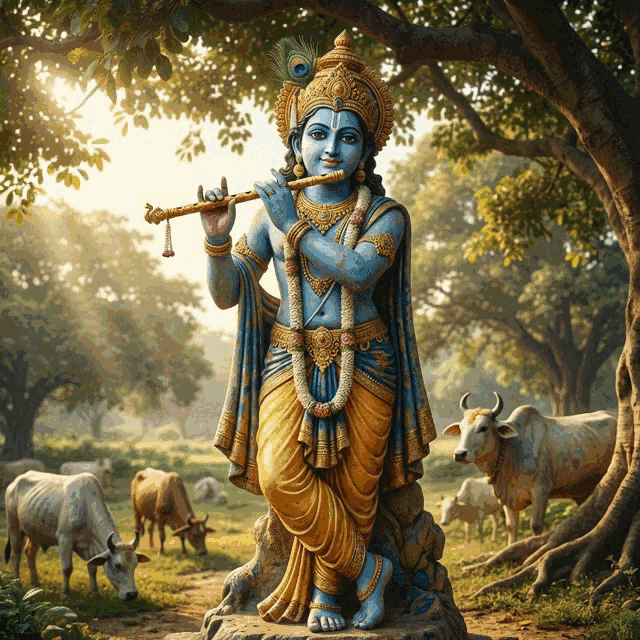
- love
- compassion
- tenderness
- divine play
Eighth avatar of Vishnu and central deity. As a child, a playful cowherd; as an adult, prince and charioteer who spoke the Bhagavad Gita.
About Krishna
The Divine Player
Krishna is the eighth avatar of Vishnu and one of Hinduism's most beloved deities. He is worshipped as the supreme god by many traditions. His life encompasses the playful child stealing butter, the romantic youth dancing with the gopis, and the wise prince delivering the Bhagavad Gita.
The Butter Thief
Born in Mathura to Devaki and Vasudeva, Krishna was secretly raised by foster parents Yashoda and Nanda in Vrindavan to protect him from his evil uncle Kamsa. His childhood is filled with miraculous and mischievous deeds—defeating demons, lifting Mount Govardhana, and stealing butter.
The Flute Player and Radha
As a youth, Krishna enchanted the cowherd girls (gopis) with his divine flute music. His relationship with Radha represents the highest form of devotional love (prema). The Rasa Lila (divine dance) symbolizes the soul's longing for union with the divine.
The Bhagavad Gita
On the battlefield of Kurukshetra, Krishna served as charioteer to the warrior Arjuna. When Arjuna hesitated to fight his own relatives, Krishna revealed the Bhagavad Gita, the supreme spiritual teaching on duty, devotion, and liberation. The festivals Janmashtami and Holi celebrate his life.
Origin story
Born to Devaki and Vasudeva but raised by foster parents to protect him from his evil uncle Kamsa. In the Mahabharata war, he served as Arjuna's charioteer and revealed the Bhagavad Gita.
Worship and cult
Temples, festivals, and practices recorded for Krishna
Butter, flute, and the battlefield of Kurukshetra occupy the same god. Braj loves the child and lover; the Gita's speaker is the same person. Cult is song, food, and the swing, not a smoke-filled civic altar first.
Sacred sites
- Vrindavan and Mathura
- Dwarka
- Puri Jagannath as a form of Krishna
Festivals
- Janmashtami
- Holi in Braj
- Rath Yatra at Puri
In the atlas
Where Krishna appears
In the museums
Krishna in art
Real objects in public collections, released into the public domain by the museums that hold them. Dates refer to when each object was made. Objects made within the tradition come first, later depictions after.
 (opens the museum record)
Ancient object
Yashoda with the Infant Krishna (opens the museum record)
A Chola bronze showing Krishna's foster mother Yashoda holding the infant Krishna, tagged by the museum with his name. The tender maternal subject was a popular one in South Indian temple bronzes.
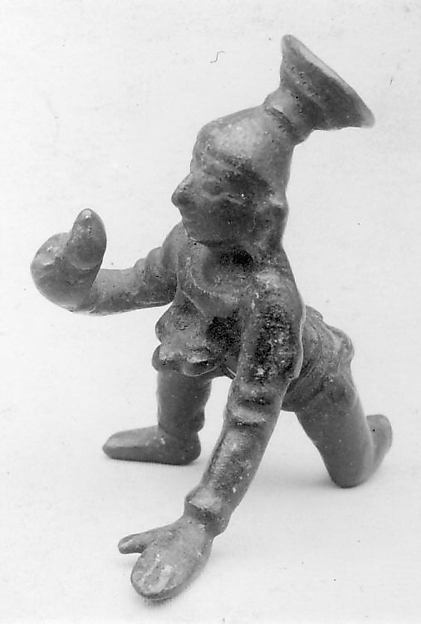 (opens the museum record)
Later depiction
Krishna (opens the museum record)
A South Indian bronze portable idol the museum catalogs simply as Krishna, made for personal devotional use. Portable images like this were carried and dressed in household worship.
Sources and further reading
Source notes
These references are recorded in the catalog. Their passage wording and translation have not been checked, so quotations are not displayed here.
- Bhagavad Gita, Ch. IV (trans. Arnold, 'The Song Celestial')
Appears in
Ancient and classical works featuring this figure.
Arjuna's charioteer and divine guide (throughout, especially the Bhagavad Gita in Book 6)
About this entry
By Elizabeth Stein for Mythos Atlas. About the author. Editorial notes are grounded in the site's cited sources and can be challenged through the contact page.
Parallels are editorial comparisons across traditions: a shared role does not, by itself, establish a shared origin.
Keep exploring
One myth a week, with its sources in a short email. The sign-up form is just below.
Genealogy
Family tree
Krishna's parents, consorts, children and rivals, as recorded in the atlas.