Celtic Pantheon
Manannán mac Lir
Also known as Manannán, Manannan, Barinthus
- sea
- otherworld
- weather
- magic
- trade
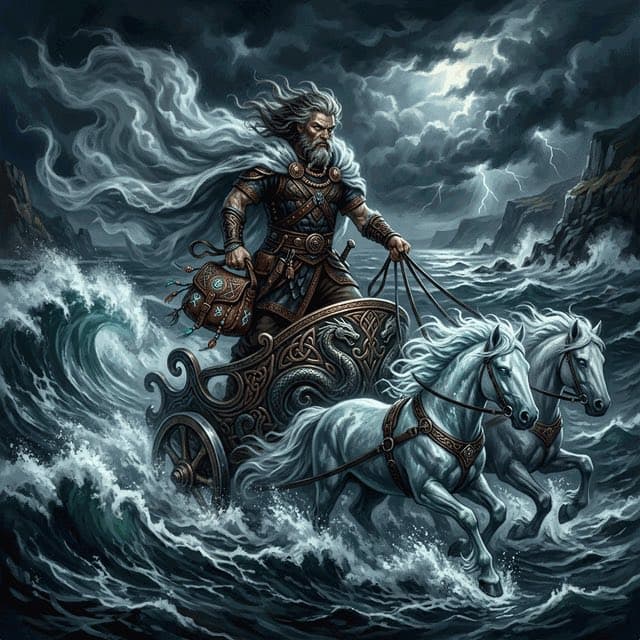
Lord of the sea and guardian of Tír na nÓg, the Land of Youth. He rides the waves in his chariot and cloaks the Otherworld in mist.
About Manannán mac Lir
Lord of the Sea
Manannán mac Lir commands the wild Atlantic, riding its waves in his chariot as easily as a mortal rides a road. His dominion extends beyond the physical ocean to encompass the Otherworld itself—those mystical islands beyond the sunset where the immortals feast and time moves strangely.
The Isle of Man
The Isle of Man takes its name from Manannán, who was revered there as a protective deity. The Manx people paid him rent in the form of rushes at Midsummer, and his three-legged symbol (the triskelion) remains the island's emblem. In Welsh tradition, he appears as Manawydan fab Llŷr, a more human figure but still connected to the sea.
Magical Treasures
Manannán possesses an array of enchanted objects. His crane bag contains the treasures of the sea—when the tide is full, it holds wonders; when the tide ebbs, it is empty. His cloak of mist (féth fíada) can render the wearer invisible and was given to the Tuatha Dé Danann to hide them from mortals. His chariot, Wave Sweeper, can travel over sea as over land, and his boat, Ocean Sweeper, needs no oars or sails.
Guardian of the Otherworld
When the Milesians conquered Ireland and the Tuatha Dé Danann retreated into the síd mounds, Manannán organized their exile. He assigned each god their hollow hill and taught them the magic to conceal themselves. He is thus the architect of the division between the mortal world and the realm of Faerie.
Fosterage of Lugh
Manannán raised the young Lugh in Tír na nÓg after the child escaped Balor's attempts to drown him. Under Manannán's tutelage, Lugh learned magic, warfare, and all the arts that would later earn him the title Samildánach ("Equally Skilled in All"). When Lugh came of age, Manannán gave him magical weapons for his journey to Tara.
Origin story
Manannán mac Lir is the son of **Lir**, a sea god whose name survives in the Irish Sea (Muir Meann). Though sometimes counted among the Tuatha Dé Danann, Manannán stands apart as ruler of his own realm: the **Otherworld** beyond the western sea. He was foster-father to many, including **Lugh Lámhfhada**, whom he raised and trained in the magical arts. His wife is **Fand**, a woman of the síd, though he also had dalliances with mortal women. After the Tuatha Dé Danann retreated into the fairy mounds, Manannán gave each of the gods their síd and taught them the féth fíada—the spell of invisibility that hides the Otherworld from mortal eyes.
Across traditions
Parallel figures
Figures who play a role like Manannán mac Lir's in other traditions.
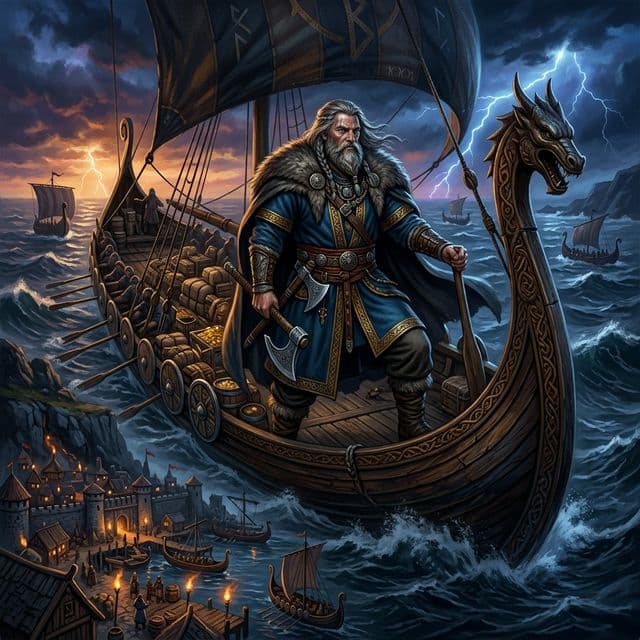 NorseNjordIllustration
Both are sea gods associated with wealth, prosperous trade, and safe seafaring
Compare Manannán mac Lir and Njord side by side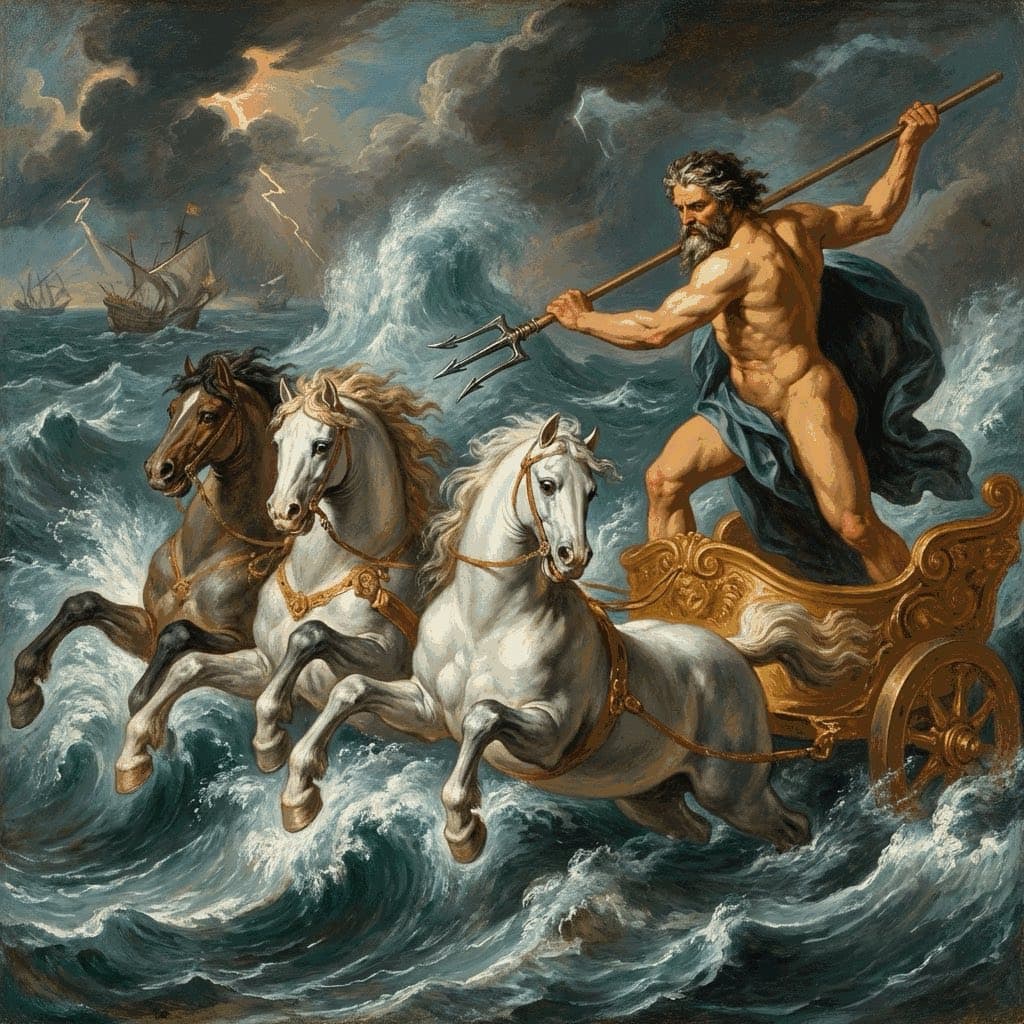 GreekPoseidonIllustration
Both are major gods of the sea who also govern weather and the otherworldly power of the ocean
Compare Manannán mac Lir and Poseidon side by side
Worship and cult
Temples, festivals, and practices recorded for Manannán mac Lir
Mist, the wave, and the crane bag. He ferries and conceals. Island folklore kept him longer than a priesthood did. Offerings toward the sea are the honest shape of the cult.
Sacred sites
- Isle of Man traditions; sea and mist more than a stone temple
Festivals
- Manx sea observances in later folklore
Family
In the atlas
Where Manannán mac Lir appears
Sources and further reading
Source notes
These references are recorded in the catalog. Their passage wording and translation have not been checked, so quotations are not displayed here.
- Lady Gregory, Gods and Fighting Men (1904)
About this entry
By Elizabeth Stein for Mythos Atlas. About the author. Editorial notes are grounded in the site's cited sources and can be challenged through the contact page.
Parallels are editorial comparisons across traditions: a shared role does not, by itself, establish a shared origin.
Family relationships come from the atlas's kinship records. Ancient sources often disagree on divine genealogy.
Keep exploring
One myth a week, with its sources in a short email. The sign-up form is just below.
Genealogy
Family tree
Manannán mac Lir's parents, consorts, children and rivals, as recorded in the atlas.