Chinese Pantheon
Nuwa
Also known as Nu Wa, Empress Wa, Snake Goddess
- creation
- humanity
- marriage
- order
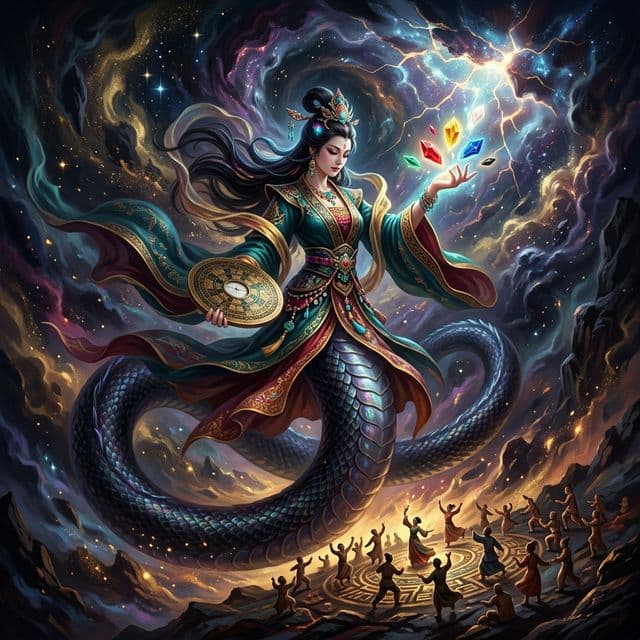
The serpent-bodied goddess who created humanity from yellow clay and repaired the broken sky after a great catastrophe. She is the mother of mankind and establisher of marriage.
About Nuwa
The Mother of Humanity
Nuwa is one of the most ancient and important goddesses in Chinese mythology, credited with creating humanity and saving the world from destruction. With her brother-husband Fuxi, she represents the primordial creative forces that shaped civilization.
The Creation of Humanity
After Pangu's death created the world, Nuwa wandered the earth. Finding it beautiful but lonely, she began molding figures from yellow clay in her own image. When she breathed life into them, they became the first humans. At first, she carefully crafted each figure by hand - these became the nobles and wealthy. But tiring of this slow work, she dipped a rope in clay and flicked droplets across the land - these became the common people.
Repairing the Sky
A great catastrophe occurred when the fire god Zhurong and water god Gonggong fought a terrible war. In his defeat, Gonggong smashed his head against Mount Buzhou, one of the pillars holding up the sky. The sky cracked, floods and fires ravaged the earth, and monsters emerged to prey on humanity.
Nuwa gathered stones of five colors - blue, white, red, yellow, and black - and melted them to repair the hole in the sky. She killed the Black Dragon to stop the floods, piled ashes from burned reeds to absorb the waters, and cut off the legs of a giant turtle to serve as new pillars for the sky.
The First Marriage
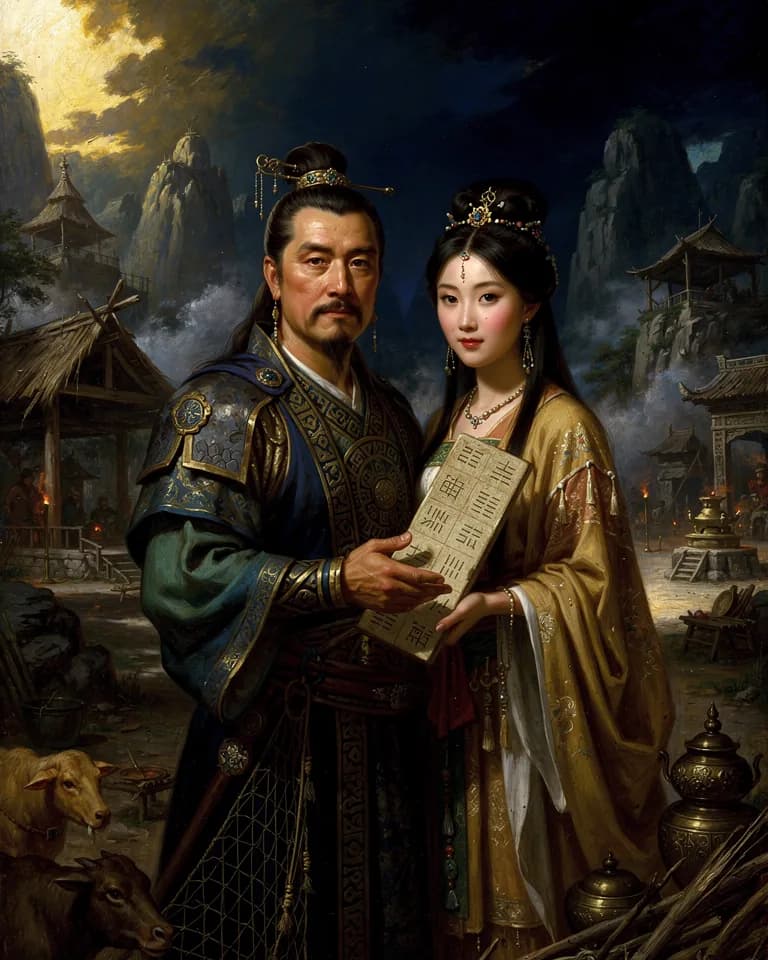
In some versions, after a great flood destroyed all humanity except Nuwa and her brother Fuxi, they were compelled by Heaven to marry to repopulate the earth. This story establishes Nuwa as the goddess of marriage and the legitimizer of the marriage institution.
Appearance and Iconography
Nuwa is typically depicted with a human upper body and a serpent tail, sometimes shown intertwined with her brother Fuxi. Together they hold a compass and square, representing the ordering of the cosmos. This image appears in countless Han dynasty tomb paintings.
Origin story
In the age after Pangu created the world, the goddess Nuwa felt lonely wandering the empty earth. She took yellow clay and molded it into figures like herself, breathing life into them to create humanity. She is the mother of all people.
Across traditions
Parallel figures
Figures who play a role like Nuwa's in other traditions.
 GreekPrometheusIllustration
Both create humanity from clay and are benefactors of mankind
Compare Nuwa and Prometheus side by side MesopotamianNinhursagIllustration
Both are creator goddesses who fashion humans from clay
Compare Nuwa and Ninhursag side by side
Worship and cult
Temples, festivals, and practices recorded for Nuwa
She patches the sky and makes humans from yellow earth. Cult is local and often paired with Fuxi. The serpent-human body on Han tombs is the image; the temple fair is the living remainder.
Sacred sites
- Nüwa temples in northern China (for example Huaiyang traditions)
- Paired with Fuxi on Han stone reliefs
Festivals
- Human-creation festivals in local temple fairs
Family
In the atlas
Where Nuwa appears
Stories
Sources and further reading
Source notes
These references are recorded in the catalog. Their passage wording and translation have not been checked, so quotations are not displayed here.
- Huainanzi
About this entry
By Elizabeth Stein for Mythos Atlas. About the author. Editorial notes are grounded in the site's cited sources and can be challenged through the contact page.
Parallels are editorial comparisons across traditions: a shared role does not, by itself, establish a shared origin.
Family relationships come from the atlas's kinship records. Ancient sources often disagree on divine genealogy.
Keep exploring
One myth a week, with its sources in a short email. The sign-up form is just below.
Genealogy
Family tree
Nuwa's parents, consorts, children and rivals, as recorded in the atlas.