Yoruba Tradition
Obatala
Also known as Oxala, Orishanla, Oshala
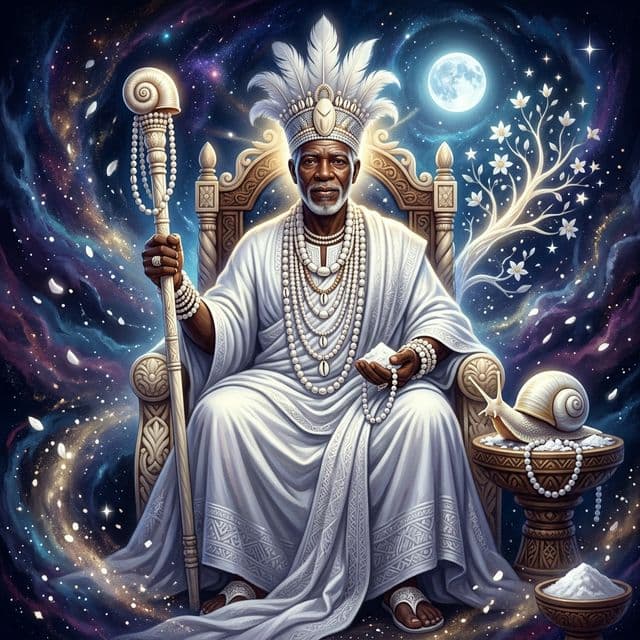
- creation
- purity
- wisdom
- clarity
- peace
The Orisha of creation, purity, and wisdom. Obatala was tasked by Olodumare with creating land from the primordial waters and shaping human bodies from clay.
About Obatala
The King of the White Cloth
Obatala, whose name means 'King of the White Cloth,' is one of the most important Orishas. He was given the task of creating the physical world and shaping human bodies, making him the father of humanity.
The Creation Story
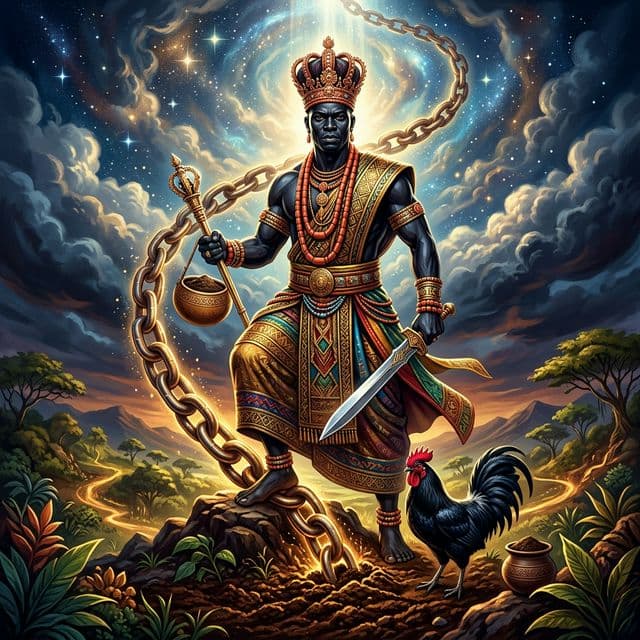
Olodumare sent Obatala to create land from the primordial waters. He was given a chain, a snail shell filled with sand, a white hen, and a palm nut. Descending from heaven, he poured the sand on the water and set the hen loose to scatter it, forming the first land at Ile-Ife. However, Obatala became drunk on palm wine during the creation of humans, which is why some people are born with disabilities.
The White Orisha
Obatala is associated with all things white: white cloth, white beads, white animals, and cool, calm energy. His priests wear white exclusively, and offerings to him include white foods: coconut, white yam, snails, and rice.
Origin story
Obatala was one of the first Orishas created by Olodumare. He was given the sacred task of creating the earth and molding human forms from clay, into which Olodumare breathed life.
Across traditions
Parallel figures
Figures who play a role like Obatala's in other traditions.
 GreekPrometheusIllustration
Both created humanity and faced consequences for their actions
Compare Obatala and Prometheus side by side
Worship and cult
Temples, festivals, and practices recorded for Obatala
White cloth, no palm wine, patience. He owns those he shaped clumsily when drunk. The cult is coolness and ethical constraint.
Sacred sites
- Ile-Ife as the landing of creation
- White-cloth shrines in Yoruba towns
Festivals
- Obatala festival days; white is the rule
Family

In the atlas
Where Obatala appears
Sources and further reading
Source notes
These references are recorded in the catalog. Their passage wording and translation have not been checked, so quotations are not displayed here.
- Oriki Obatala
About this entry
By Elizabeth Stein for Mythos Atlas. About the author. Editorial notes are grounded in the site's cited sources and can be challenged through the contact page.
Parallels are editorial comparisons across traditions: a shared role does not, by itself, establish a shared origin.
Family relationships come from the atlas's kinship records. Ancient sources often disagree on divine genealogy.
Keep exploring
One myth a week, with its sources in a short email. The sign-up form is just below.
Genealogy
Family tree
Obatala's parents, consorts, children and rivals, as recorded in the atlas.