Yoruba Tradition
Osanyin
Also known as Ossaim, Osain, Ossanha
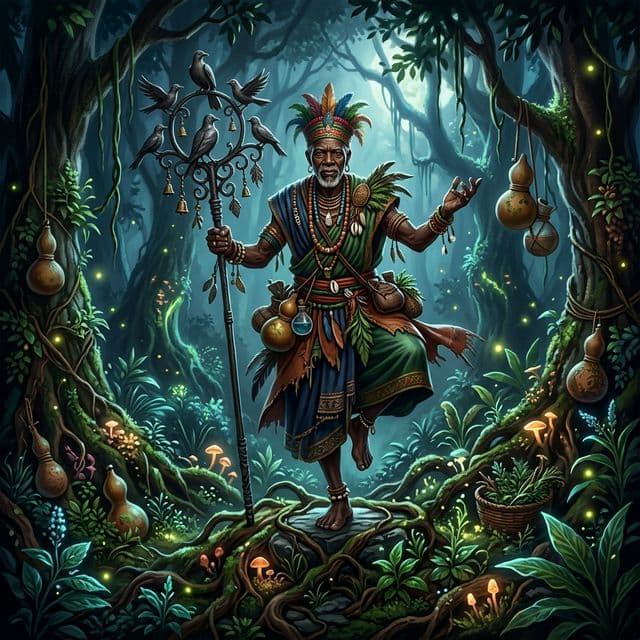
- herbs
- healing
- medicine
- forest
The Orisha of herbs, healing, and the forest. Osanyin knows the secret properties of all plants and is essential to all Orisha worship.
About Osanyin
The Master of Herbs
Osanyin is the Orisha of herbs, healing, and the secrets of the forest. He knows the medicinal and magical properties of every plant, root, and leaf. No Orisha ritual is complete without the proper herbs, making Osanyin essential to all worship.
Kosi Ewe, Kosi Orisha
There is a Yoruba saying: 'Kosi ewe, kosi Orisha' (Without leaves, there are no Orishas). This emphasizes Osanyin's crucial role. Every Orisha has specific herbs associated with them.
The Singular Form
Osanyin is depicted as having one leg, one arm, and one eye. Various myths explain this unique form.
The Iron Staff
Osanyin's symbol is an iron staff crowned with birds, usually seven birds around a central figure. This staff is placed in the home or temple to provide protection.
Origin story
Osanyin was created by Olodumare to know the secrets of all plants. He dwells in the forest, where every herb, root, and leaf speaks to him of its properties.
Across traditions
Parallel figures
Figures who play a role like Osanyin's in other traditions.
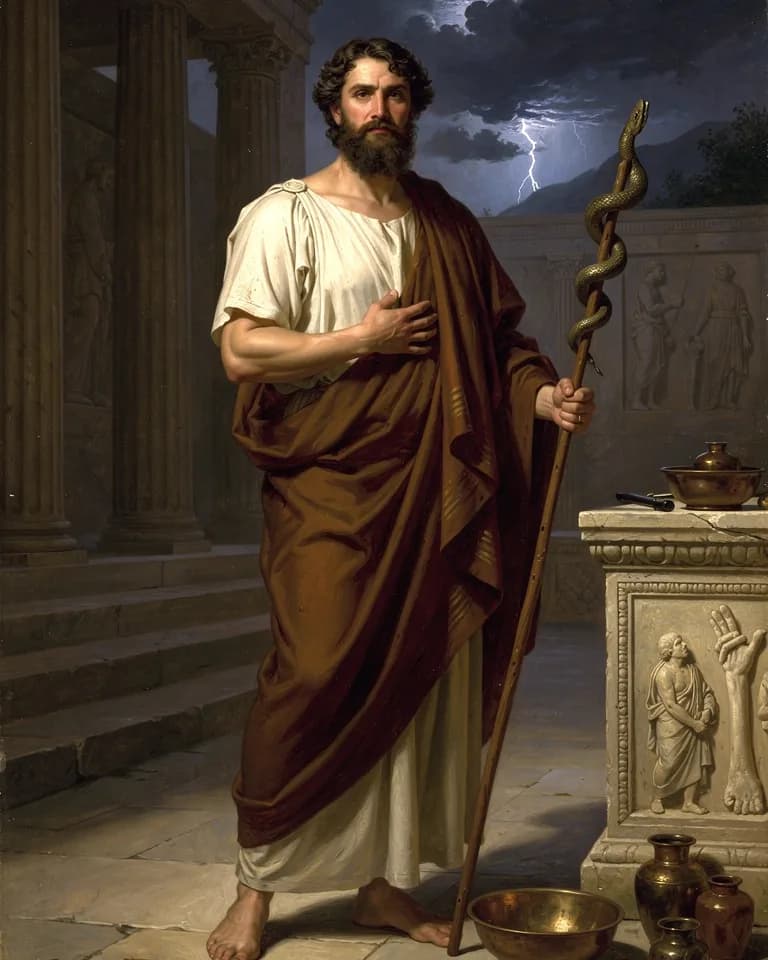 GreekAsclepiusIllustration
Both are gods of healing and medicine
Compare Osanyin and Asclepius side by side
Worship and cult
Temples, festivals, and practices recorded for Osanyin
Leaves. The cult is medicine and the rule that the herb-priest hears what others miss. A bird on a staff, not a cathedral.
Sacred sites
- Herbalist shrines; one-legged staff
Sources and further reading
Source notes
These references are recorded in the catalog. Their passage wording and translation have not been checked, so quotations are not displayed here.
- Oriki Osanyin
About this entry
By Elizabeth Stein for Mythos Atlas. About the author. Editorial notes are grounded in the site's cited sources and can be challenged through the contact page.
Parallels are editorial comparisons across traditions: a shared role does not, by itself, establish a shared origin.
Keep exploring
One myth a week, with its sources in a short email. The sign-up form is just below.
Genealogy
Family tree
Osanyin's parents, consorts, children and rivals, as recorded in the atlas.