Yoruba Tradition
Oya
Also known as Iansa, Oya-Iansa, Oia
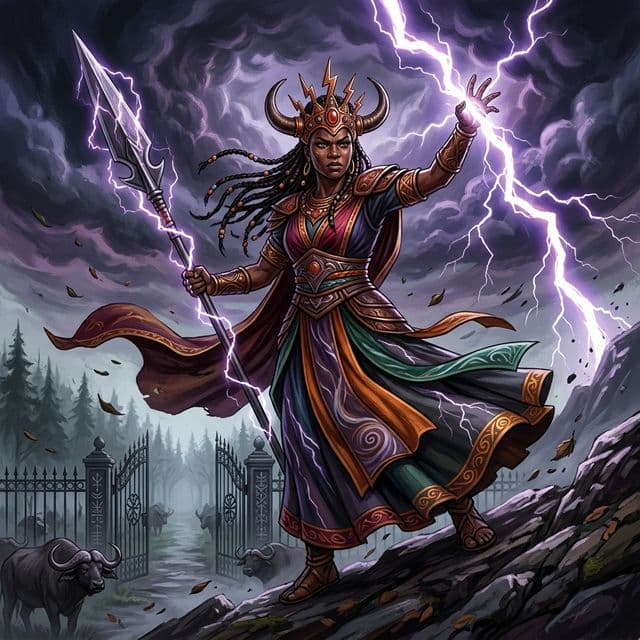
- wind
- storms
- transformation
- death
- rebirth
The Orisha of wind, storms, and transformation. Oya is a fierce warrior goddess who controls the forces of change and guards the cemetery gates.
About Oya
The Warrior Queen of Wind
Oya is the fierce goddess of wind, storms, and transformation, often considered the most powerful female Orisha. She represents change in all its forms: the wind that precedes Shango's thunder, the breath between life and death.
Shango's Greatest Wife
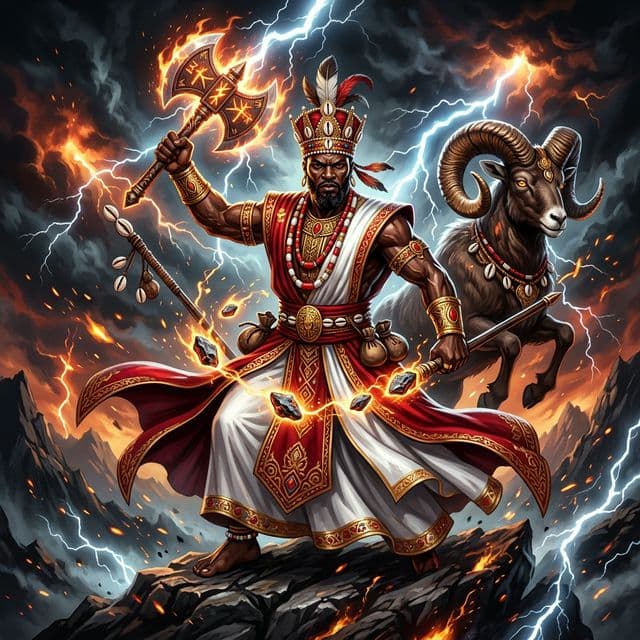
Though Shango had three wives, Oya was his equal in battle. Legend says she once stole the secret of making fire from Shango. When Shango goes to war, Oya rides beside him, her winds clearing the path for his thunder.
Guardian of the Cemetery
Oya is intimately connected with death and the ancestors. She guards the gates of the cemetery and escorts the dead to the afterlife.
The Buffalo Woman
One of Oya's origin myths tells that she was originally a buffalo who could transform into a beautiful woman. This myth connects her to wild, untameable feminine power.
Origin story
Oya emerged from Olodumare as the embodiment of wind and change. Originally associated with the Niger River, she rose to become the goddess of the air itself, riding the storms alongside Shango.
Across traditions
Parallel figures
Figures who play a role like Oya's in other traditions.
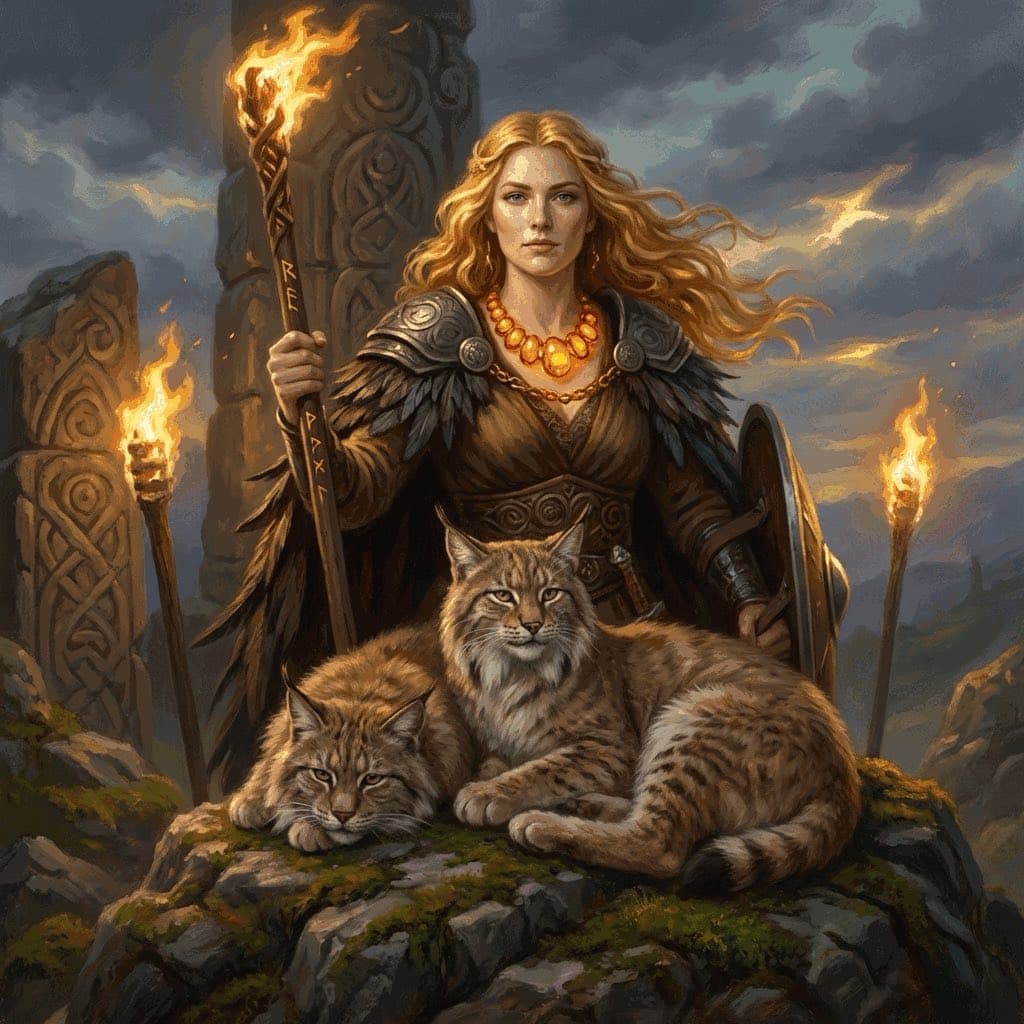 NorseFreyjaIllustration
Both are powerful warrior goddesses associated with death and transformation
Compare Oya and Freyja side by side
Worship and cult
Temples, festivals, and practices recorded for Oya
Storm, buffalo, and the dead. She owns the whirlwind and the graveyard door. Not a gentle river sister.
Sacred sites
- Niger / River Niger; cemetery gates
Festivals
- Oya festival days; wind and the market
Family
In the atlas
Where Oya appears
Play the myth
Branching retellings featuring Oya: your choices decide the ending.
Sources and further reading
Source notes
These references are recorded in the catalog. Their passage wording and translation have not been checked, so quotations are not displayed here.
- Oriki Oya
About this entry
By Elizabeth Stein for Mythos Atlas. About the author. Editorial notes are grounded in the site's cited sources and can be challenged through the contact page.
Parallels are editorial comparisons across traditions: a shared role does not, by itself, establish a shared origin.
Family relationships come from the atlas's kinship records. Ancient sources often disagree on divine genealogy.
Keep exploring
One myth a week, with its sources in a short email. The sign-up form is just below.
Genealogy
Family tree
Oya's parents, consorts, children and rivals, as recorded in the atlas.