Egyptian Pantheon
Sobek
Also known as Sebek, Suchos
- Nile
- crocodiles
- fertility
- military prowess
- pharaonic power
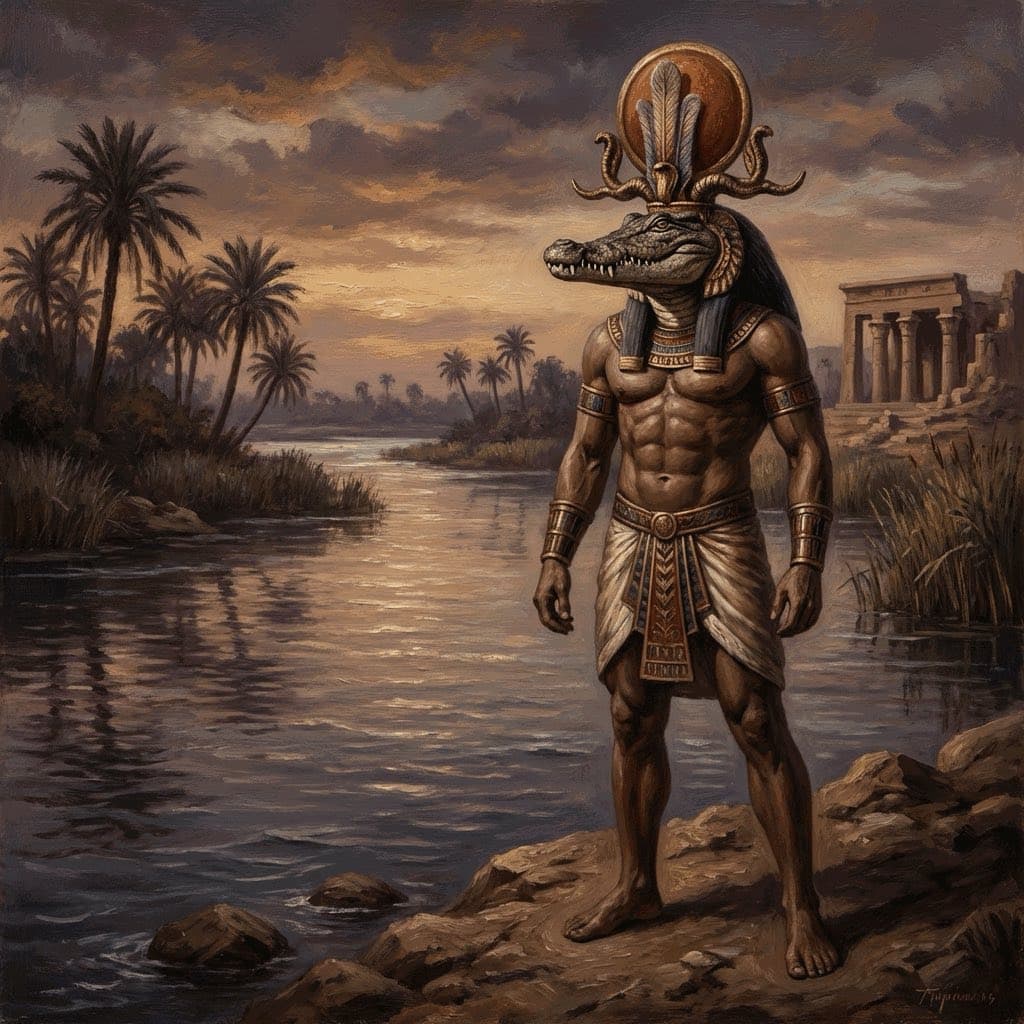
Crocodile god of the Nile and its fertility. Protector against the dangers of the Nile and symbol of pharaonic power and military prowess.
About Sobek
Lord of the Waters
Sobek is the crocodile-headed god of the Nile, fertility, and military prowess. He embodies the power and danger of the Nile crocodile while also representing the life-giving properties of the river's waters and annual floods.
Protector and Predator
Sobek held a paradoxical role in Egyptian religion. Crocodiles were both feared predators that claimed many lives and revered protectors. Sobek could ward off the very danger he represented. Fishermen and those who worked the Nile prayed to him for protection, and he was believed to have created the Nile from his sweat.
Royal Power and Military Might
Sobek became associated with pharaonic power and military strength due to the crocodile's ferocity and dominance. Several pharaohs of the Twelfth and Thirteenth Dynasties took names honoring Sobek, and he was invoked to grant victory in battle. His aggressive nature made him a patron of the army.
Cult Centers and Sacred Crocodiles
Sobek's main cult centers were at Crocodilopolis (Shedet) in the Fayyum and at Kom Ombo in Upper Egypt. At these temples, sacred crocodiles were kept in pools, adorned with gold and jewels, fed choice meats, and mummified after death. Harming a sacred crocodile was punishable by death.
Origin story
Sobek emerged from the primordial waters of Nun, the dark chaos that existed before creation. In some traditions, he is the son of the goddess Neith, the ancient creator deity of Sais. Other myths describe him as self-created from the primeval waters. As the Nile was the lifeblood of Egypt, Sobek's connection to the river made him essential to the land's fertility. The annual flooding of the Nile, which deposited rich silt for farming, was attributed to his power.
Worship and cult
Temples, festivals, and practices recorded for Sobek
Living crocodiles kept and mummified. Water, military strength, and the dangerous river. Kom Ombo's double house lets him sit beside Horus without a quarrel the reliefs bother to explain.
Sacred sites
- Kom Ombo, shared with Horus
- Shedet (Crocodilopolis) in the Faiyum
Festivals
- Faiyum crocodile processions
Sources and further reading
Source notes
These references are recorded in the catalog. Their passage wording and translation have not been checked, so quotations are not displayed here.
- Hymns to Sobek of Shedet
About this entry
By Elizabeth Stein for Mythos Atlas. About the author. Editorial notes are grounded in the site's cited sources and can be challenged through the contact page.
Parallels are editorial comparisons across traditions: a shared role does not, by itself, establish a shared origin.
Keep exploring
One myth a week, with its sources in a short email. The sign-up form is just below.
Genealogy
Family tree
Sobek's parents, consorts, children and rivals, as recorded in the atlas.