Aztec Pantheon
Tonatiuh
Also known as He Who Goes Forth Shining, Nahui Ollin
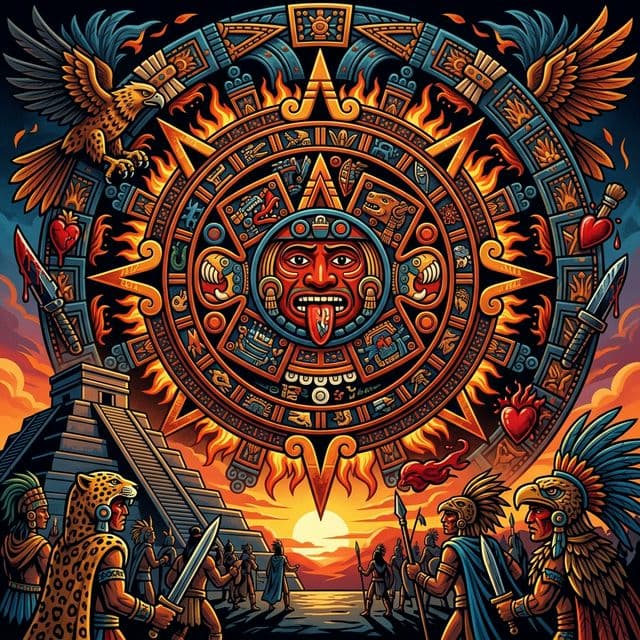
- sun
- warriors
- sacrifice
- the Fifth Sun
The sun god of the Fifth Sun (the current world age). Tonatiuh demanded human hearts and blood to fuel his daily journey across the sky, driving the Aztec system of ritual sacrifice.
About Tonatiuh
The Fifth Sun
Tonatiuh ("He Who Goes Forth Shining") was the sun of the current world age, the Fifth Sun. In Aztec cosmology, four previous suns had been destroyed, each ending in cataclysm. Tonatiuh was the current sun, and the Aztecs believed he required human blood and hearts to maintain his journey across the sky.
The Sun Stone
The famous Aztec Sun Stone (often miscalled the "calendar stone") bears Tonatiuh's face at its center. His tongue protrudes as a sacrificial knife, demanding blood. The stone depicts the four previous suns that were destroyed and the current age that will end in earthquakes.
Birth at Teotihuacan
In the creation myth, the gods gathered at Teotihuacan to create a new sun. The proud god Tecciztecatl hesitated to throw himself into the sacred fire, but the humble Nanahuatzin leaped in without hesitation and became the sun. Shamed, Tecciztecatl followed and became the moon. Both were equally bright until a god threw a rabbit at the moon, dimming it.
The Need for Sacrifice
The newborn sun refused to move across the sky. Only when the other gods sacrificed themselves by having their hearts torn out did Tonatiuh begin his journey. This mythic precedent established that the sun requires hearts to continue moving, justifying the Aztec practice of human sacrifice.
The Warrior Sun
Slain warriors were believed to accompany Tonatiuh across the sky for four years before being transformed into hummingbirds and butterflies. This honor was shared by women who died in childbirth, considered equivalent to dying in battle.
Origin story
After the destruction of the Fourth Sun, the gods gathered at Teotihuacan. Nanahuatzin threw himself into the sacrificial fire and rose as the Fifth Sun. The other gods sacrificed their hearts to make him move, establishing the cosmic debt that humans must repay through sacrifice.
Across traditions
Parallel figures
Figures who play a role like Tonatiuh's in other traditions.
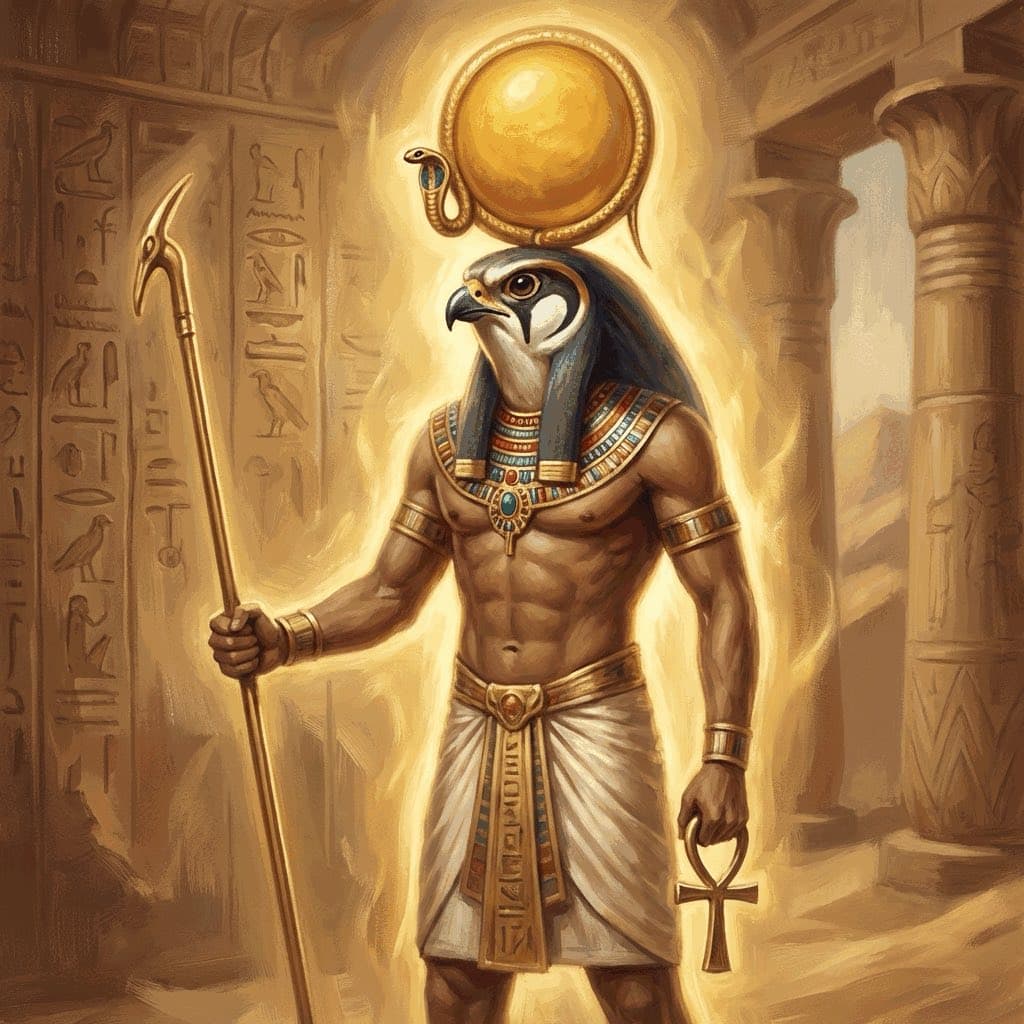 EgyptianRaIllustration
Both are sun gods who traverse the sky daily and require worship to sustain their journey
Compare Tonatiuh and Ra side by side GreekHeliosIllustration
Both are personifications of the sun who travel across the sky
Compare Tonatiuh and Helios side by side
Worship and cult
Temples, festivals, and practices recorded for Tonatiuh
The Fifth Sun who drinks war. Hearts and blood in the Mexica explanation of why the sun rises. There is no gentle pastoral Tonatiuh in the imperial sources. Name the cost if you name the god.
Sacred sites
- The sun's face on the so-called Aztec calendar stone is a cult image, not a building
- Offerings toward the sun at the Templo Mayor
Festivals
- Solar offerings in the veintena calendar
Sources and further reading
Source notes
These references are recorded in the catalog. Their passage wording and translation have not been checked, so quotations are not displayed here.
- Leyenda de los Soles
About this entry
By Elizabeth Stein for Mythos Atlas. About the author. Editorial notes are grounded in the site's cited sources and can be challenged through the contact page.
Parallels are editorial comparisons across traditions: a shared role does not, by itself, establish a shared origin.
Keep exploring
One myth a week, with its sources in a short email. The sign-up form is just below.
Genealogy
Family tree
Tonatiuh's parents, consorts, children and rivals, as recorded in the atlas.