Mesoamerican Pantheon
Yum Kaax
Also known as Lord of the Forest, Yum K'aax
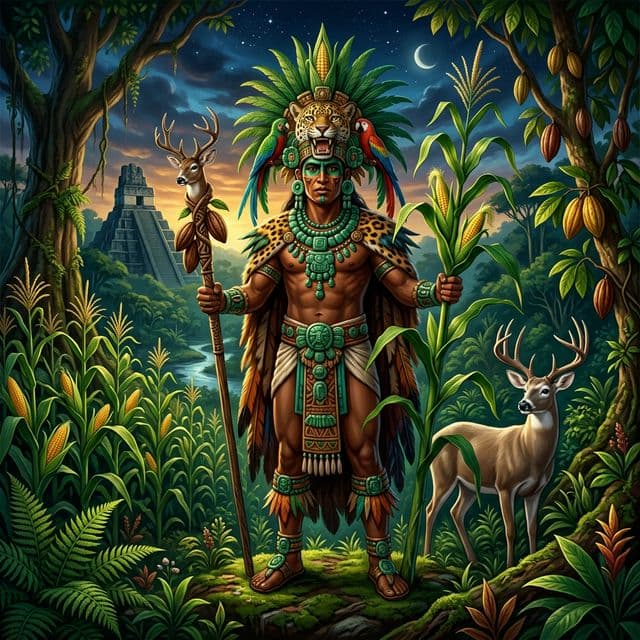
- maize
- agriculture
- forests
- wild game
- abundance
The youthful Maya god of maize, agriculture, and wild nature. Yum Kaax represents the life-sustaining bounty of cultivated fields and untamed forests.
About Yum Kaax
Lord of the Forest
Yum Kaax rules over both cultivated maize and wild forest bounty. He is depicted as a young, handsome god with maize foliation growing from his head.
Maize and Civilization
Maize was the foundation of Mesoamerican civilization. Yum Kaax's blessing ensured successful harvests, while his anger brought famine. The Maya believed humans were created from maize dough.
Guardian of Game
As lord of the forest, Yum Kaax also protected wild animals. Hunters sought his permission before the hunt, offering the first catch in gratitude.
Origin story
When the Hero Twins defeated the lords of Xibalba, their father Hun Hunahpu was resurrected as the Maize God, becoming Yum Kaax who provides sustenance to humanity.
Worship and cult
Temples, festivals, and practices recorded for Yum Kaax
Lord of the wild harvest and the young maize in some Yucatec telling. Hunters and milperos, not a city precinct.
Sacred sites
- Milpa and forest edge
Sources and further reading
Source notes
These references are recorded in the catalog. Their passage wording and translation have not been checked, so quotations are not displayed here.
- Lewis Spence, The Myths of Mexico and Peru (1913)
About this entry
By Elizabeth Stein for Mythos Atlas. About the author. Editorial notes are grounded in the site's cited sources and can be challenged through the contact page.
Parallels are editorial comparisons across traditions: a shared role does not, by itself, establish a shared origin.
Keep exploring
One myth a week, with its sources in a short email. The sign-up form is just below.