Celtic Pantheon
The Dagda
Also known as Eochaid Ollathair, Ruad Rohez
- fertility
- agriculture
- manliness
- strength
- magic
- druidry
- wisdom
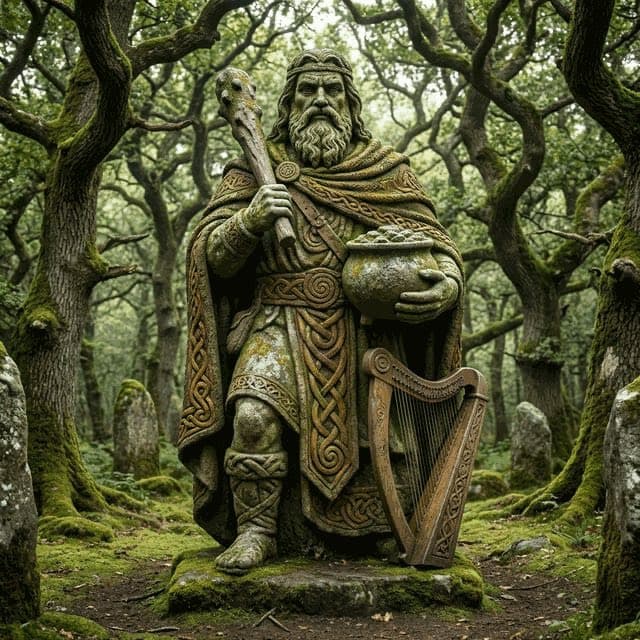
The father figure and king of the Tuatha Dé Danann. A giant, bearded powerhouse with a magic club that can kill with one end and heal with the other, and a cauldron that never runs empty.
About The Dagda
The Good God
The Dagda, whose name means "the Good God" (not morally good, but good at everything), is the father figure and High King of the Tuatha Dé Danann, the divine race of Irish mythology. He embodies abundance, fertility, and the life-giving power of the earth. Despite his immense power, he is often depicted with a comically short tunic and enormous appetite, lending him a more approachable, earthy quality than many other chief deities.
Sacred Treasures
The Dagda possesses three legendary items. His club (the lorg mór) is so heavy it must be dragged on wheels; one end kills the living, while the other end resurrects the dead. His cauldron (the coire ansic) is one of the Four Treasures of the Tuatha Dé Danann—it never empties and no one ever leaves it unsatisfied. His magical harp, Uaithne, can control the seasons and the emotions of all who hear it, playing the three noble strains: joy, sorrow, and sleep.
Role in the Mythological Cycle
In the Second Battle of Mag Tuired, the Dagda played a crucial role in the victory over the Fomorians. Before the battle, he used his harp to steal away the seasons from the enemy. He also mated with the Morrígan at the river Unius on Samhain, securing her magical aid for the coming conflict. After the defeat of the Tuatha Dé Danann by the Milesians, the Dagda divided the síd (fairy mounds) among the gods, though he himself eventually gave up his mound at Brú na Bóinne to his son Aengus.
Origin story
The Dagda is one of the principal leaders of the **Tuatha Dé Danann**, the divine tribe who arrived in Ireland shrouded in magical mist or in cloud-ships from the northern islands of the world. His parents are sometimes given as Elatha of the Fomorians and Eithne, making him half-Fomorian himself, though other traditions name Danu as the mother of all the Tuatha Dé Danann. He is the father of many important deities, including Brigid, Aengus, Midir, and Bodb Derg. His primary consort is the Morrígan, the great goddess of war and sovereignty.
Across traditions
Parallel figures
Figures who play a role like The Dagda's in other traditions.
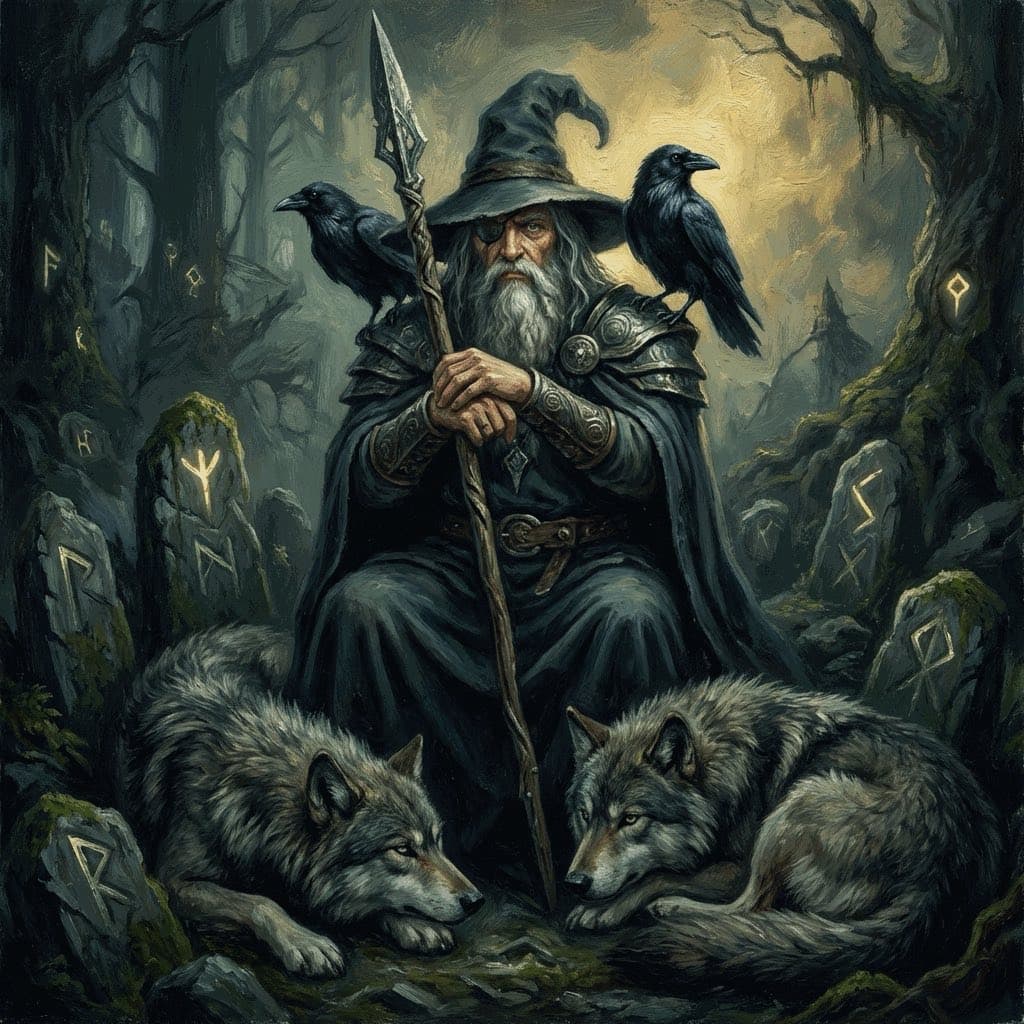 NorseOdinIllustration
The Dagda's epithet 'Ollathair' (All-Father) parallels Odin's 'Allfather'; both wield a great magical implement and are linked to wisdom and magic
Compare The Dagda and Odin side by side
Worship and cult
Temples, festivals, and practices recorded for The Dagda
Club, cauldron, and harp. Evidence is medieval Irish literature, not excavation of a Dagda temple. Treat Newgrange slogans with caution. The cult, if reconstructed, is hospitality, weather, and the chieftain's hall.
Sacred sites
- No standing temple; Brú na Bóinne is later associated, not a proven Dagda fane
Festivals
- Samhain in later seasonal reading
Family
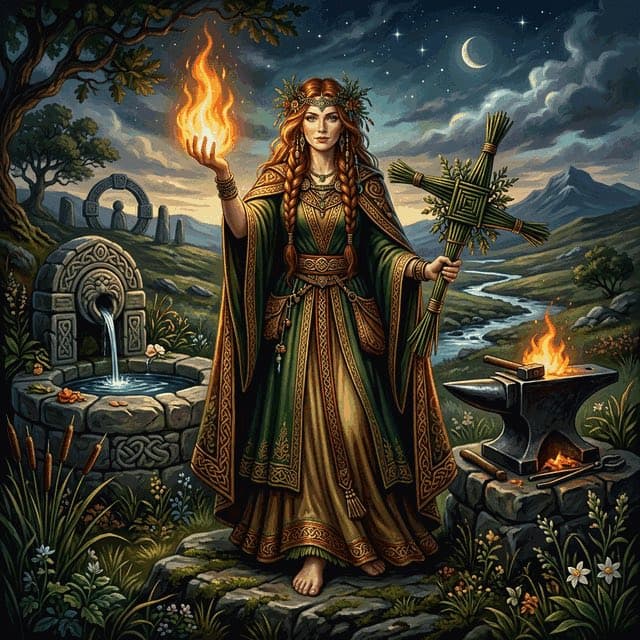
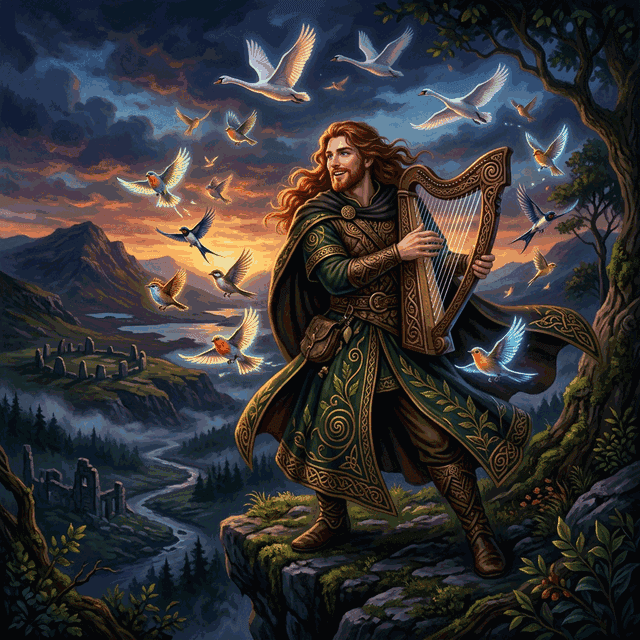
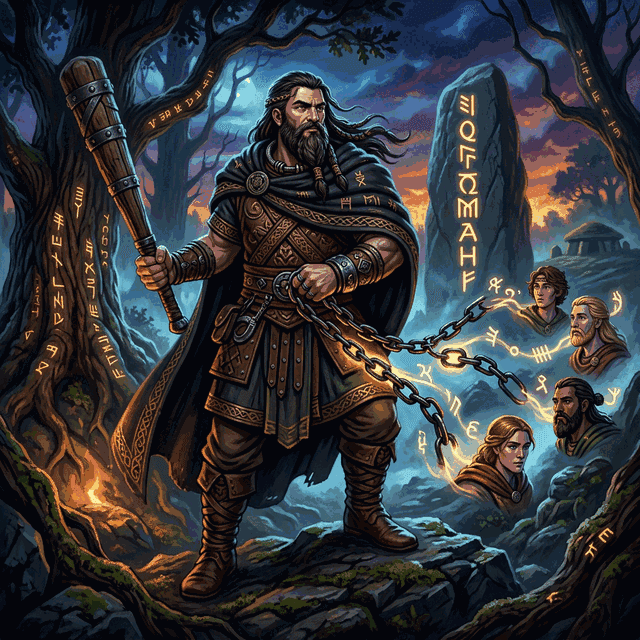
Questions about The Dagda's family
- Who are The Dagda's parents?
- The atlas's kinship records name one parent of The Dagda: Danu. Ancient accounts do not always agree on divine parentage.
- Who were The Dagda's spouses and consorts?
- Spouses and consorts of The Dagda recorded in the atlas: The Morrígan.
- Who are The Dagda's siblings?
- Siblings of The Dagda recorded in the atlas: Ogma.
In the atlas
Where The Dagda appears
Stories
Sources and further reading
Source notes
These references are recorded in the catalog. Their passage wording and translation have not been checked, so quotations are not displayed here.
- Cath Maige Tuired (trans. Gray)
About this entry
By Elizabeth Stein for Mythos Atlas. About the author. Editorial notes are grounded in the site's cited sources and can be challenged through the contact page.
Parallels are editorial comparisons across traditions: a shared role does not, by itself, establish a shared origin.
Family relationships come from the atlas's kinship records. Ancient sources often disagree on divine genealogy.
Keep exploring
One myth a week, with its sources in a short email. The sign-up form is just below.
Genealogy
Family tree
The Dagda's parents, consorts, children and rivals, as recorded in the atlas.