Celtic Pantheon
Lugh
Also known as Lugh Lámhfhada, Samildánach
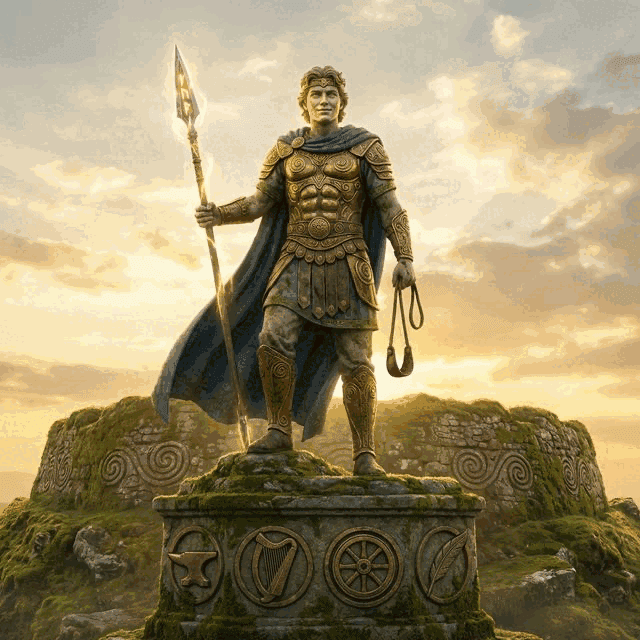
- skill
- craft
- arts
- oaths
- kingship
The master of all skills and arts. A youthful warrior king who led the Tuatha Dé Danann to victory against the Fomorians.
About Lugh
The Many-Skilled One
Lugh, known as Lugh Lámhfhada ("Long-Armed Lugh") and Samildánach ("Equally Skilled in All Arts"), is the radiant warrior-king of Irish mythology. He represents mastery, excellence, and the ideal of kingship. Unlike many deities who specialize in one domain, Lugh has perfected every skill—from warfare to poetry, from smithcraft to sorcery.
The Festival of Lughnasadh
Lugh established the festival of Lughnasadh (August 1st) in honor of his foster-mother Tailtiu, who died clearing the forests of Ireland for agriculture. This harvest festival, one of the four great Celtic festivals, includes games, athletic contests, and trading fairs—activities reflecting Lugh's own mastery of all skills.
The Spear of Victory
Lugh wields the Spear of Lugh (Gáe Assail), one of the Four Treasures of the Tuatha Dé Danann. This magical spear is so bloodthirsty it must be kept in a cauldron of water to prevent it from bursting into flame. When thrown, it never misses its target and returns to its wielder's hand.
Champion of the Tuatha Dé Danann
In the Second Battle of Mag Tuired, Lugh led the Tuatha Dé Danann to victory against the Fomorians. He fulfilled the prophecy by slaying his own grandfather, the tyrant Balor of the Evil Eye, with a sling-stone through his deadly eye. This act liberated the Tuatha Dé Danann from Fomorian oppression.
Origin story
Lugh is the son of Cian of the Tuatha Dé Danann and Ethniu, daughter of **Balor of the Evil Eye**, king of the Fomorians. A prophecy foretold that Balor would be killed by his own grandson, so he imprisoned Ethniu in a tower. Despite these precautions, Cian reached her with the help of the druidess Biróg, and Lugh was conceived. When Balor discovered the child, he ordered him drowned, but Lugh was rescued and raised by different foster-parents, including Tailtiu and Manannán mac Lir. He came to Tara as a young man and gained entry by demonstrating that he alone possessed every skill the court required.
Across traditions
Parallel figures
Figures who play a role like Lugh's in other traditions.
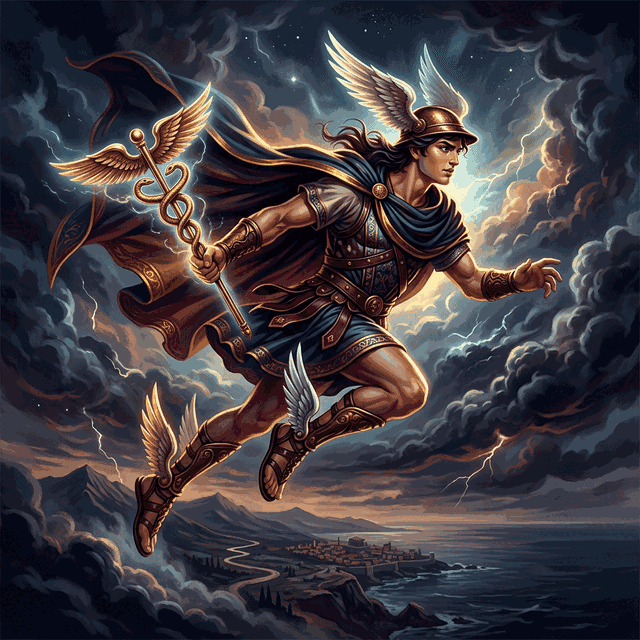 RomanMercuryIllustration
Caesar identified the Gaulish god later associated with Lugh/Lugus with Mercury, both master craftsmen-gods of skill, trade, and eloquence
Compare Lugh and Mercury side by side
Worship and cult
Temples, festivals, and practices recorded for Lugh
Many skills, the spear, and the harvest fair. Lughnasadh is the one calendar fact that stuck. Games for a foster-mother, first fruits, and a god who is not only a sun sticker on a modern altar.
Sacred sites
- No surviving temple; Lughnasadh assembly sites in later tradition (Tailtiu)
Festivals
- Lughnasadh (1 August)
In the atlas
Where Lugh appears
Artifacts
Sources and further reading
Source notes
These references are recorded in the catalog. Their passage wording and translation have not been checked, so quotations are not displayed here.
- Cath Maige Tuired (trans. Gray)
About this entry
By Elizabeth Stein for Mythos Atlas. About the author. Editorial notes are grounded in the site's cited sources and can be challenged through the contact page.
Parallels are editorial comparisons across traditions: a shared role does not, by itself, establish a shared origin.
Keep exploring
One myth a week, with its sources in a short email. The sign-up form is just below.
Genealogy
Family tree
Lugh's parents, consorts, children and rivals, as recorded in the atlas.