Chinese Pantheon
Nezha
Also known as Na Zha, Third Lotus Prince, Marshal of the Central Altar
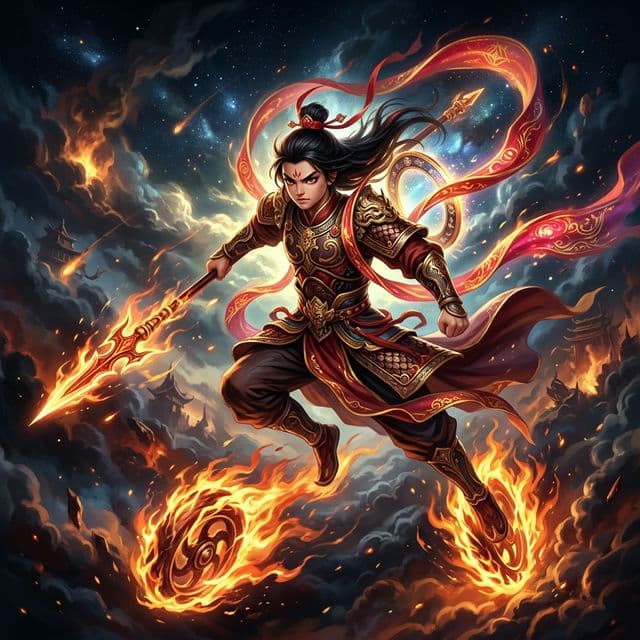
- war
- protection
- youth
- filial defiance
A fierce child warrior deity born after three years and six months of pregnancy. He killed a dragon prince, defied his father, and was reborn from lotus flowers to become one of Heaven's greatest warriors.
About Nezha
The Rebellious Lotus Prince
Nezha is one of Chinese mythology's most compelling figures: a child warrior whose story encompasses birth, filial rebellion, suicide, resurrection, and ultimate redemption. He represents both the terrifying power of youthful defiance and its eventual reconciliation with cosmic order.
The Extraordinary Birth
Li Jing, a military commander, and his wife Lady Yin conceived a child who remained in the womb for three years and six months. When he was finally born, he emerged as a ball of flesh. Thinking it a demon, Li Jing struck it with his sword, and out sprang a fully-formed boy wearing golden bracelets and a red silk sash - gifts from the immortal Taiyi Zhenren, who became his master.
The Dragon Prince
At age seven, Nezha went to bathe in the Eastern Sea and accidentally disrupted the Dragon King's palace. When the Dragon King's third son Ao Bing attacked him, Nezha killed the dragon prince and stripped his tendons to make a belt for his father. The enraged Dragon King demanded justice from the Jade Emperor.
Sacrifice and Rebirth
Facing the threat of his entire family's execution, Nezha committed suicide to spare them. His master Taiyi Zhenren collected his spirit and reconstructed his body from lotus flowers, giving him a new form neither fully human nor spirit. This lotus body made him immortal and even more powerful.
The Conflict with His Father
Reborn, Nezha confronted his father who had destroyed his temple. Their battle was interrupted by the Buddha and the immortal Randeng, who reconciled them. Nezha went on to serve as a commander in the war against the demons during the Investiture of the Gods.
Cultural Significance
Nezha embodies the tension between filial piety (the greatest Confucian virtue) and individual righteousness. His story asks: what happens when a child must defy a father to do what is right? This question resonates deeply in Chinese culture.
Origin story
Lady Yin was pregnant for three years and six months before giving birth to a ball of flesh. When her husband Li Jing struck it with his sword, a boy emerged wearing golden bracelets and a red sash - divine gifts marking him as no ordinary child.
Across traditions
Parallel figures
Figures who play a role like Nezha's in other traditions.
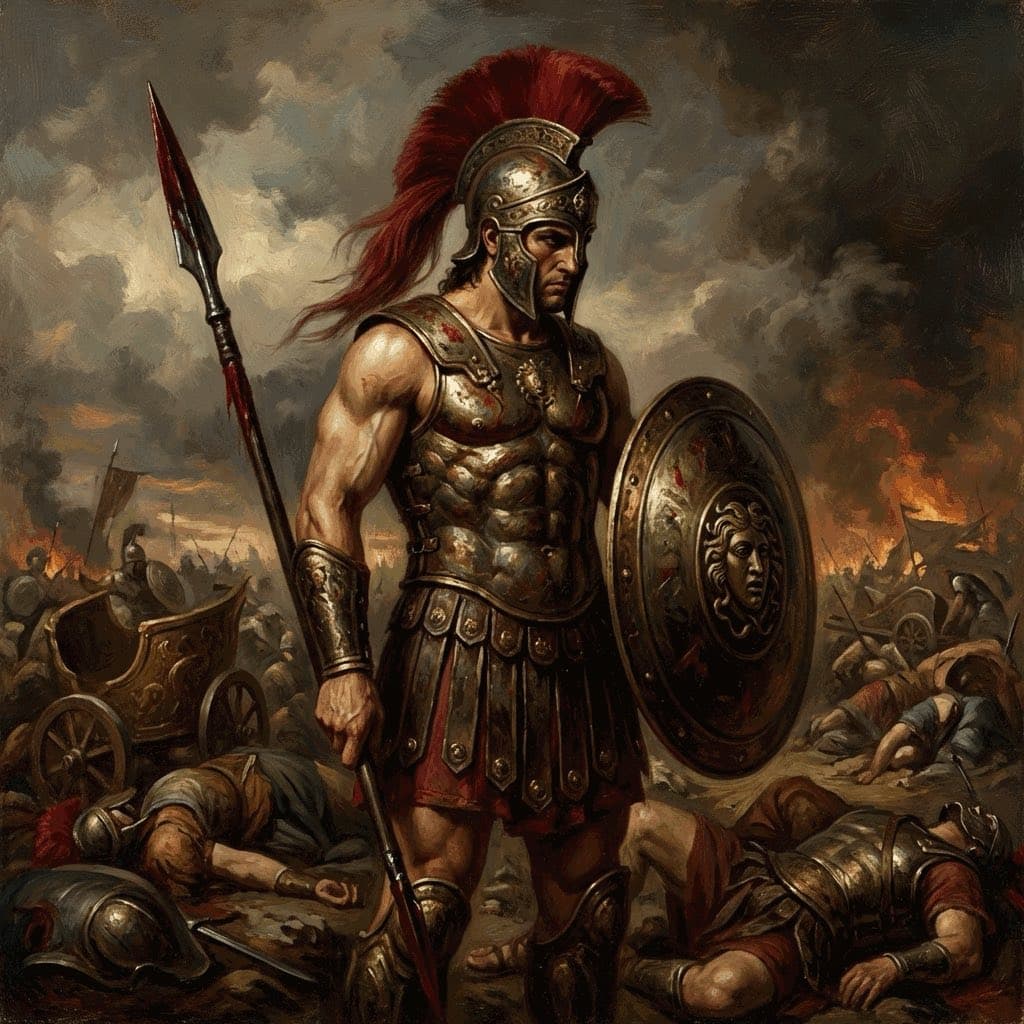 GreekAresIllustration
Both are war deities known for fierce tempers, though Nezha is more sympathetic as a child warrior
Compare Nezha and Ares side by side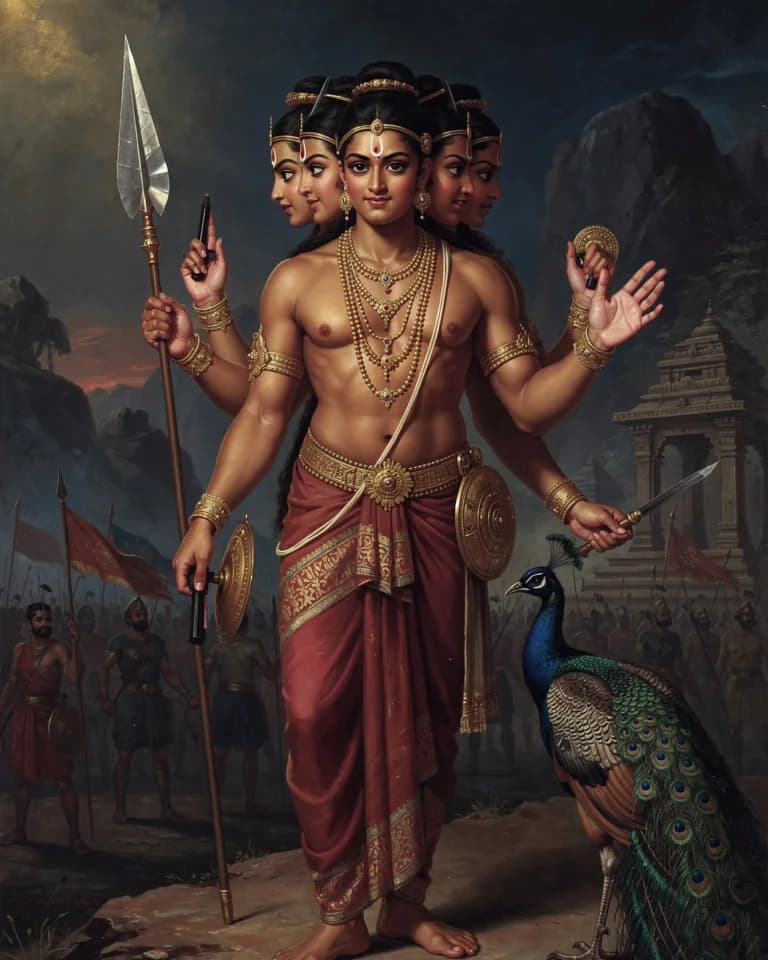 HinduKartikeyaIllustration
Both are young warrior gods who command divine armies
Compare Nezha and Kartikeya side by side
Worship and cult
Temples, festivals, and practices recorded for Nezha
The lotus child with the fire-tipped spear. Street processions, child protection, and a temper. Popular novel first, then the temple.
Sacred sites
- Nezha temples in Tianjin and Taiwan
- Temple-procession cults along the coast
Festivals
- Nezha's birthday in the lunar calendar
In the atlas
Where Nezha appears
Stories
Sources and further reading
Source notes
These references are recorded in the catalog. Their passage wording and translation have not been checked, so quotations are not displayed here.
- Fengshen Yanyi (Investiture of the Gods)
About this entry
By Elizabeth Stein for Mythos Atlas. About the author. Editorial notes are grounded in the site's cited sources and can be challenged through the contact page.
Parallels are editorial comparisons across traditions: a shared role does not, by itself, establish a shared origin.
Keep exploring
One myth a week, with its sources in a short email. The sign-up form is just below.
Genealogy
Family tree
Nezha's parents, consorts, children and rivals, as recorded in the atlas.