Yoruba Tradition
Oshun
Also known as Oxum, Ochun, Osun

- love
- beauty
- rivers
- fertility
- prosperity
The Orisha of love, beauty, fresh water, and fertility. Oshun embodies feminine grace, sensuality, and the life-giving power of rivers.
About Oshun
The Sweet Water Goddess
Oshun is perhaps the most beloved of all Orishas, embodying beauty, love, fertility, and the life-giving power of fresh water. Her river, the Osun, flows through southwestern Nigeria and remains a site of pilgrimage.
The Savior of the World
In one of her most important myths, the world was dying and the Orishas could not fix it. They had ignored Oshun, considering her merely beautiful and frivolous. Oshun transformed herself into a peacock and flew to heaven to plead with Olodumare. Her feathers burned off during the journey, but she succeeded where all others had failed.
Lady of the Honey
Oshun is associated with honey, which represents both sweetness and seduction. Her worship involves honey offerings. However, Oshun when angered can be as dangerous as any warrior Orisha.
Modern Worship
The annual Osun-Osogbo Festival at her sacred grove in Nigeria draws hundreds of thousands of worshippers and was designated a UNESCO World Heritage Site.
Origin story
Oshun emerged from Olodumare as the embodiment of sweet water, love, and feminine power. She was given dominion over all fresh waters, particularly the river that bears her name in Nigeria.
Across traditions
Parallel figures
Figures who play a role like Oshun's in other traditions.
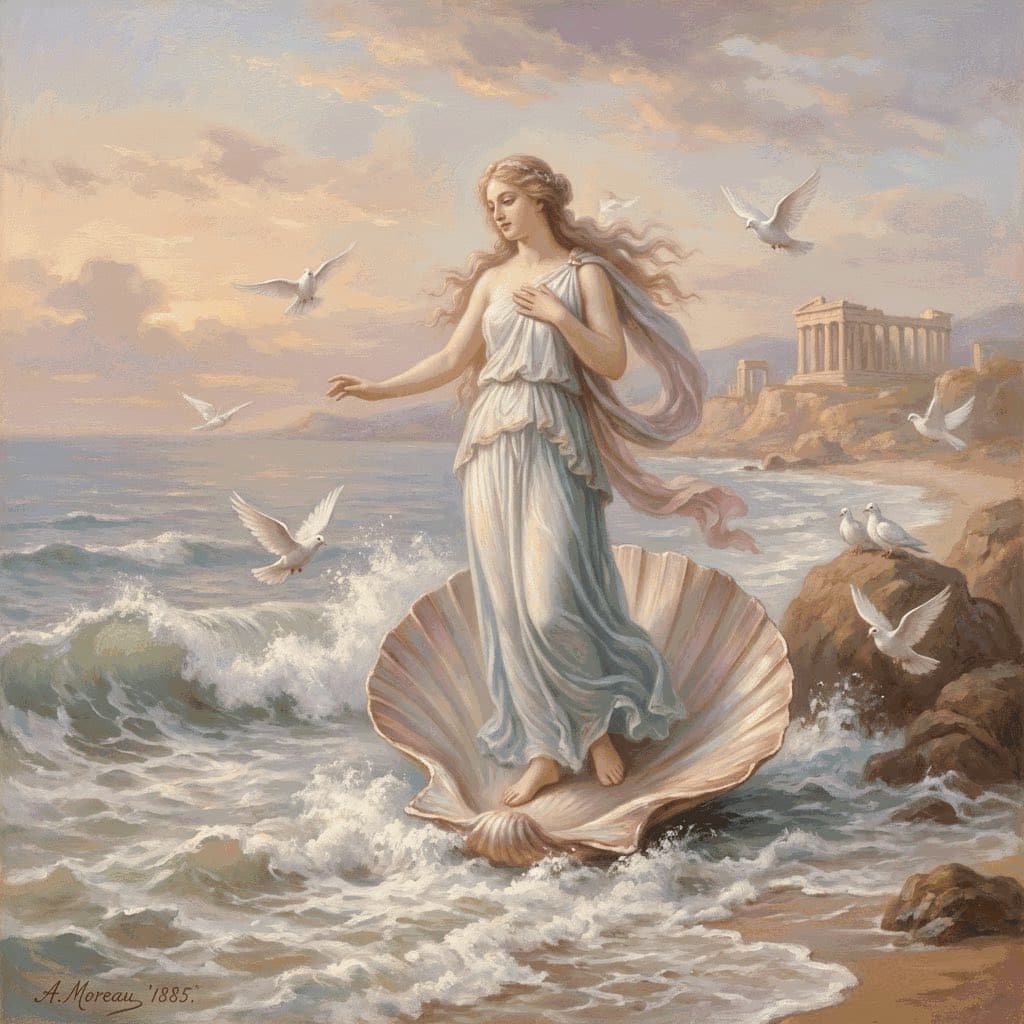 GreekAphroditeIllustration
Both are goddesses of love and beauty with transformative power
Compare Oshun and Aphrodite side by side
Worship and cult
Temples, festivals, and practices recorded for Oshun
Honey, brass, and the river. UNESCO listed the grove because the cult is still there. Beauty as power, not as decoration.
Sacred sites
- Osun-Osogbo Sacred Grove
Festivals
- Osun-Osogbo festival
Family

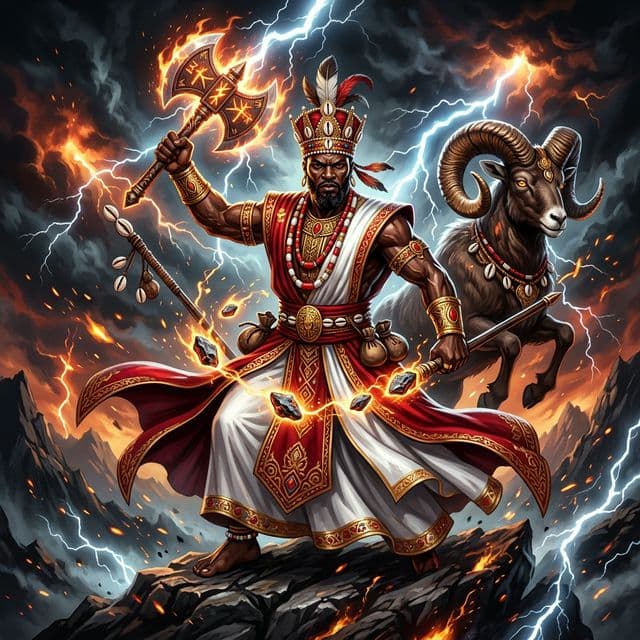
In the atlas
Where Oshun appears
Sources and further reading
Source notes
These references are recorded in the catalog. Their passage wording and translation have not been checked, so quotations are not displayed here.
- Oriki Oshun
About this entry
By Elizabeth Stein for Mythos Atlas. About the author. Editorial notes are grounded in the site's cited sources and can be challenged through the contact page.
Parallels are editorial comparisons across traditions: a shared role does not, by itself, establish a shared origin.
Family relationships come from the atlas's kinship records. Ancient sources often disagree on divine genealogy.
Keep exploring
One myth a week, with its sources in a short email. The sign-up form is just below.
Genealogy
Family tree
Oshun's parents, consorts, children and rivals, as recorded in the atlas.