Japanese Pantheon
Ryujin
龍神(Ryujin)
Also known as Watatsumi, Owatatsumi-no-kami, Dragon King of the Sea
- sea
- ocean
- dragons
- storms
- rain
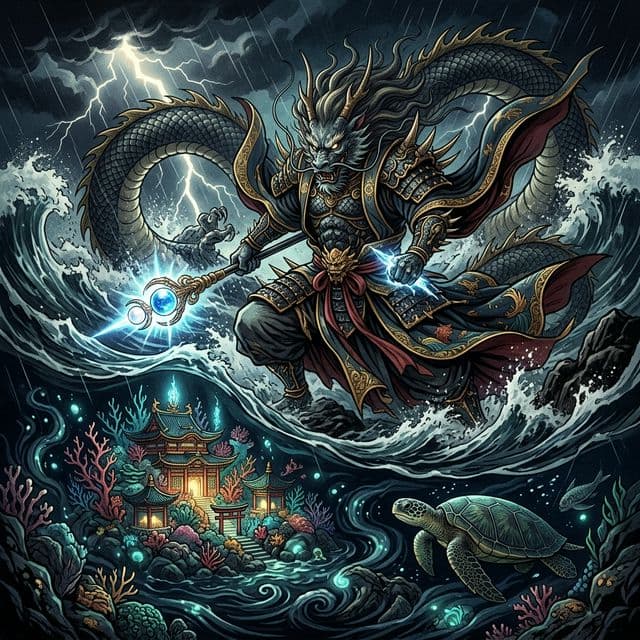
Dragon god of the sea who dwells in an underwater palace made of red and white coral. Ruler of all sea creatures and controller of the tides through his magical tide jewels.
About Ryujin
The Dragon King of the Sea
Ryujin (also called Watatsumi) is the dragon deity who rules the ocean from his magnificent coral palace Ryugu-jo beneath the waves. He commands all sea creatures—fish, turtles, jellyfish, and other marine life serve as his messengers and attendants. His kingdom exists in a realm where time moves differently; what seems like days underwater may be centuries on the surface.
The Tide Jewels
Ryujin possesses two powerful magical objects: the Kanju (tide-ebbing jewel) and Manju (tide-flowing jewel). These jewels control the ocean's tides and have featured prominently in Japanese legend. According to the Nihon Shoki, Empress Jingu used these jewels to defeat a Korean fleet by first drawing out the tide to strand enemy ships, then releasing a devastating tidal wave.
The Imperial Lineage
Ryujin's daughter Toyotama-hime (Jewel Princess) fell in love with the hunter Hoori (also called Yamasachi-hiko) when he visited the undersea palace searching for his brother's lost fishhook. They married, and Toyotama-hime traveled to land to give birth. However, Hoori broke his promise not to watch the birth and saw her transform into a dragon. Ashamed, she returned to the sea, leaving their son Ugayafukiaezu, who became the father of the legendary first emperor Jimmu.
Worship and Influence
Ryujin is venerated by fishermen, sailors, and coastal communities who depend on the sea's bounty and fear its wrath. Shrines to him dot the Japanese coastline, particularly at sites where underwater caves or unusual rock formations suggest gateways to his realm. The dragon imagery associated with Ryujin influenced Japanese art for centuries, appearing on temple decorations, festival floats, and royal regalia. His association with rain also made him important to agricultural communities praying for water during dry seasons.
Origin story
Ryujin emerged as a kami of the ocean depths in early Shinto belief. According to the **Kojiki**, he is the father of **Toyotama-hime**, who married the hunter Hoori and became grandmother to Japan's first emperor Jimmu. His coral palace **Ryugu-jo** lies beneath the waves, where time flows differently than on land.
Across traditions
Parallel figures
Figures who play a role like Ryujin's in other traditions.
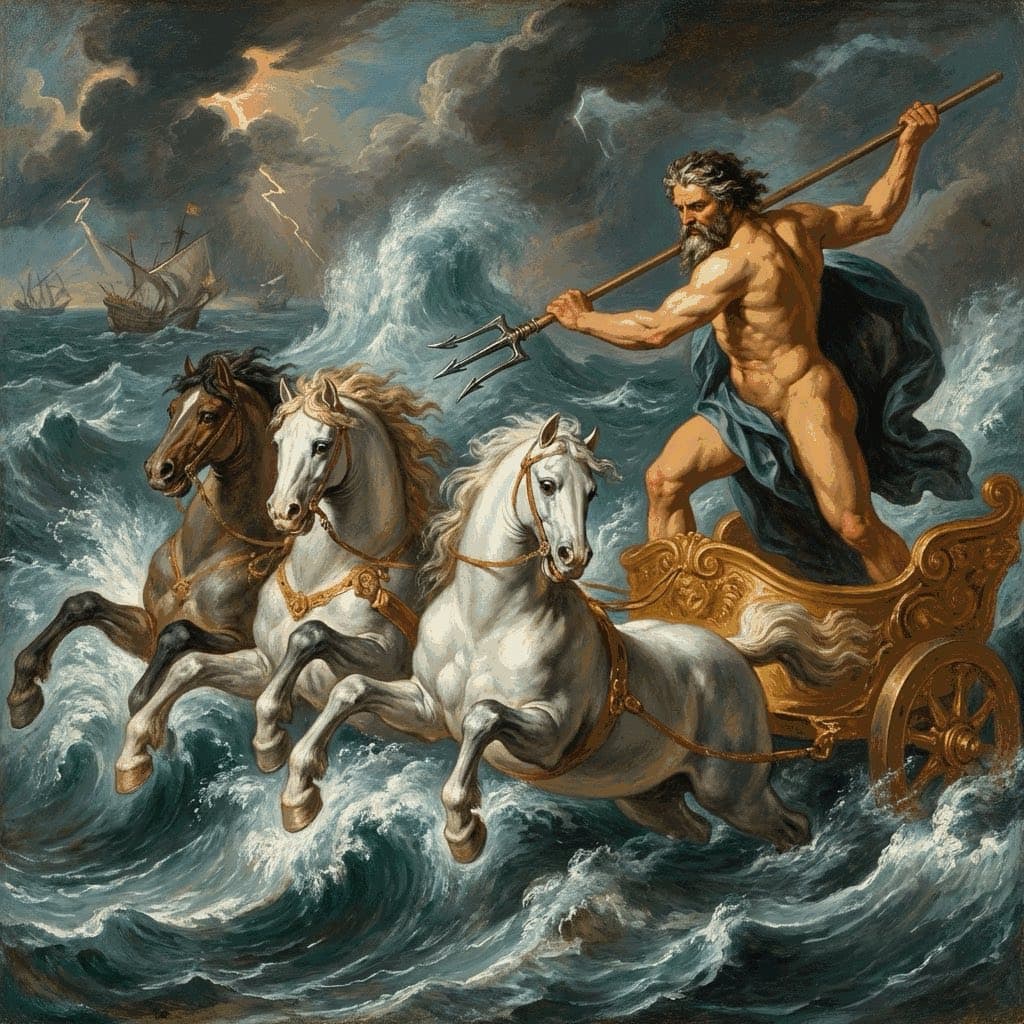 GreekPoseidonIllustration
Both are rulers of the sea with underwater palaces and control over storms and marine life
Compare Ryujin and Poseidon side by side ChineseLongwang (the Dragon Kings)Illustration
The Chinese Dragon Kings directly influenced Japanese Ryujin mythology through cultural exchange
Compare Ryujin and Longwang (the Dragon Kings) side by side
Worship and cult
Temples, festivals, and practices recorded for Ryujin
Tide jewels and the undersea palace. Fishermen more than courtiers. The cult is the weather of the catch.
Sacred sites
- Sea shrines; Ryugu in story
- Coastal jinja that house a dragon king
Sources and further reading
Source notes
These references are recorded in the catalog. Their passage wording and translation have not been checked, so quotations are not displayed here.
- Kojiki, Upper Volume (Watatsumi; later associated with Ryūjin)
About this entry
By Elizabeth Stein for Mythos Atlas. About the author. Editorial notes are grounded in the site's cited sources and can be challenged through the contact page.
Parallels are editorial comparisons across traditions: a shared role does not, by itself, establish a shared origin.
Keep exploring
One myth a week, with its sources in a short email. The sign-up form is just below.
Genealogy
Family tree
Ryujin's parents, consorts, children and rivals, as recorded in the atlas.