Mesopotamian Pantheon
Shamash
Also known as Utu, Babbar
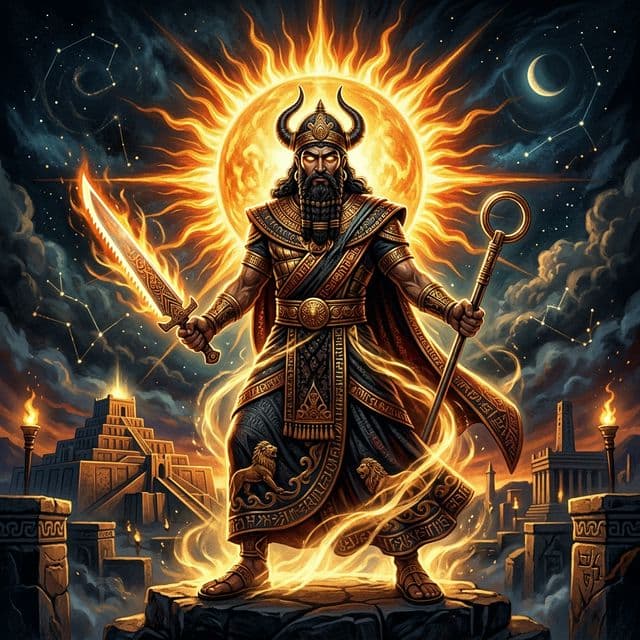
- sun
- justice
- truth
- divination
The sun god and divine judge. Shamash sees all that occurs under the sun and is the god of justice, truth, and moral order.
About Shamash
The All-Seeing Sun
Shamash traverses the sky each day, seeing everything that occurs beneath his rays. This all-seeing nature makes him the natural god of justice and truth. Nothing can be hidden from his sight, no lie escapes his notice, no injustice occurs beyond his witness. He is the great equalizer who treats beggar and king alike.
God of Justice
Shamash is the patron of judges and lawgivers. The famous Code of Hammurabi depicts the king receiving the law from Shamash, symbolizing that just law derives from divine authority. Those who sought justice in legal disputes invoked Shamash, and oaths sworn in his name were considered especially binding.
The Divine Judge
Every dawn, Shamash passes judgment on souls. The gates of the underworld open to release him into the eastern mountains, and he passes through them again at sunset in the west. His journey across the sky is a daily act of cosmic justice, his light driving back chaos and affirming the moral order.
Lord of Divination
Because Shamash sees all, he is the god most commonly consulted through divination. Babylonian priests examined the entrails of sacrificed animals (extispicy) or observed oil patterns on water (lecanomancy) to discern his messages. Omens from the sun were particularly significant in determining the king's actions.
Champion of the Oppressed
Unlike gods who favored the powerful, Shamash was specifically invoked as the protector of travelers, the poor, the orphan, and the widow. His justice extended especially to those who had no other advocate, making him a god of social ethics as much as cosmic order.
Origin story
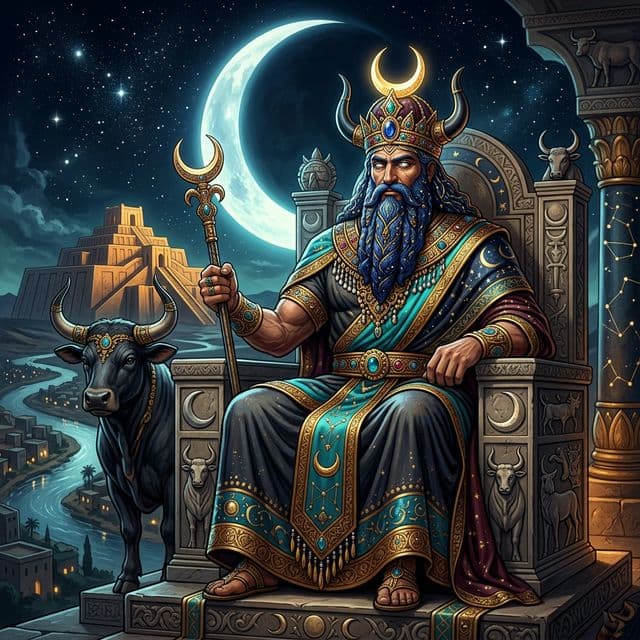
Shamash is the son of the moon god Nanna/Sin, emerging from the underworld each dawn through the eastern mountains. Each night he descends through the western gates to travel through the underworld, bringing light even to the realm of the dead, before rising again at dawn.
Across traditions
Parallel figures
Figures who play a role like Shamash's in other traditions.
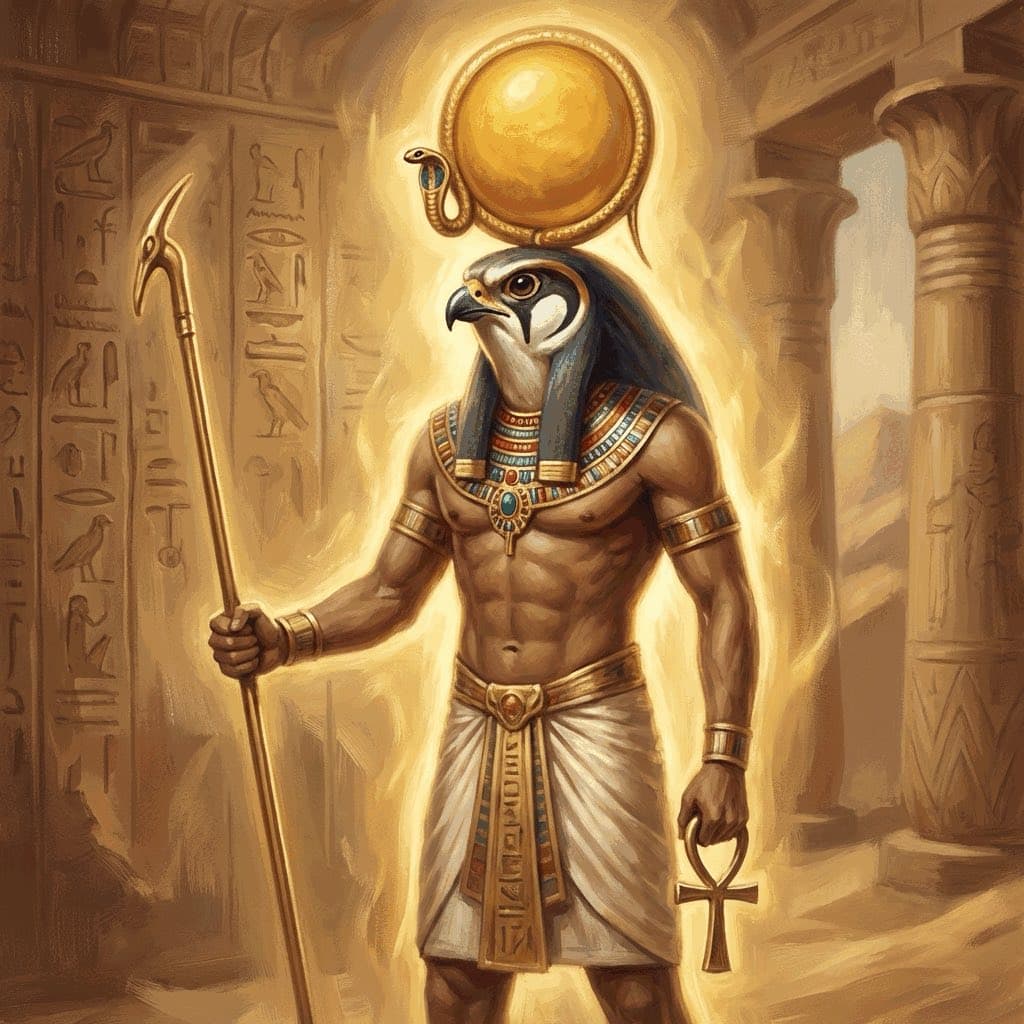 EgyptianRaIllustration
Both are sun gods who journey through the underworld at night
Compare Shamash and Ra side by side GreekApolloIllustration
Both are sun gods associated with truth and prophecy
Compare Shamash and Apollo side by side
Worship and cult
Temples, festivals, and practices recorded for Shamash
The sun who sees the lawsuit. Hammurabi's stele puts him over the king. Cult is courtroom light as much as astronomy.
Sacred sites
- Ebabbar at Sippar
- Ebabbar at Larsa
Festivals
- Justice oaths at sunrise
Family
In the atlas
Where Shamash appears
Sources and further reading
Source notes
These references are recorded in the catalog. Their passage wording and translation have not been checked, so quotations are not displayed here.
- Great Hymn to Shamash
About this entry
By Elizabeth Stein for Mythos Atlas. About the author. Editorial notes are grounded in the site's cited sources and can be challenged through the contact page.
Parallels are editorial comparisons across traditions: a shared role does not, by itself, establish a shared origin.
Family relationships come from the atlas's kinship records. Ancient sources often disagree on divine genealogy.
Keep exploring
One myth a week, with its sources in a short email. The sign-up form is just below.
Genealogy
Family tree
Shamash's parents, consorts, children and rivals, as recorded in the atlas.