Greek Pantheon
Apollo
Also known as Phoebus, Phoebus Apollo

- sun
- music
- poetry
- prophecy
- healing
- archery
God of sun, music, poetry, prophecy, and healing. Twin brother of Artemis, patron of the Muses and leader of the nine sisters.
About Apollo
The Golden God
Apollo is the ideal of the kouros (beardless youth), representing light, harmony, and reason. He is the master of the lyre and the leader of the Muses.
The Oracle of Delphi
Apollo slew the serpent Python to seize the oracle at Delphi, which became the most important religious site in Greece. His prophecies were delivered through the Pythia.
Healer and Plague-Bringer
He has a dual nature: he can bring deadly plague with his silver arrows (as seen in the Iliad) but also heal the sick. He is the father of Asclepius, the god of medicine.
Across traditions
Parallel figures
Figures who play a role like Apollo's in other traditions.
 RomanApolloIllustration
Apollo is one of the few deities whose name remained unchanged in Roman religion, retaining all his Greek attributes
Compare Apollo and Apollo side by side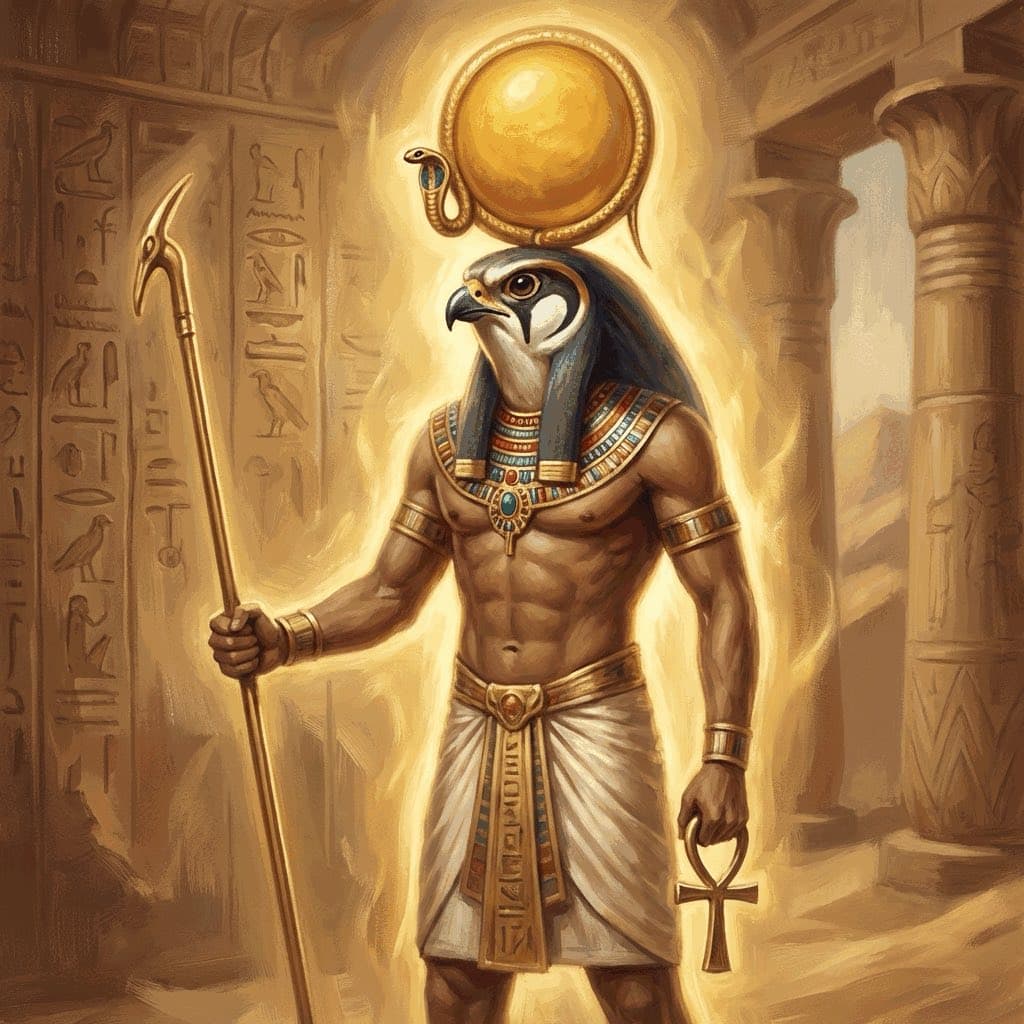 EgyptianRaIllustration
Both are solar deities associated with light, truth, and cosmic order, though Ra is the supreme creator in Egyptian myth
Compare Apollo and Ra side by side
Worship and cult
Temples, festivals, and practices recorded for Apollo
Delphi's oracle and the Pythian contest made him the public voice of the gods. Purification, plague, and the lyre sit in the same precinct. A boy-god of light is a later polish; the working cult is prophecy and katharsis.
Sacred sites
- Sanctuary of Apollo at Delphi
- Sacred island and temples of Delos
- Temple of Apollo at Didyma
Festivals
- Pythian Games
- Thargelia
- Karneia (Sparta)
Family
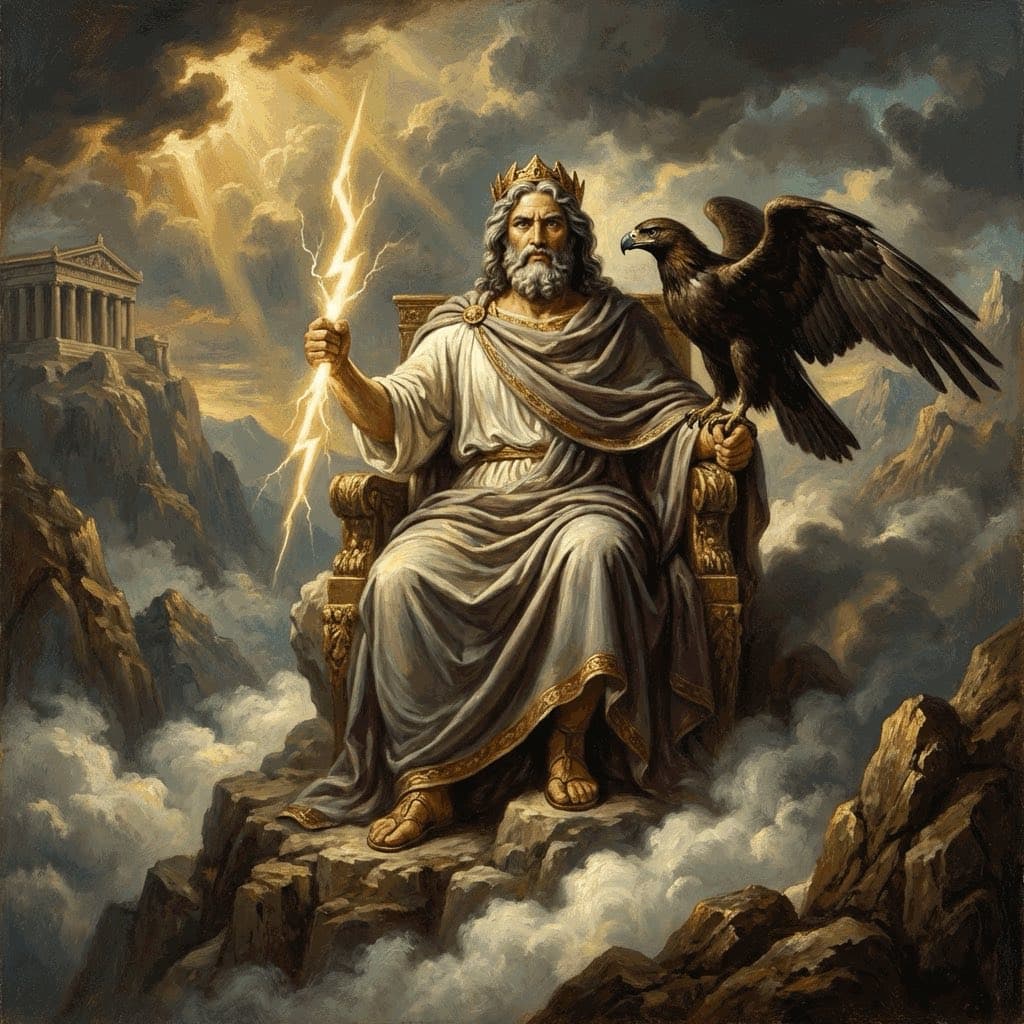
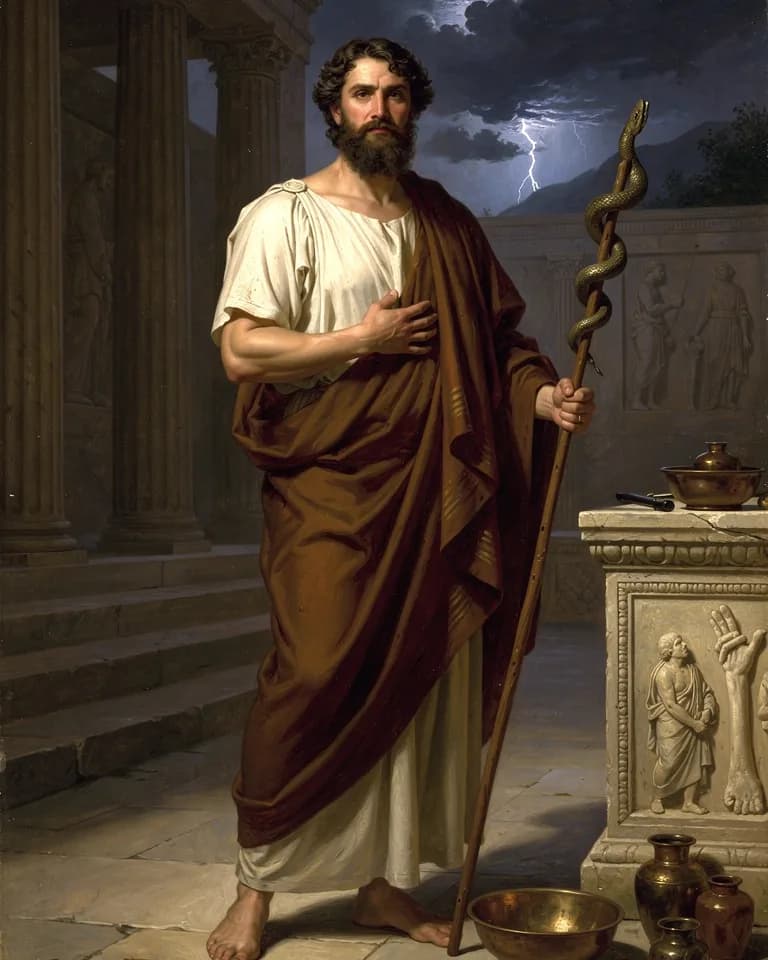

Relationship sources
Theogony — Zeus parent of Apollo
Hesiod · Hugh G. Evelyn-White, Hesiod, the Homeric Hymns and Homerica (1914), Project Gutenberg #348 · Theogony 918–920
Theogony — Apollo sibling of Artemis: Twin siblings
Hesiod · Hugh G. Evelyn-White, Hesiod, the Homeric Hymns and Homerica (1914), Project Gutenberg #348 · Theogony 918–920
Various (attributed to Homer) · H. G. Evelyn-White, Hesiod, the Homeric Hymns and Homerica (1914), Loeb Classical Library 57; Theoi transcription · Homeric Hymn 16 to Asclepius, lines 1–4
Questions about Apollo's family
In the atlas
Where Apollo appears
Play the myth
Branching retellings featuring Apollo: your choices decide the ending.
The Judgment of Paris
Step into the sandals of Paris, prince of Troy. Three goddesses stand before you, each offering a gift beyond mortal dreams. But every choice carries consequences that will echo through eternity.
5-8 min3 endingsOrpheus in the Underworld
Descend into the realm of the dead as Orpheus, the greatest musician who ever lived. Can your love for Eurydice triumph over death itself? The choice that awaits you has haunted lovers for millennia.
6-10 min3 endings
In the museums
Apollo in art
Real objects in public collections, released into the public domain by the museums that hold them. Dates refer to when each object was made. Objects made within the tradition come first, later depictions after.
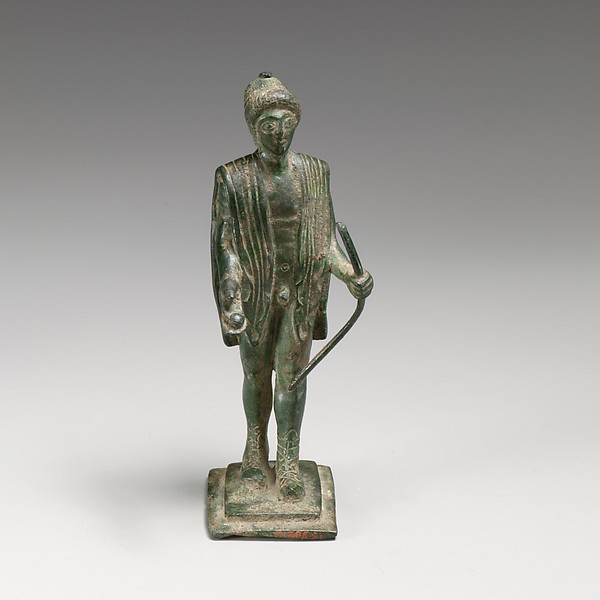 (opens the museum record)
Ancient object
Bronze statuette of Apollo (opens the museum record)
A Classical Greek bronze statuette the museum catalogs as Apollo. Bronze figurines of the god were common votive gifts at his sanctuaries.
 (opens the museum record)
Ancient object
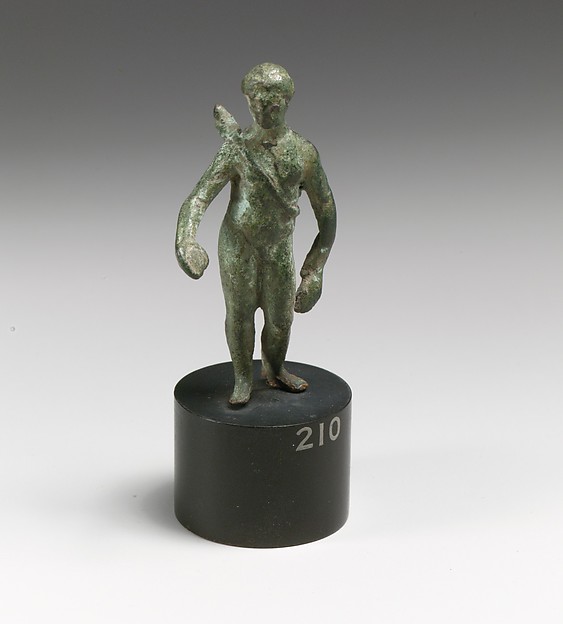
Bronze statuette of Apollo (opens the museum record)
A Roman bronze statuette the museum titles as Apollo with a quiver, referencing his role as archer god. Roman households and shrines used small bronzes like this for private devotion.
Sources and further reading
Source notes
These references are recorded in the catalog. Their passage wording and translation have not been checked, so quotations are not displayed here.
- Homeric Hymn to Apollo
- Delphic Maxims, Temple of Apollo at Delphi
Appears in
Ancient and classical works featuring this figure.
patron of Troy and Hector (Books 1-24)
Archer god of music and light who slays Python on Mount Parnassus to establish the Delphic Oracle (Hymn 3)
pursues Daphne whose transformation into a laurel originates his sacred tree (Book 1)
About this entry
By Elizabeth Stein for Mythos Atlas. About the author. Editorial notes are grounded in the site's cited sources and can be challenged through the contact page.
Parallels are editorial comparisons across traditions: a shared role does not, by itself, establish a shared origin.
Family relationships come from the atlas's kinship records. Ancient sources often disagree on divine genealogy.
Keep exploring
One myth a week, with its sources in a short email. The sign-up form is just below.
Genealogy
Family tree
Apollo's parents, consorts, children and rivals, as recorded in the atlas.