Greek Pantheon
Artemis
Also known as Diana
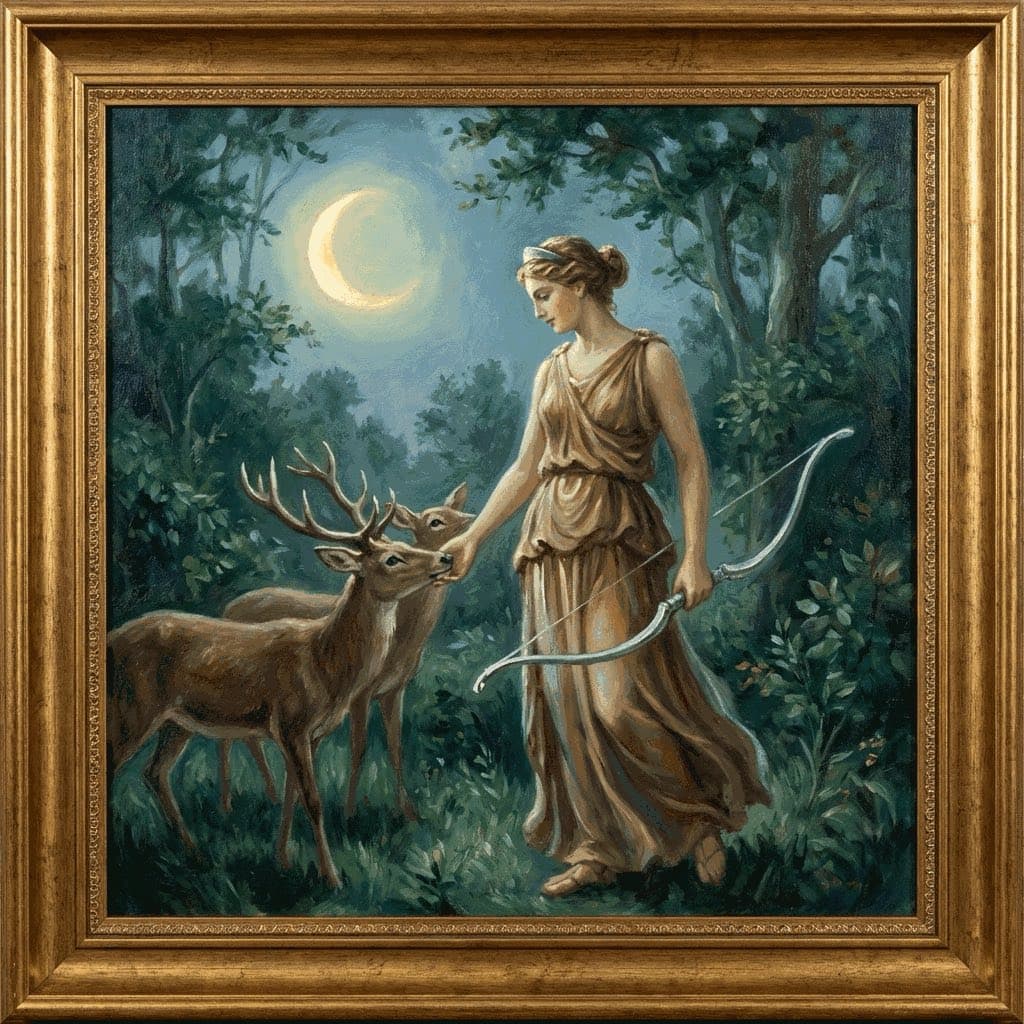
- hunt
- wilderness
- moon
- childbirth
- virginity
Goddess of the hunt, wilderness, and the moon. Twin sister of Apollo, protector of young women and animals.
About Artemis
Mistress of Beasts
Artemis is the fierce virgin goddess of the hunt and the wilderness ("Potnia Theron"). She roams the forests with her band of nymphs, protecting the natural world and punishing those who disrespect it.
The Virgin Huntress
She swore an oath of eternal maidenhood to Zeus. Actaeon, a hunter who accidentally saw her bathing, was transformed into a stag and devoured by his own hounds. She also punished Niobe for boasting that she was superior to Leto (Artemis's mother).
Protector Of Threshold Lives
Artemis also governs transitions that seem far removed from the hunt: childbirth, adolescence, and the dangerous boundary between girlhood and adulthood. Greek communities honored her in rites that prepared the young for civic and family life, so her myths join wilderness freedom with social discipline in a way that is easy to miss if she is reduced to a moon-and-bow archetype.
Across traditions
Parallel figures
Figures who play a role like Artemis's in other traditions.
 RomanDianaIllustration
Diana is the direct Roman equivalent, sharing all of Artemis's attributes as virgin huntress and moon goddess
Compare Artemis and Diana side by side JapaneseTsukuyomiIllustration
Both are lunar deities, though Tsukuyomi is male and rules the night rather than the hunt
Compare Artemis and Tsukuyomi side by side
Worship and cult
Temples, festivals, and practices recorded for Artemis
Wild animals, childbirth, and girls leaving childhood are hers. Brauron kept the arktoi, the 'bears.' Ephesus housed a many-breasted civic image that is not a Greek huntress in a short chiton. Both are Artemis.
Sacred sites
- Artemision at Ephesus
- Brauron in Attica
- Sanctuary at Aulis
Festivals
- Brauronia
- Elaphebolia
- Ephesian Artemisia
Family

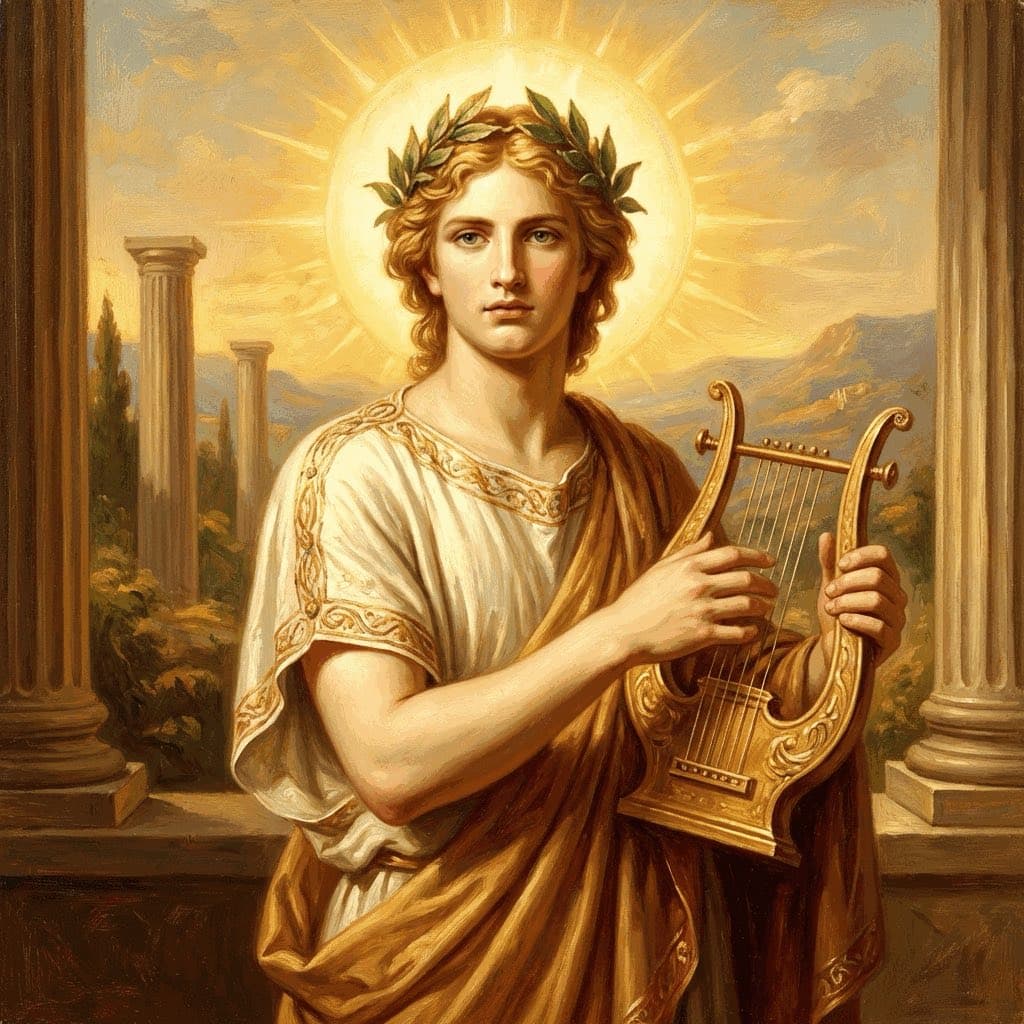
Relationship sources
Theogony — Zeus parent of Artemis
Hesiod · Hugh G. Evelyn-White, Hesiod, the Homeric Hymns and Homerica (1914), Project Gutenberg #348 · Theogony 918–920
Theogony — Apollo sibling of Artemis: Twin siblings
Hesiod · Hugh G. Evelyn-White, Hesiod, the Homeric Hymns and Homerica (1914), Project Gutenberg #348 · Theogony 918–920
In the atlas
Where Artemis appears
In the museums
Artemis in art
Real objects in public collections, released into the public domain by the museums that hold them. Dates refer to when each object was made. Objects made within the tradition come first, later depictions after.
 (opens the museum record)
Ancient object
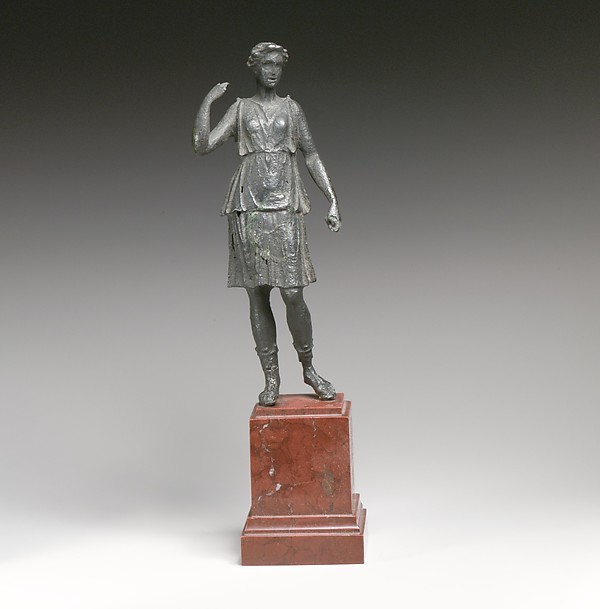
Bronze statuette of Artemis (opens the museum record)
A Hellenistic bronze statuette the museum catalogs as Artemis, goddess of the hunt and wilderness. Figures of this type were common temple and household dedications.
 (opens the museum record)
Ancient object
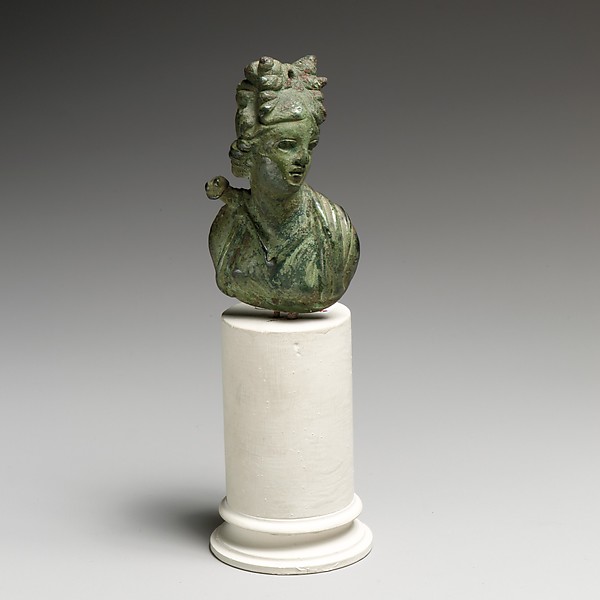
Bronze bust of Artemis (opens the museum record)
A Roman bronze bust the museum identifies as Artemis. Portrait-style busts of deities were used as decorative fittings as well as objects of devotion.
Sources and further reading
Source notes
These references are recorded in the catalog. Their passage wording and translation have not been checked, so quotations are not displayed here.
- Homeric Hymn XXVII, To Artemis (trans. Evelyn-White)
About this entry
By Elizabeth Stein for Mythos Atlas. About the author. Editorial notes are grounded in the site's cited sources and can be challenged through the contact page.
Parallels are editorial comparisons across traditions: a shared role does not, by itself, establish a shared origin.
Family relationships come from the atlas's kinship records. Ancient sources often disagree on divine genealogy.
Keep exploring
One myth a week, with its sources in a short email. The sign-up form is just below.
Genealogy
Family tree
Artemis's parents, consorts, children and rivals, as recorded in the atlas.