Greek Pantheon
Zeus
Ζεύς(Zeus)
Also known as Jupiter, Jove
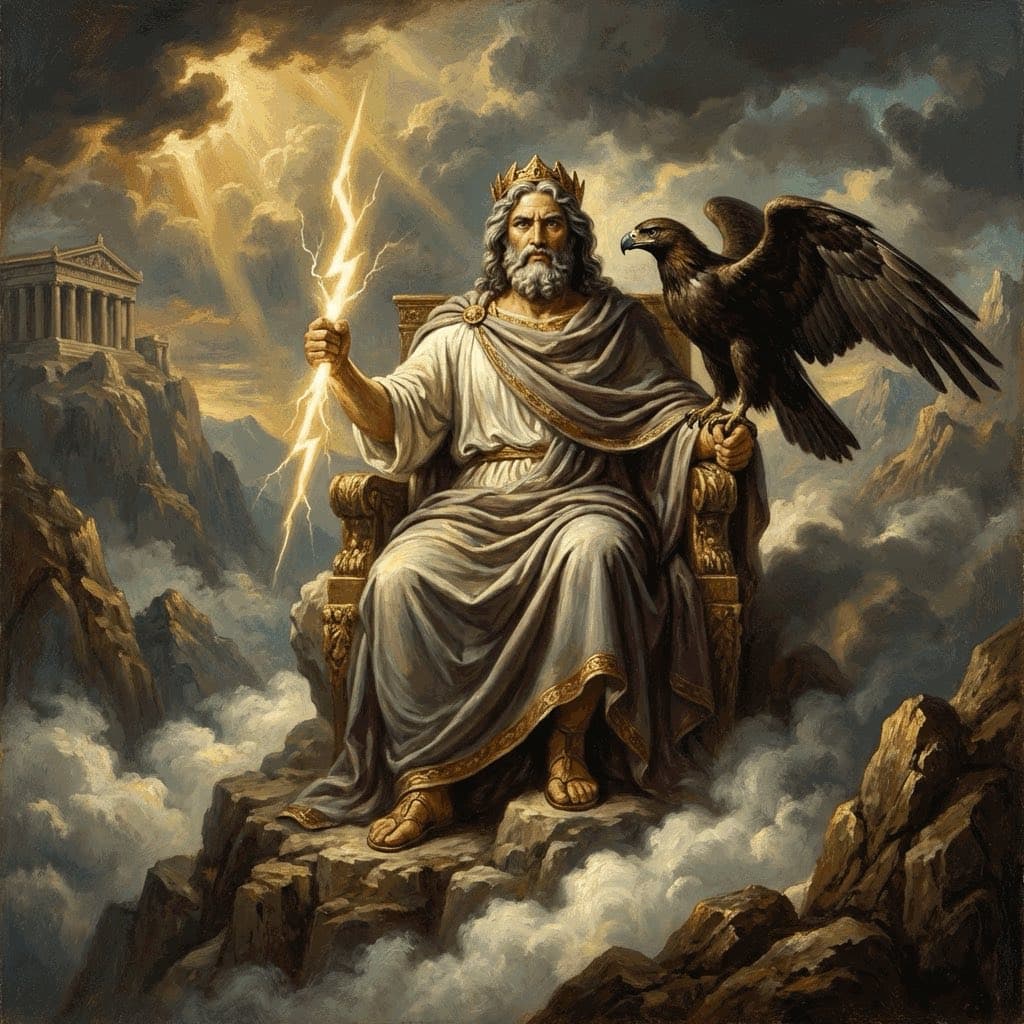
- sky
- thunder
- lightning
- law
- order
King of the gods and ruler of Mount Olympus. God of the sky, thunder, and justice. Zeus overthrew his father Cronus to become the supreme deity of the Greek pantheon.
About Zeus
The King of Olympus
Zeus is the supreme ruler of the gods, the lord of the sky, and the wielder of the thunderbolt. His power is greater than that of all the other gods combined. He presides over the oaths of men and the laws of the universe, ensuring justice and order.
Rise to Power
Born to the Titans Cronus and Rhea in a secret cave on Crete, Zeus was hidden from his father's voracious appetite. When he came of age, he tricked Cronus into regurgitating his swallowed siblings. Together, they waged the Titanomachy, a ten-year war against the Titans, eventually imprisoning them in Tartarus.
The Loves of Zeus
Famous for his many affairs, Zeus fathered countless heroes (Heracles, Perseus) and gods (Apollo, Artemis, Dionysus) with both mortals and goddesses, often incurring the wrath of his wife, Hera.
Origin story
Zeus was the youngest son of the Titans Cronus and Rhea. Cronus, fearing a prophecy that he would be overthrown by his children, swallowed each child at birth. Rhea hid Zeus and gave Cronus a stone wrapped in swaddling clothes instead. Zeus was raised in secret and later forced Cronus to regurgitate his siblings, leading the rebellion against the Titans.
Across traditions
Parallel figures
Figures who play a role like Zeus's in other traditions.
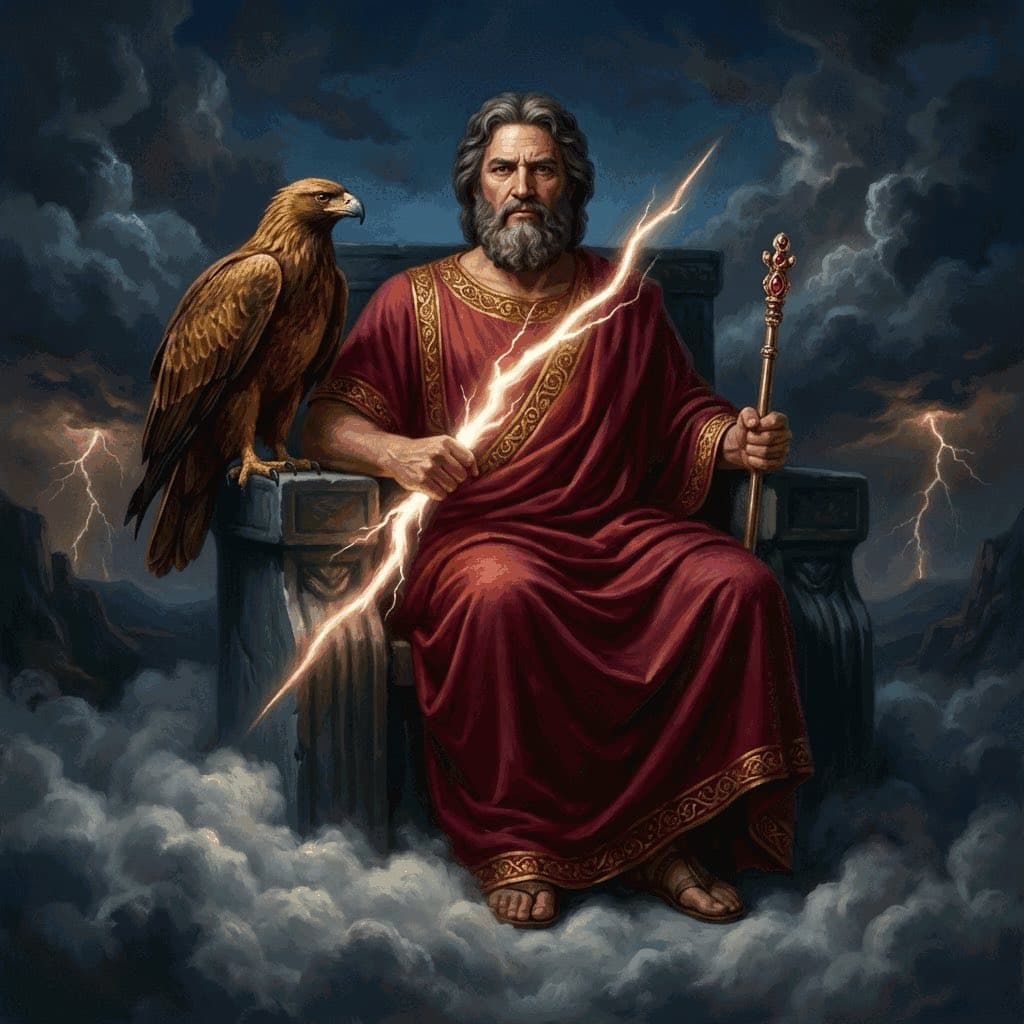 RomanJupiterIllustration
Jupiter is the direct Roman equivalent, sharing Zeus's role as sky father and king of gods
Compare Zeus and Jupiter side by side NorseOdinIllustration
Both are sky father figures and kings of their respective pantheons, though Odin emphasizes wisdom while Zeus emphasizes power
Compare Zeus and Odin side by side HinduIndraIllustration
Both are thunder and sky gods who serve as kings of the gods in their respective traditions
Compare Zeus and Indra side by side
Worship and cult
Temples, festivals, and practices recorded for Zeus
White bulls and the thunderbolt belong to him. Olympic contest was a sacrifice as much as a race. Dodona spoke through oak and doves. Civic oaths called Zeus Horkios; a perjurer feared the sky more than the court.
Sacred sites
- Temple of Zeus at Olympia
- Oracle of Zeus at Dodona
- Nemean sanctuary
Festivals
- Olympic Games
- Diasia
- Dipolieia
Family
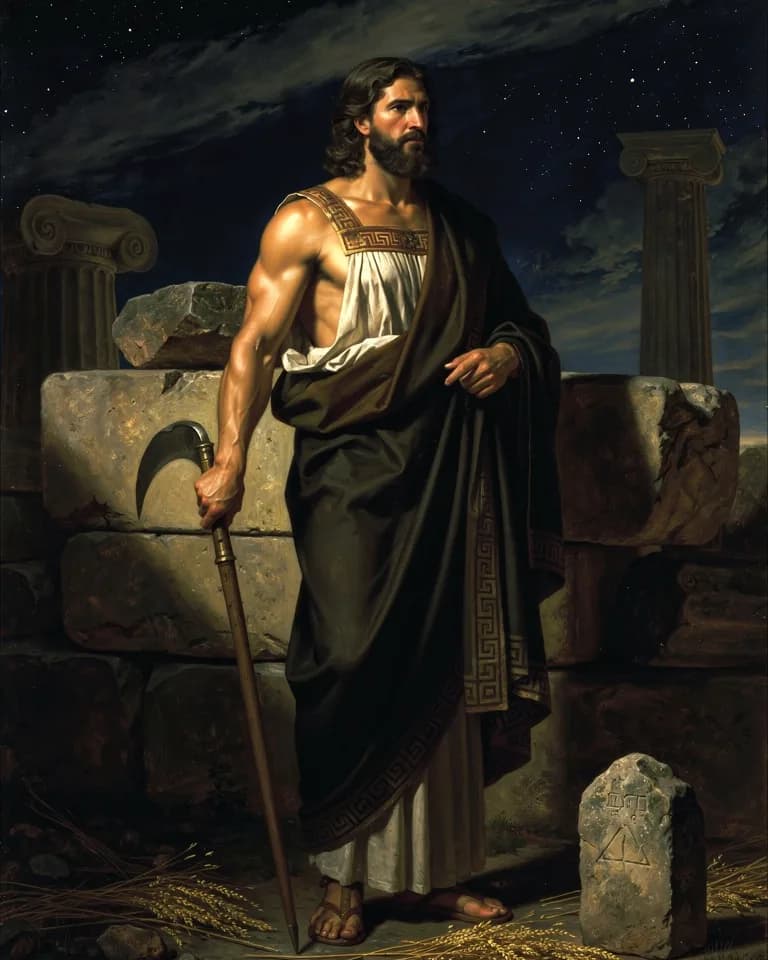
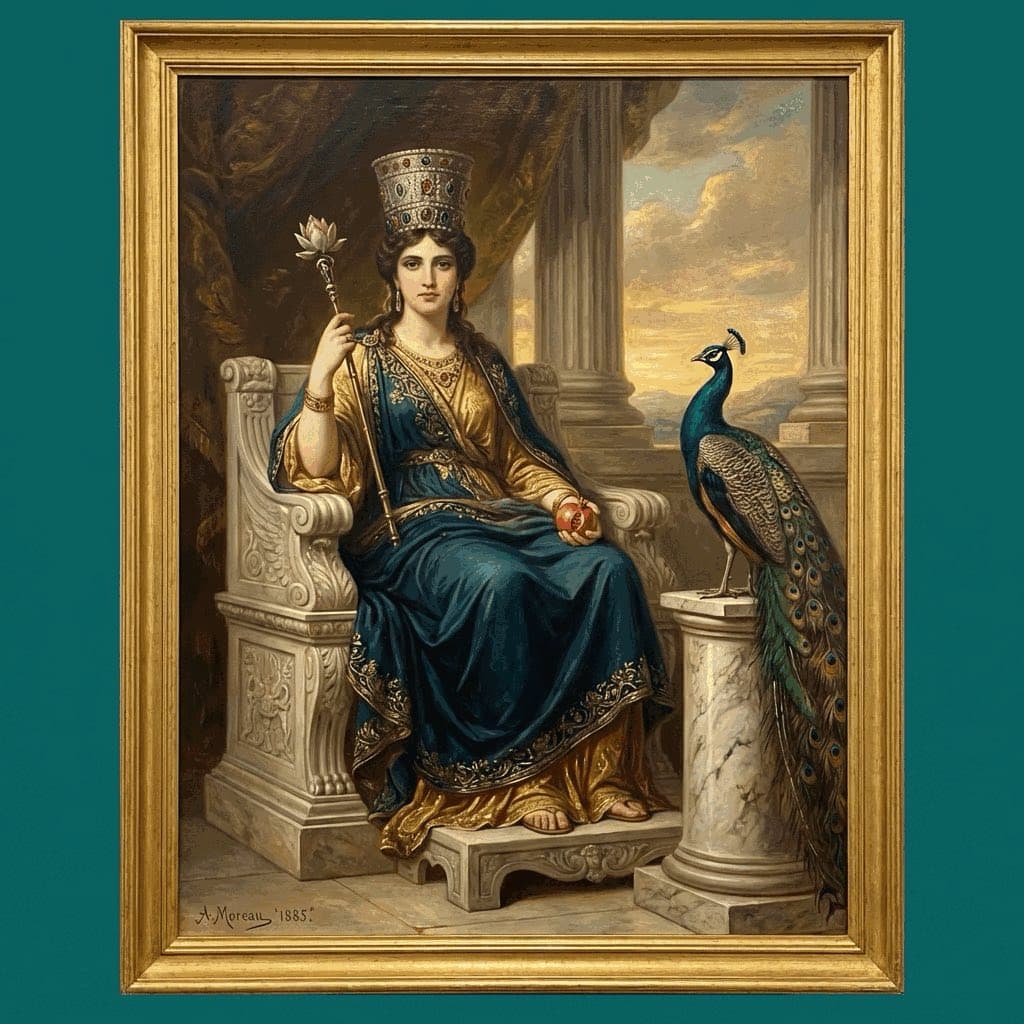
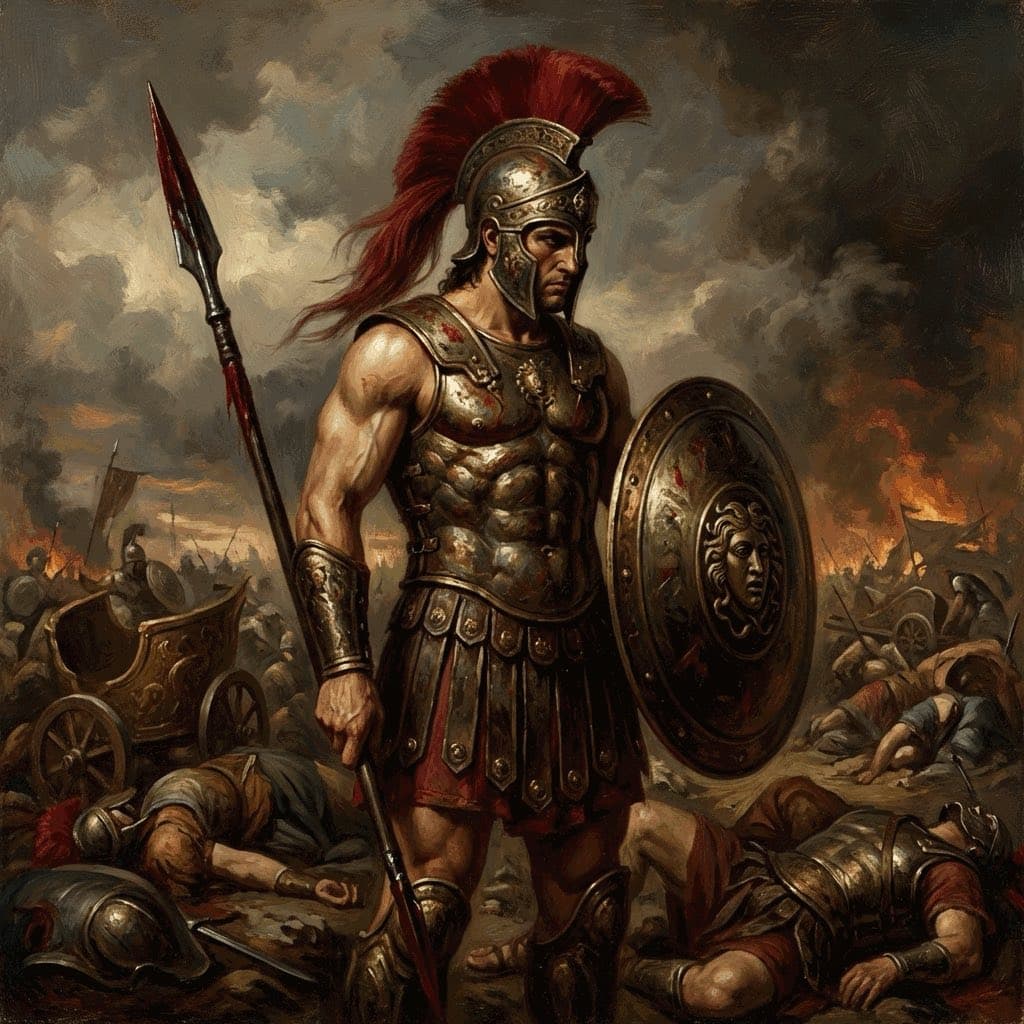


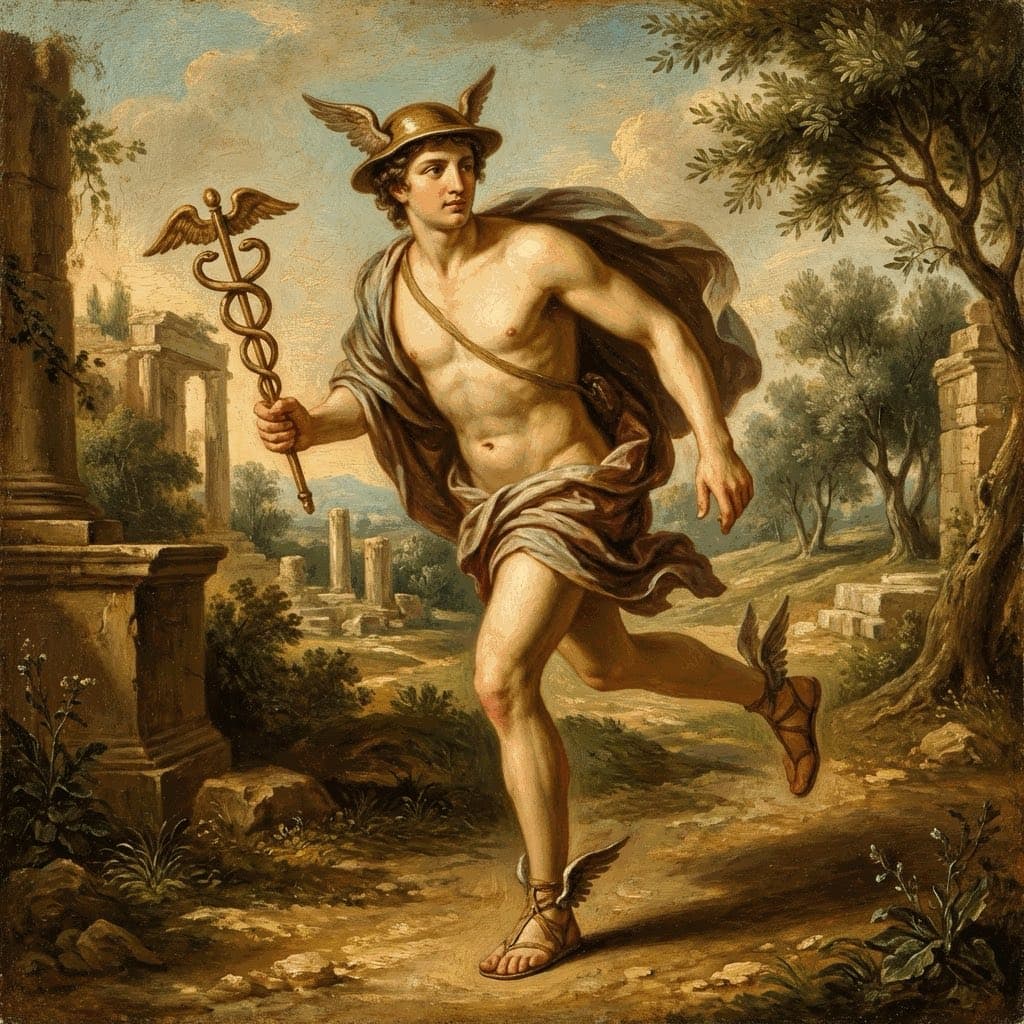


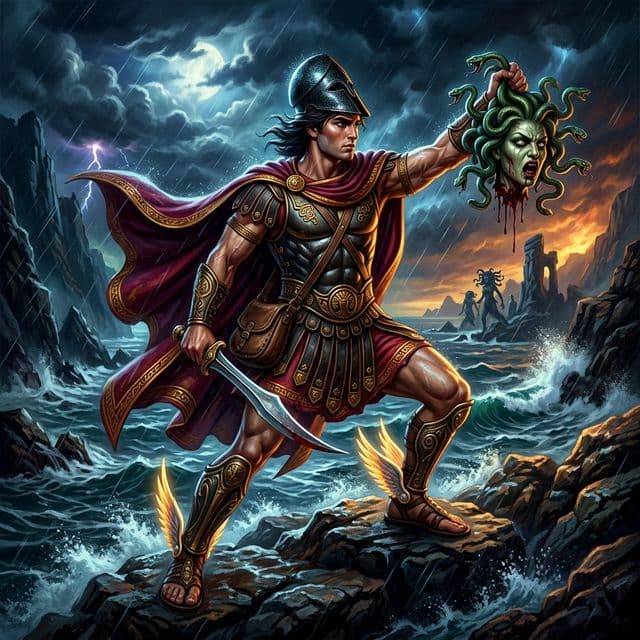

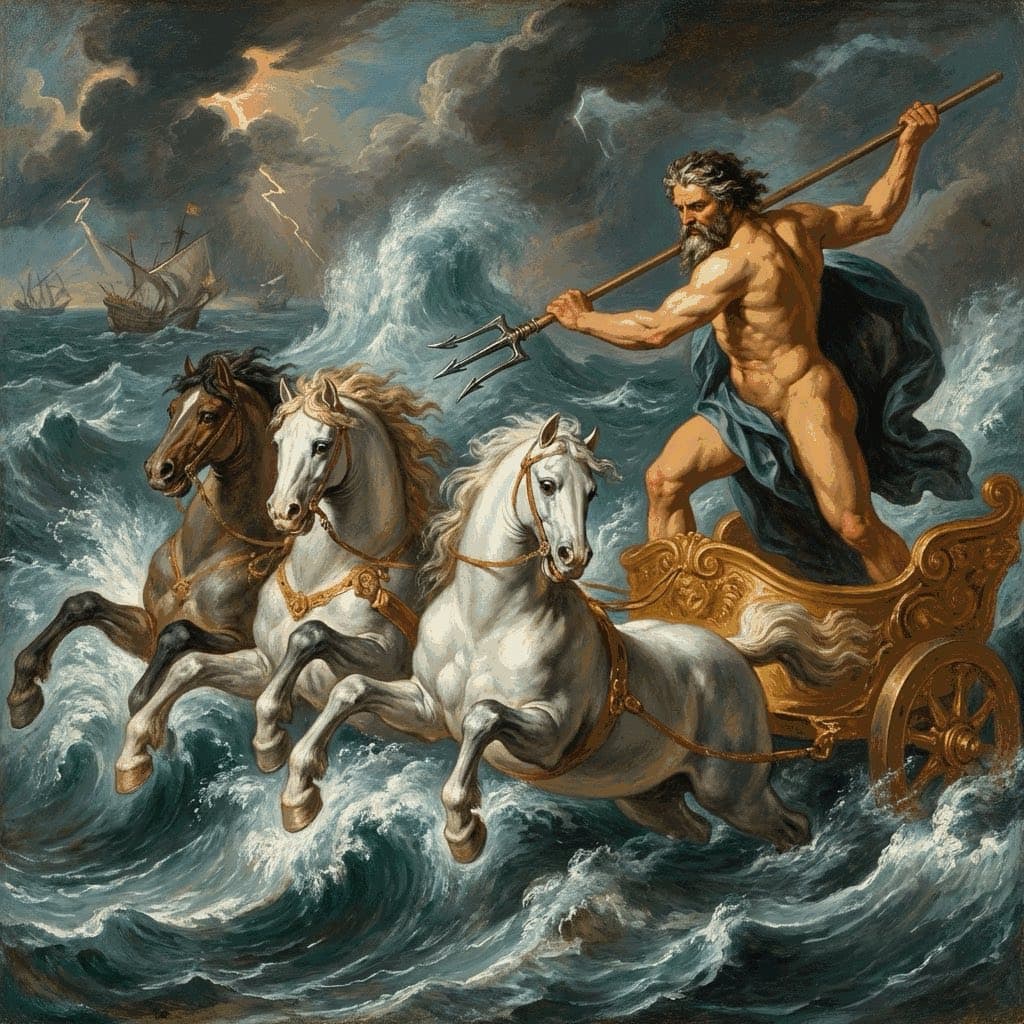
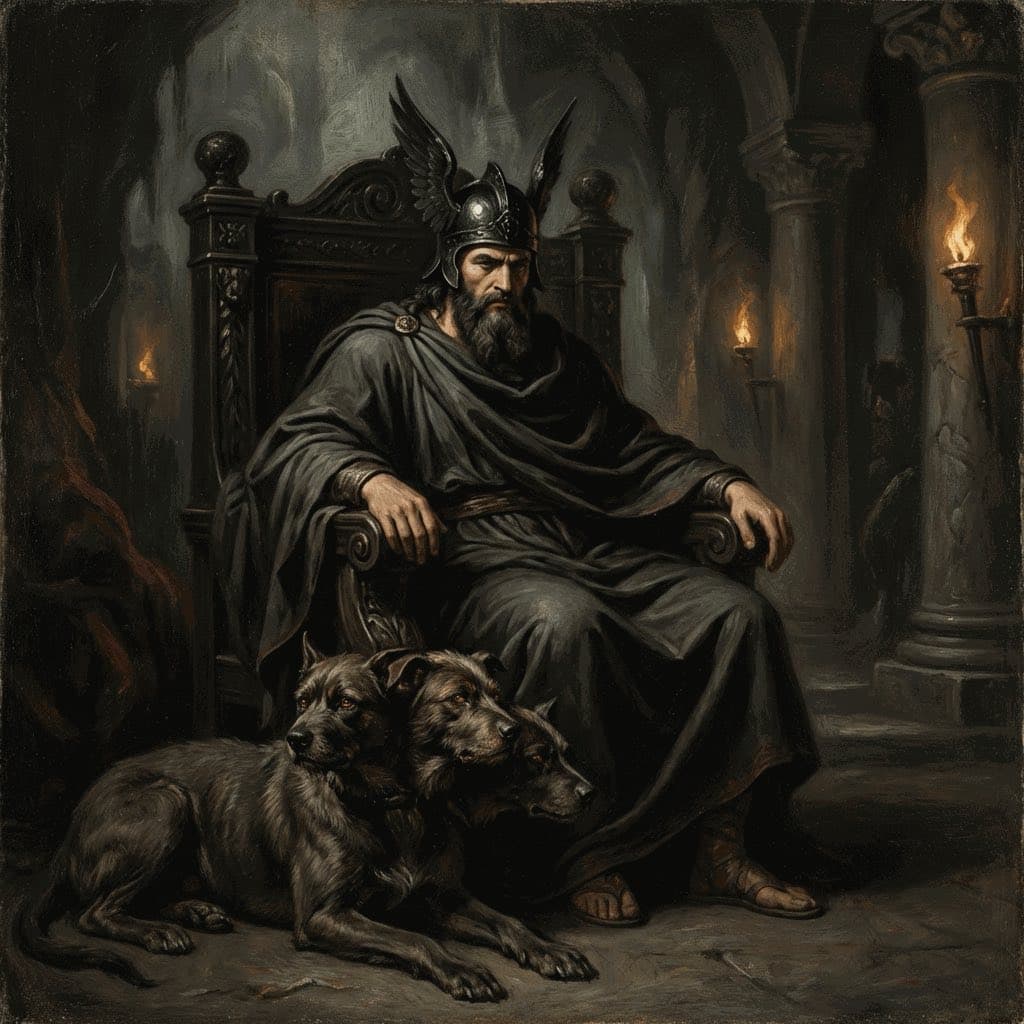
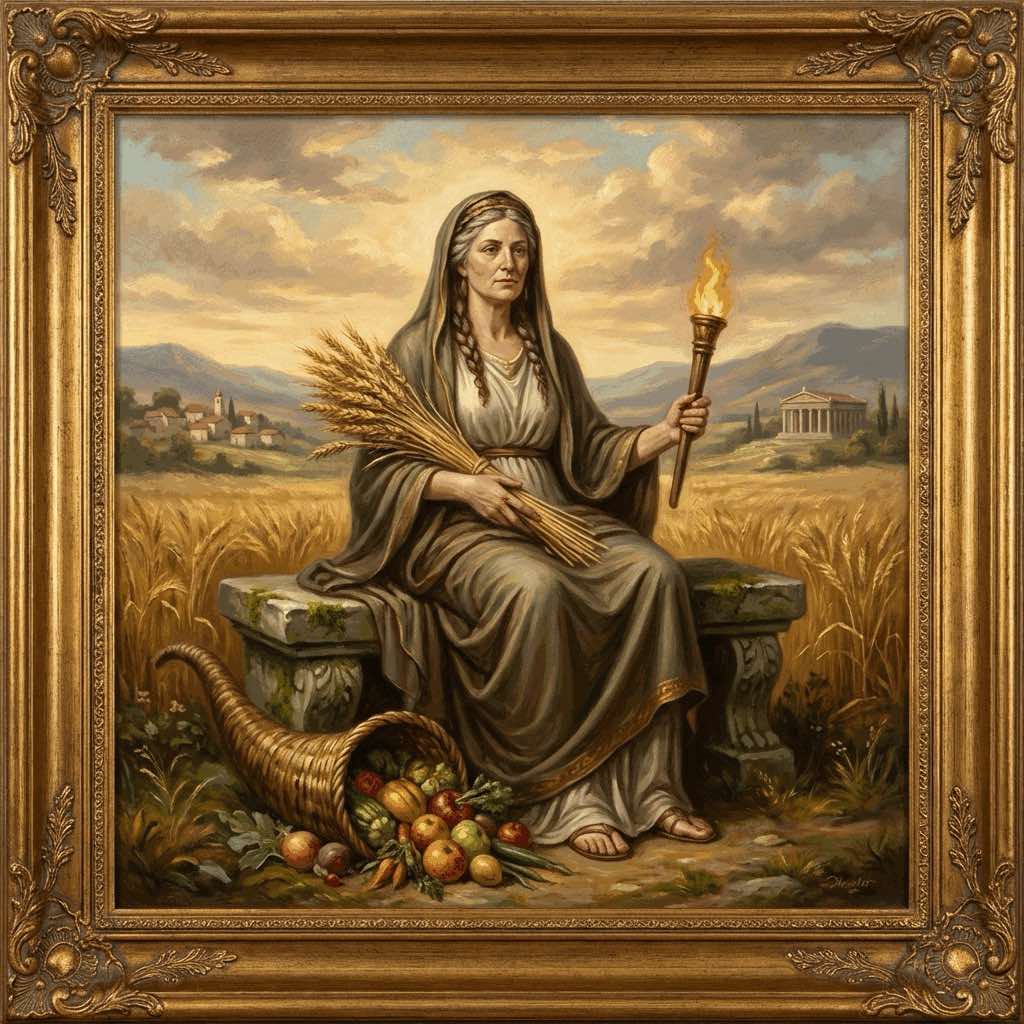


Relationship sources
Theogony — Zeus spouse of Hera
Hesiod · Hugh G. Evelyn-White, Hesiod, the Homeric Hymns and Homerica (1914), Project Gutenberg #348 · Theogony 921–923
Theogony — Zeus sibling of Hera
Hesiod · H. G. Evelyn-White, Hesiod, the Homeric Hymns and Homerica (1914), Loeb Classical Library 57; Theoi transcription · Theogony 453–458
Theogony — Zeus sibling of Poseidon
Hesiod · H. G. Evelyn-White, Hesiod, the Homeric Hymns and Homerica (1914), Loeb Classical Library 57; Theoi transcription · Theogony 453–458
Theogony — Zeus sibling of Hades
Hesiod · H. G. Evelyn-White, Hesiod, the Homeric Hymns and Homerica (1914), Loeb Classical Library 57; Theoi transcription · Theogony 453–458
Theogony — Zeus sibling of Demeter
Hesiod · H. G. Evelyn-White, Hesiod, the Homeric Hymns and Homerica (1914), Loeb Classical Library 57; Theoi transcription · Theogony 453–458
Theogony — Zeus sibling of Hestia
Hesiod · H. G. Evelyn-White, Hesiod, the Homeric Hymns and Homerica (1914), Loeb Classical Library 57; Theoi transcription · Theogony 453–458
Theogony — Zeus parent of Ares
Hesiod · Hugh G. Evelyn-White, Hesiod, the Homeric Hymns and Homerica (1914), Project Gutenberg #348 · Theogony 921–923
Theogony — Zeus parent of Athena
Hesiod · Hugh G. Evelyn-White, Hesiod, the Homeric Hymns and Homerica (1914), Project Gutenberg #348 · Theogony 886–900; 924–929
Theogony — Zeus parent of Apollo
Hesiod · Hugh G. Evelyn-White, Hesiod, the Homeric Hymns and Homerica (1914), Project Gutenberg #348 · Theogony 918–920
Theogony — Zeus parent of Artemis
Hesiod · Hugh G. Evelyn-White, Hesiod, the Homeric Hymns and Homerica (1914), Project Gutenberg #348 · Theogony 918–920
Theogony — Zeus parent of Hermes
Hesiod · Hugh G. Evelyn-White, Hesiod, the Homeric Hymns and Homerica (1914), Project Gutenberg #348 · Theogony 938–939
Theogony — Zeus parent of Dionysus
Hesiod · Hugh G. Evelyn-White, Hesiod, the Homeric Hymns and Homerica (1914), Project Gutenberg #348 · Theogony 940–942
Theogony — Zeus parent of Persephone: Persephone is the daughter of Zeus and Demeter
Hesiod · Hugh G. Evelyn-White, Hesiod, the Homeric Hymns and Homerica (1914), Project Gutenberg #348 · Theogony 912–914
Theogony — Cronus parent of Zeus
Hesiod · Hugh G. Evelyn-White, Hesiod, the Homeric Hymns and Homerica (1914), Project Gutenberg #348 · Theogony 453–491
Theogony — Rhea parent of Zeus
Hesiod · Hugh G. Evelyn-White, Hesiod, the Homeric Hymns and Homerica (1914), Project Gutenberg #348 · Theogony 453–491
Questions about Zeus's family
- Who are Zeus's parents?
- The atlas's kinship records name 2 parents of Zeus: Cronus and Rhea. Ancient accounts do not always agree on divine parentage.
- Who are Zeus's children?
- Children of Zeus recorded in the atlas: Ares, Athena, Apollo, Artemis, Hermes, Dionysus, Persephone, Perseus, and The Dioscuri (Castor and Polydeuces).
- Who were Zeus's spouses and consorts?
- Spouses and consorts of Zeus recorded in the atlas: Hera.
In the atlas
Where Zeus appears
Play the myth
Branching retellings featuring Zeus: your choices decide the ending.
In the museums
Zeus in art
Real objects in public collections, released into the public domain by the museums that hold them. Dates refer to when each object was made. Objects made within the tradition come first, later depictions after.
 (opens the museum record)
Ancient object
Terracotta column-krater (vase for mixing wine and water) (opens the museum record)
An Attic column-krater whose painted scene the museum tags as including Zeus among other figures. Large mixing vessels like this were used at the symposium, the Greek drinking party where mythological imagery was common.
 (opens the museum record)
Ancient object
Terracotta Nolan neck-amphora (jar) (opens the museum record)
An Attic neck-amphora whose painted figure the museum's record tags as Zeus, together with a bow and arrow, an unusual attribute for him. Nolan amphorae like this were a favored shape for single mythological figures in the Classical period.
Sources and further reading
Ancient sources
Quotations, paraphrases and verification notes. Each passage states what has been checked.
“And he was reigning in heaven, himself holding the lightning and glowing thunderbolt, when he had overcome by might his father Cronos.”
Hesiod, Theogony · 71-73
Translation: Hugh G. Evelyn-White
H. G. Evelyn-White, 1914
Read source“Father of us all, thou son of Cronos, high above all lords, well know we of ourselves that thy might is unyielding,”
Homer, Iliad · 8.31–32; opening clause of Athena’s reply
Translation: A. T. Murray
1924; Theoi transcription. Terminal comma retained. English transcription checked 2026-09-23. Replaces prior unverified wording; no original-language text is supplied or certified.
Read sourceAppears in
Ancient and classical works featuring this figure.
arbiter of the war's course from Olympus (Books 1-24)
youngest child of Cronus who leads the Olympians to victory and becomes king of the gods (the succession myth)
Supreme Olympian ruler who hides fire and prosperity from humankind following Prometheus's deception (Lines 42-105)
Further reading
The definitive genealogy of Zeus and his rise to power
Read online: Theogony (opens in new tab)Comprehensive catalog of Zeus's myths and offspring
Read online: Bibliotheca (Library) (opens in new tab)Mythology: Timeless Tales of Gods and Heroes
Accessible modern retelling of Zeus myths
Read online: Mythology: Timeless Tales of Gods and Heroes (opens in new tab)- Burkert, Walter. Greek Religion (Harvard University Press, 1985) — authoritative survey of Greek cult practice and Olympian theology.
- West, M. L. (ed. & trans.). Hesiod: Theogony (Oxford World’s Classics). Handy edition for the succession myth and Zeus’s rise.
About this entry
By Elizabeth Stein for Mythos Atlas. About the author. Editorial notes are grounded in the site's cited sources and can be challenged through the contact page.
Parallels are editorial comparisons across traditions: a shared role does not, by itself, establish a shared origin.
Family relationships come from the atlas's kinship records. Ancient sources often disagree on divine genealogy.
Keep exploring
One myth a week, with its sources in a short email. The sign-up form is just below.
Genealogy
Family tree
Zeus's parents, consorts, children and rivals, as recorded in the atlas.