Greek Pantheon
Athena
Ἀθηνᾶ(Athena)
Also known as Minerva, Pallas Athena

- wisdom
- warfare
- crafts
- strategy
Goddess of wisdom, warfare, and crafts. Born fully armed from Zeus's forehead after he swallowed her mother Metis.
About Athena
The Grey-Eyed Goddess
Athena is the goddess of wisdom, courage, and strategic warfare. Unlike Ares, who embodies bloodlust, Athena represents the intellectual and civilized side of war.
Birth from the Head
Prophecy warned Zeus that a child of Metis would overthrow him. He swallowed Metis whole, but later suffered a splitting headache. Hephaestus (or Prometheus) struck his head with an axe, and Athena sprang forth, fully grown and armored.
Patron of Heroes
She is the great helper of heroes, aiding Odysseus, Perseus, and Heracles in their quests. She is the patron deity of Athens, having won the city in a contest against Poseidon by gifting the olive tree.
Across traditions
Parallel figures
Figures who play a role like Athena's in other traditions.
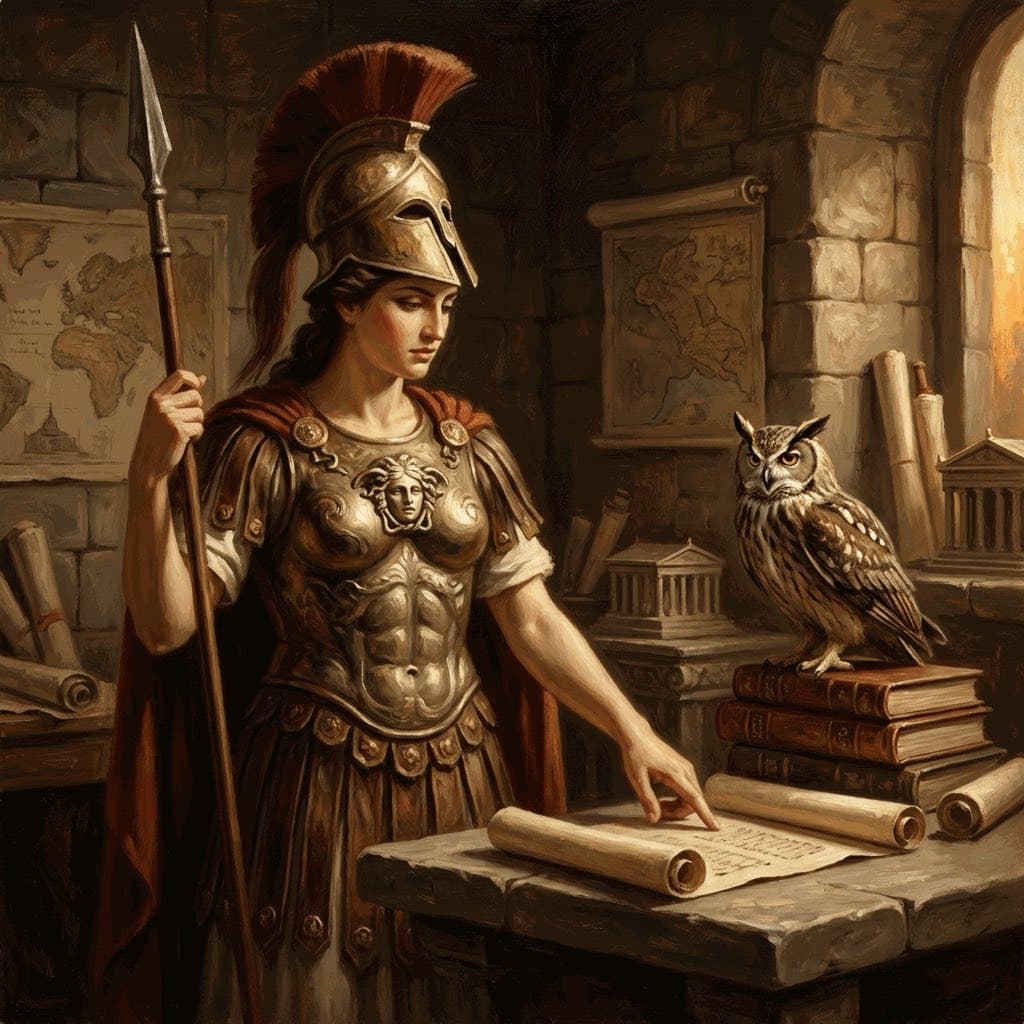 RomanMinervaIllustration
Minerva is the direct Roman equivalent, sharing the same domains of wisdom, strategic warfare, and crafts
Compare Athena and Minerva side by side
Worship and cult
Temples, festivals, and practices recorded for Athena
The Panathenaia carried a new peplos to her statue. Craftsmen, the olive, and the armed maiden share one cult. She is the city's mind: weaving, bronze, and the vote, not a borrowed Roman Minerva.
Sacred sites
- Parthenon and Erechtheion on the Athenian Acropolis
- Temple of Athena Alea at Tegea
Festivals
- Panathenaia
- Plynteria
- Chalkeia
Family
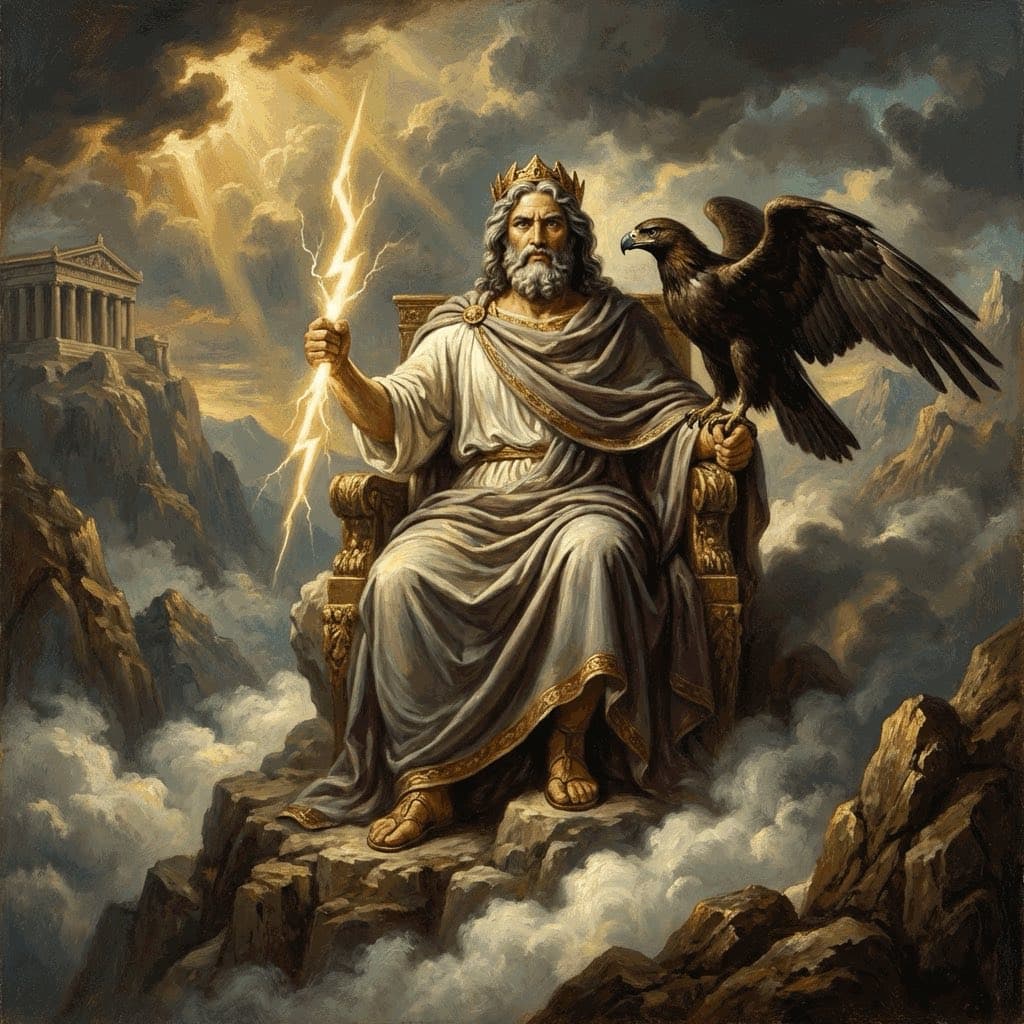 Athena
Relationship sources
Theogony — Zeus parent of Athena
Hesiod · Hugh G. Evelyn-White, Hesiod, the Homeric Hymns and Homerica (1914), Project Gutenberg #348 · Theogony 886–900; 924–929
Questions about Athena's family
- Who are Athena's parents?
- The atlas's kinship records name one parent of Athena: Zeus. Ancient accounts do not always agree on divine parentage.
In the atlas
Where Athena appears
Play the myth
Branching retellings featuring Athena: your choices decide the ending.
In the museums
Athena in art
Real objects in public collections, released into the public domain by the museums that hold them. Dates refer to when each object was made. Objects made within the tradition come first, later depictions after.
 (opens the museum record)
Ancient object
Bronze statuette of Athena (opens the museum record)
A Roman bronze statuette the museum catalogs simply as Athena, shown helmeted in her role as goddess of war and wisdom. Small bronzes like this circulated widely as household or votive images across the Roman world.
 (opens the museum record)
Ancient object
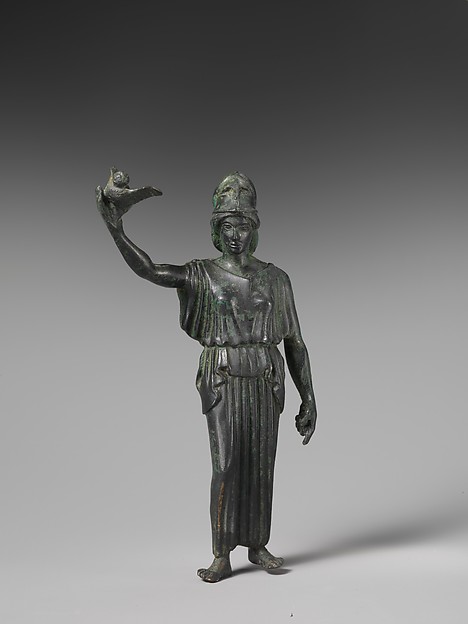
Bronze statuette of Athena flying her owl (opens the museum record)
A Classical Greek bronze statuette the museum titles as Athena flying her owl, her sacred bird and symbol of wisdom. The pairing of goddess and owl was one of her most recognizable attributes in Greek art.
 (opens the museum record)
Ancient object
Terracotta Panathenaic prize amphora (jar) (opens the museum record)
An Archaic Panathenaic prize amphora, the type of vessel filled with olive oil and awarded to victors at the Panathenaic Games in Athens; the museum tags its painted side as showing Athena, the festival's patron goddess.
Sources and further reading
Ancient sources
Quotations, paraphrases and verification notes. Each passage states what has been checked.
“I begin to sing of Pallas Athena, guardian of the city, dread goddess, who with Ares cares for the works of war, the sacking of cities and the war-cry, and who saves the host as it goes forth and returns.”
Homeric Hymn 11 to Athena · 1-4
Translation: Hugh G. Evelyn-White
H. G. Evelyn-White, 1914
Read sourceSource notes
These references are recorded in the catalog. Their passage wording and translation have not been checked, so quotations are not displayed here.
- Hesiod, Theogony
- Homer, Iliad (translation wording unverified)
Appears in
Ancient and classical works featuring this figure.
patron of the Greeks, especially Achilles and Odysseus (Books 1-24)
Odysseus's protector and guide throughout his journey (Books 1-24)
Goddess of wisdom who clothes Pandora in silver robes and teaches her the art of weaving (Lines 72-76)
About this entry
By Elizabeth Stein for Mythos Atlas. About the author. Editorial notes are grounded in the site's cited sources and can be challenged through the contact page.
Parallels are editorial comparisons across traditions: a shared role does not, by itself, establish a shared origin.
Family relationships come from the atlas's kinship records. Ancient sources often disagree on divine genealogy.
Keep exploring
One myth a week, with its sources in a short email. The sign-up form is just below.
Genealogy
Family tree
Athena's parents, consorts, children and rivals, as recorded in the atlas.