Greek Pantheon
Hera
Ἥρα(Hera)
Also known as Juno
- marriage
- women
- family
- childbirth
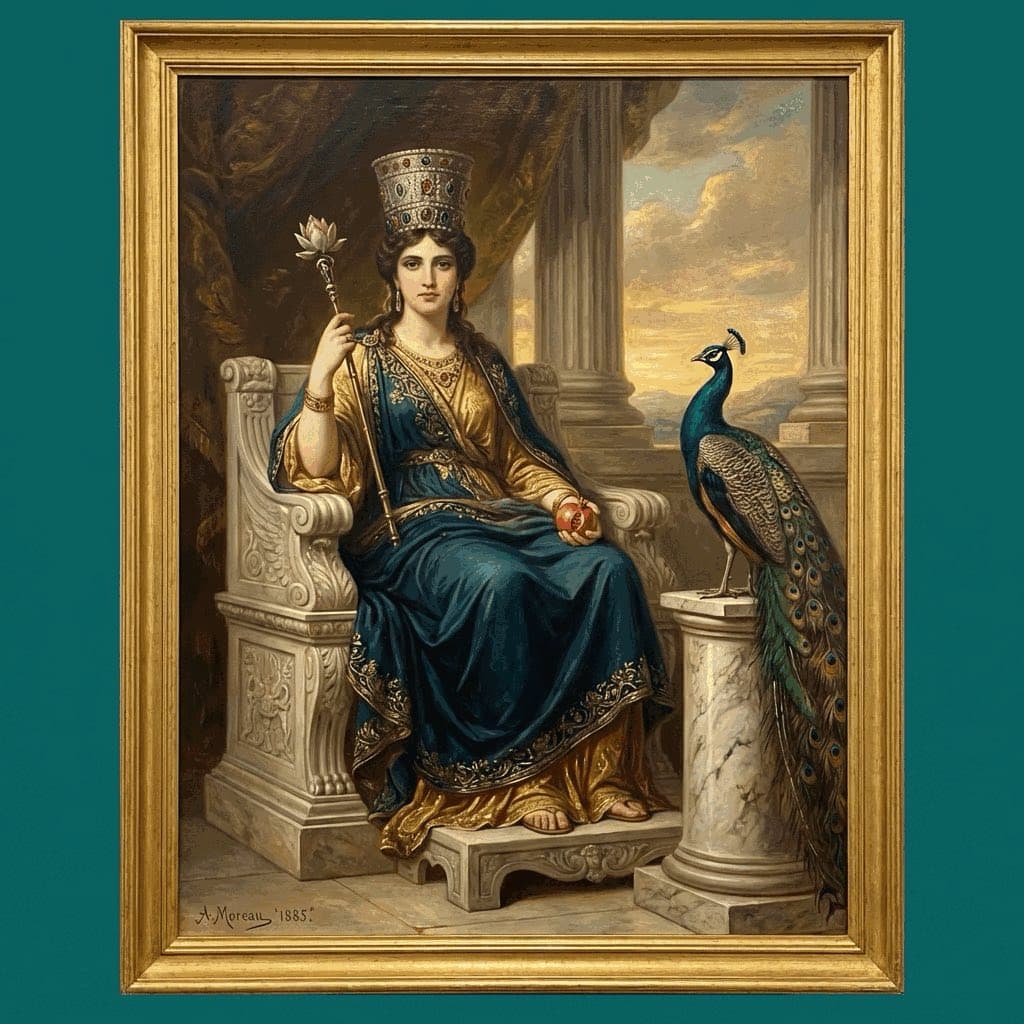
Queen of the gods and goddess of marriage and family. Wife and sister of Zeus, known for her jealousy toward Zeus's lovers and illegitimate children.
About Hera
Queen of the Gods
Hera is the majestic queen of Olympus and the goddess of marriage and childbirth. As the wife of Zeus, she holds immense power, but she is most famously known for her jealousy and vengeance against Zeus's lovers and illegitimate children.
The Divine Marriage
Her marriage to Zeus is turbulent, reflecting the storms of the sky. Despite his infidelities, Hera remains the protector of lawful marriage and the sanctity of the family. She is often depicted holding a pomegranate (symbol of fertility) and accompanied by a peacock.
Origin story
Hera was the eldest daughter of Cronus and Rhea, swallowed by Cronus at birth and later freed by Zeus. She became Zeus's wife after he courted her in the form of a cuckoo bird.
Across traditions
Parallel figures
Figures who play a role like Hera's in other traditions.
 RomanJunoIllustration
Juno is the direct Roman equivalent, both queens of the gods and goddesses of marriage and women
Compare Hera and Juno side by side NorseFriggIllustration
Both are the wife of the chief sky god and preside over marriage, motherhood, and the domestic sphere
Compare Hera and Frigg side by side
Worship and cult
Temples, festivals, and practices recorded for Hera
Argos and Samos kept her oldest houses. The Heraia were women's games at Argos and a foot-race at Olympia. Marriage, cattle, and the cuckoo or peacock are hers; the cult is civic and jealous, not only a wedding story.
Sacred sites
- Heraion of Argos
- Heraion of Samos
- Temple of Hera at Olympia
Festivals
- Heraia
- Daedala (Boeotia)
Family

Relationship sources
Theogony — Zeus spouse of Hera
Hesiod · Hugh G. Evelyn-White, Hesiod, the Homeric Hymns and Homerica (1914), Project Gutenberg #348 · Theogony 921–923
Theogony — Zeus sibling of Hera
Hesiod · H. G. Evelyn-White, Hesiod, the Homeric Hymns and Homerica (1914), Loeb Classical Library 57; Theoi transcription · Theogony 453–458
Theogony — Hera parent of Ares
Hesiod · Hugh G. Evelyn-White, Hesiod, the Homeric Hymns and Homerica (1914), Project Gutenberg #348 · Theogony 921–923
Theogony — Hera parent of Hephaestus
Hesiod · Hugh G. Evelyn-White, Hesiod, the Homeric Hymns and Homerica (1914), Project Gutenberg #348 · Theogony 924–929
Theogony — Cronus parent of Hera
Hesiod · Hugh G. Evelyn-White, Hesiod, the Homeric Hymns and Homerica (1914), Project Gutenberg #348 · Theogony 453–491
Theogony — Rhea parent of Hera
Hesiod · Hugh G. Evelyn-White, Hesiod, the Homeric Hymns and Homerica (1914), Project Gutenberg #348 · Theogony 453–491
Questions about Hera's family
- Who are Hera's parents?
- The atlas's kinship records name 2 parents of Hera: Cronus and Rhea. Ancient accounts do not always agree on divine parentage.
- Who are Hera's children?
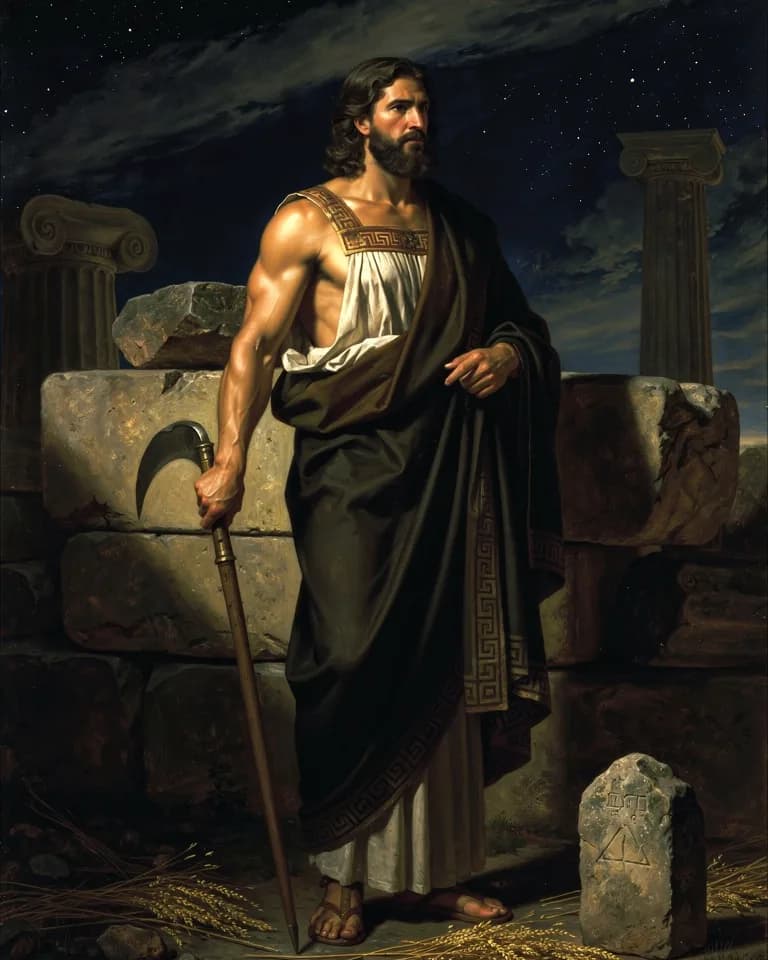
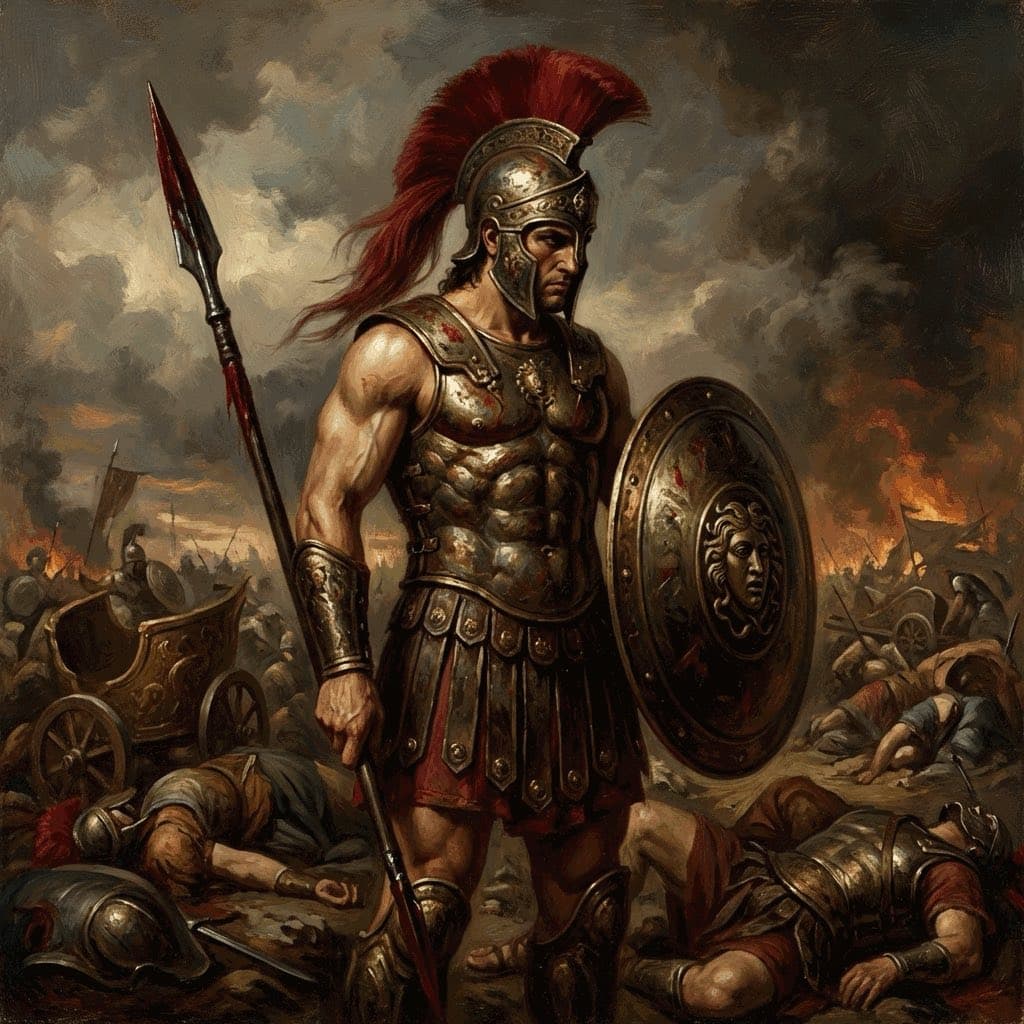
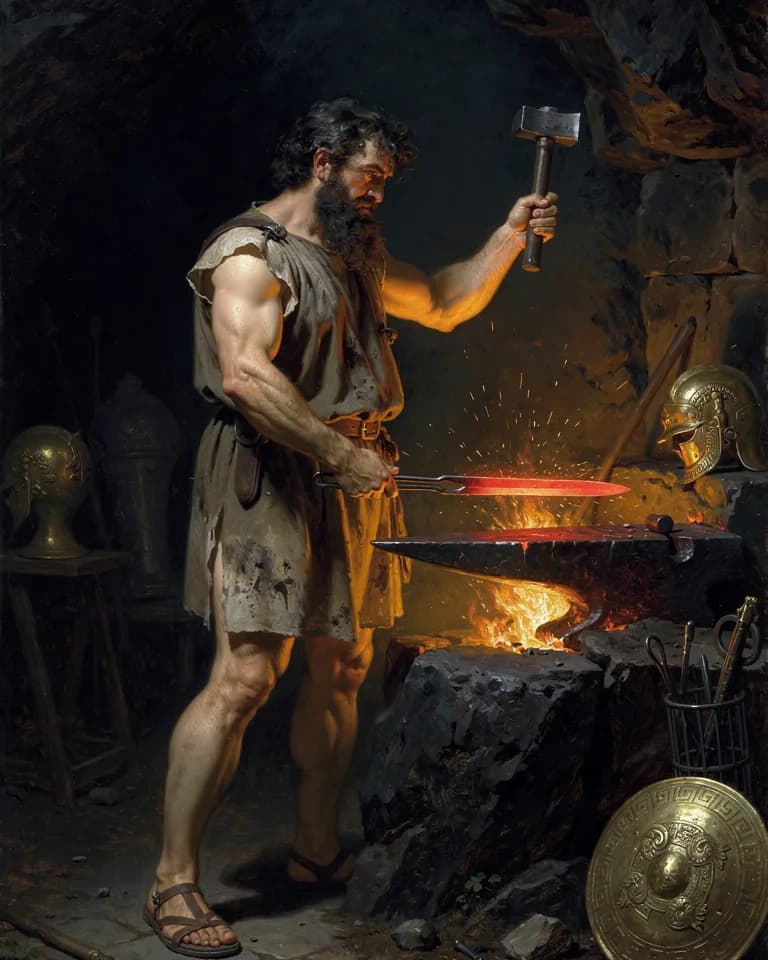
- Children of Hera recorded in the atlas: Ares and Hephaestus.
- Who were Hera's spouses and consorts?
- Spouses and consorts of Hera recorded in the atlas: Zeus.
- Who are Hera's siblings?
- Siblings of Hera recorded in the atlas: Zeus.
In the atlas
Where Hera appears
Play the myth
Branching retellings featuring Hera: your choices decide the ending.
In the museums
Hera in art
Real objects in public collections, released into the public domain by the museums that hold them. Dates refer to when each object was made. Objects made within the tradition come first, later depictions after.
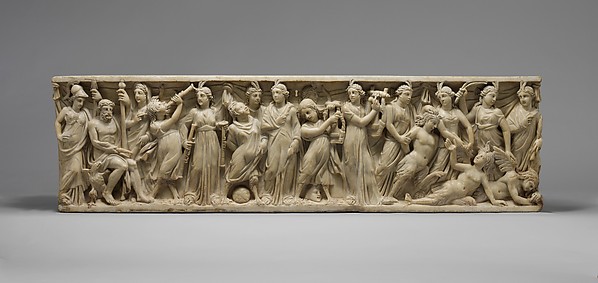 (opens the museum record)
Ancient object
Marble sarcophagus with the contest between the Muses and the Sirens (opens the museum record)
Fragments of a Roman marble sarcophagus carved with the contest between the Muses and the Sirens; the museum's tags list Hera among the figures on the surrounding frieze. The relief shows how Greek mythological subjects continued to furnish Roman funerary art centuries later.
Sources and further reading
Ancient sources
Quotations, paraphrases and verification notes. Each passage states what has been checked.
“I sing of golden-throned Hera whom Rhea bare. Queen of the immortals is she, surpassing all in beauty: she is the sister and the wife of loud-thundering Zeus.”
Homeric Hymn to Hera · 1-3
Translation: Hugh G. Evelyn-White
H. G. Evelyn-White, 1914
Read sourceAppears in
Ancient and classical works featuring this figure.
eventually becomes Zeus's queen (the catalog of Zeus's unions)
Further reading
Hera's role in the Trojan War and conflicts with Zeus
Read online: Iliad (opens in new tab)Comprehensive account of Hera's persecution of Heracles
Read online: Bibliotheca (Library) (opens in new tab)
About this entry
By Elizabeth Stein for Mythos Atlas. About the author. Editorial notes are grounded in the site's cited sources and can be challenged through the contact page.
Parallels are editorial comparisons across traditions: a shared role does not, by itself, establish a shared origin.
Family relationships come from the atlas's kinship records. Ancient sources often disagree on divine genealogy.
Keep exploring
One myth a week, with its sources in a short email. The sign-up form is just below.
Genealogy
Family tree
Hera's parents, consorts, children and rivals, as recorded in the atlas.