Greek Pantheon
Hephaestus
Also known as Vulcan, Hephaistos
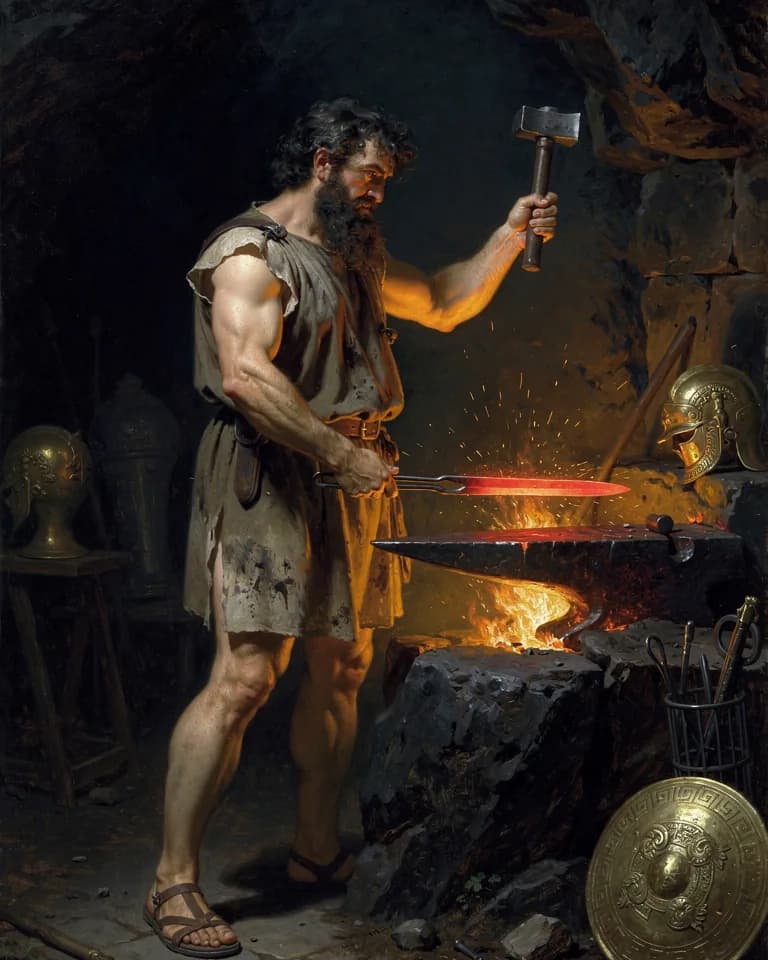
- fire
- metalworking
- crafts
- sculpture
God of fire, metalworking, and crafts. Son of Hera (and possibly Zeus), cast from Olympus due to his lameness but later readmitted.
About Hephaestus
The Smith God
Hephaestus is the master blacksmith of the gods, controlling fire and the forge. He is the patron of all craftsmen. Unlike the other beautiful immortals, he was born lame and was cast off Olympus by his mother Hera (or Zeus).
The Divine Artificer
He returned to Olympus and built the golden palaces of the gods. He crafted Achilles' armor, Zeus's thunderbolts, and Pandora (the first woman). He is married to Aphrodite, though she is unfaithful to him.
Across traditions
Parallel figures
Figures who play a role like Hephaestus's in other traditions.
 RomanVulcanIllustration
Vulcan is the direct Roman equivalent, sharing the same role as divine blacksmith and god of fire and the forge
Compare Hephaestus and Vulcan side by side
Worship and cult
Temples, festivals, and practices recorded for Hephaestus
Smiths and fire that can be worked. The Chalkeia linked him with Athena Ergane. Lemnos kept an older, dirtier fire-god. Lameness is myth; the cult is bronze, volcano, and the workshop.
Sacred sites
- Hephaesteion above the Athenian Agora
- Island cult on Lemnos
Festivals
- Chalkeia
- Hephaisteia
Family
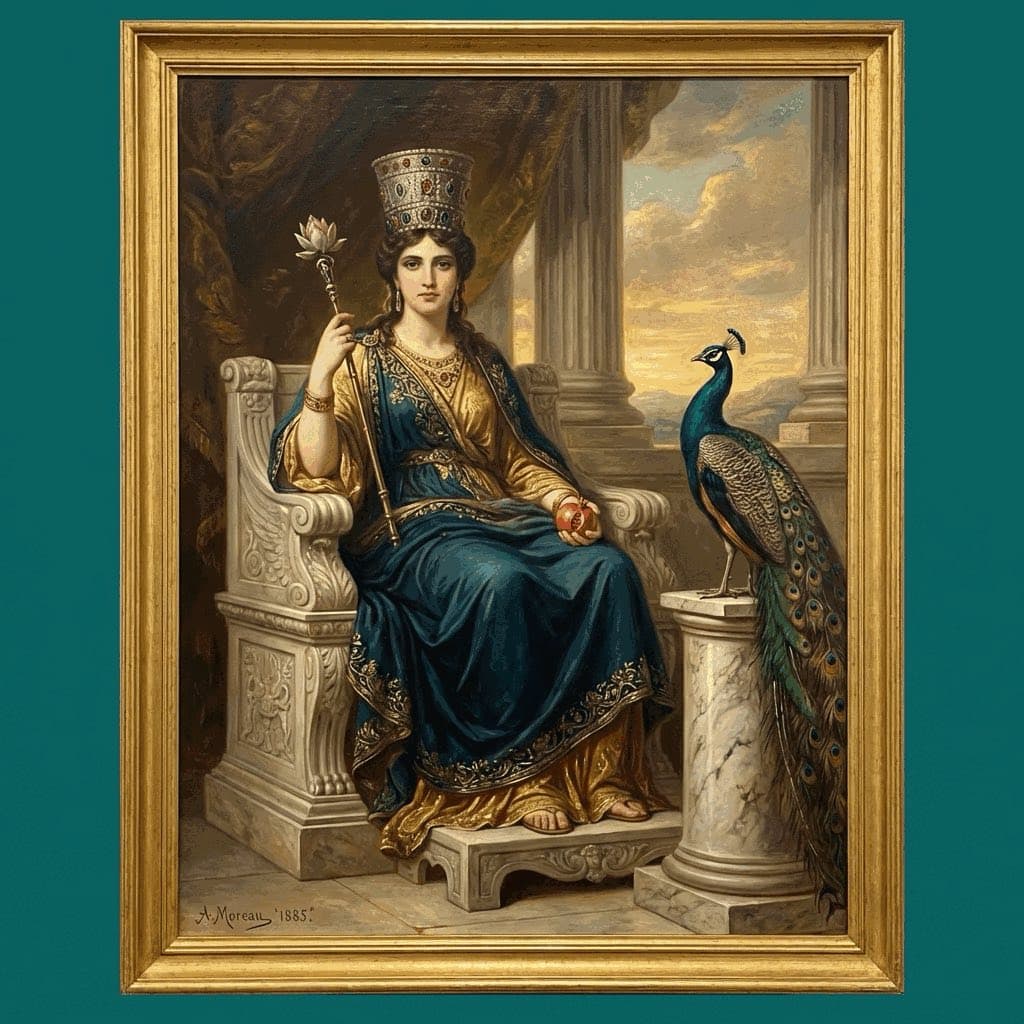
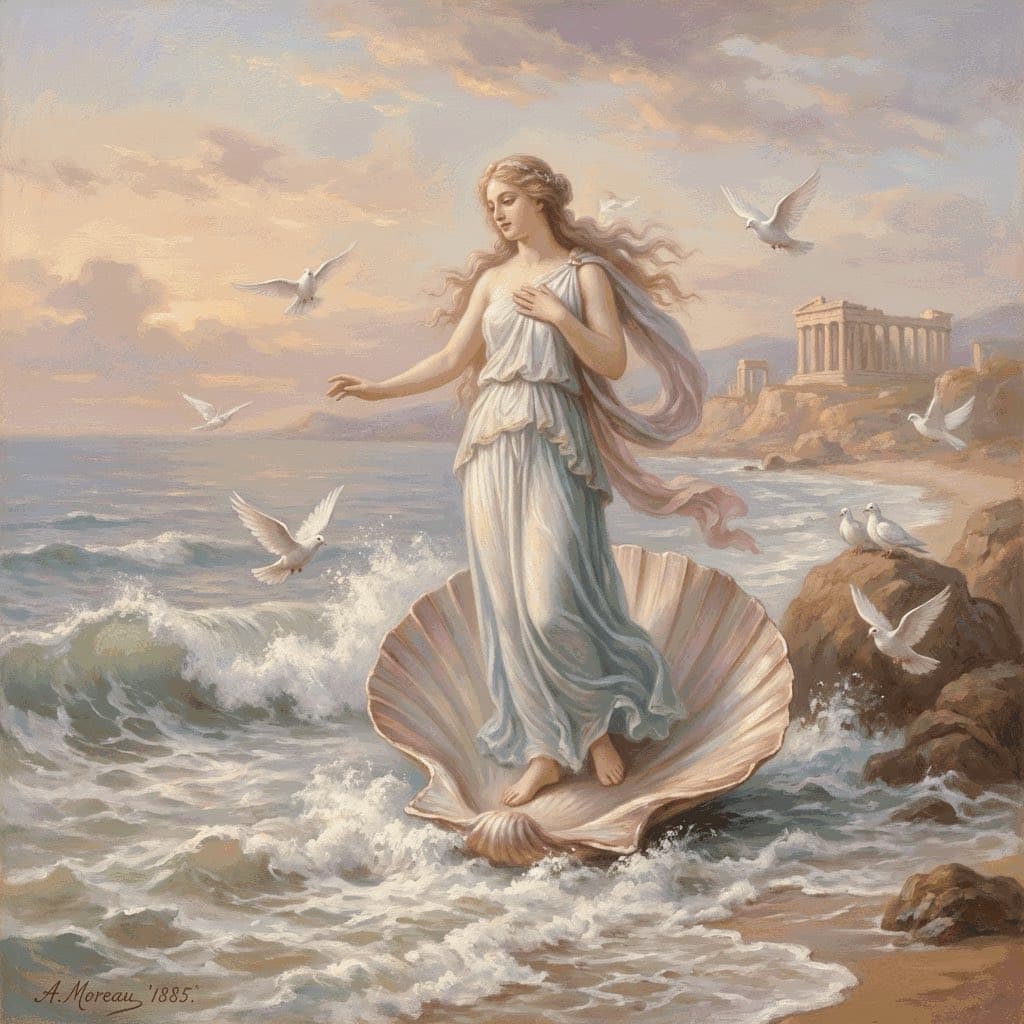
Relationship sources
Theogony — Hera parent of Hephaestus
Hesiod · Hugh G. Evelyn-White, Hesiod, the Homeric Hymns and Homerica (1914), Project Gutenberg #348 · Theogony 924–929
In the atlas
Where Hephaestus appears
Stories
Sources and further reading
Source notes
These references are recorded in the catalog. Their passage wording and translation have not been checked, so quotations are not displayed here.
- Homeric Hymn XX, To Hephaestus (trans. Evelyn-White)
Cite this page
No publication date is recorded for this page, so each citation uses n.d. and today's date as the access date.
About this entry
By Elizabeth Stein for Mythos Atlas. About the author. Editorial notes are grounded in the site's cited sources and can be challenged through the contact page.
Parallels are editorial comparisons across traditions: a shared role does not, by itself, establish a shared origin.
Family relationships come from the atlas's kinship records. Ancient sources often disagree on divine genealogy.
Keep exploring
One myth a week, with its sources in a short email. The sign-up form is just below.
Genealogy
Family tree
Hephaestus's parents, consorts, children and rivals, as recorded in the atlas.