Side by sideParallel across traditions

Hephaestus vs Vulcan

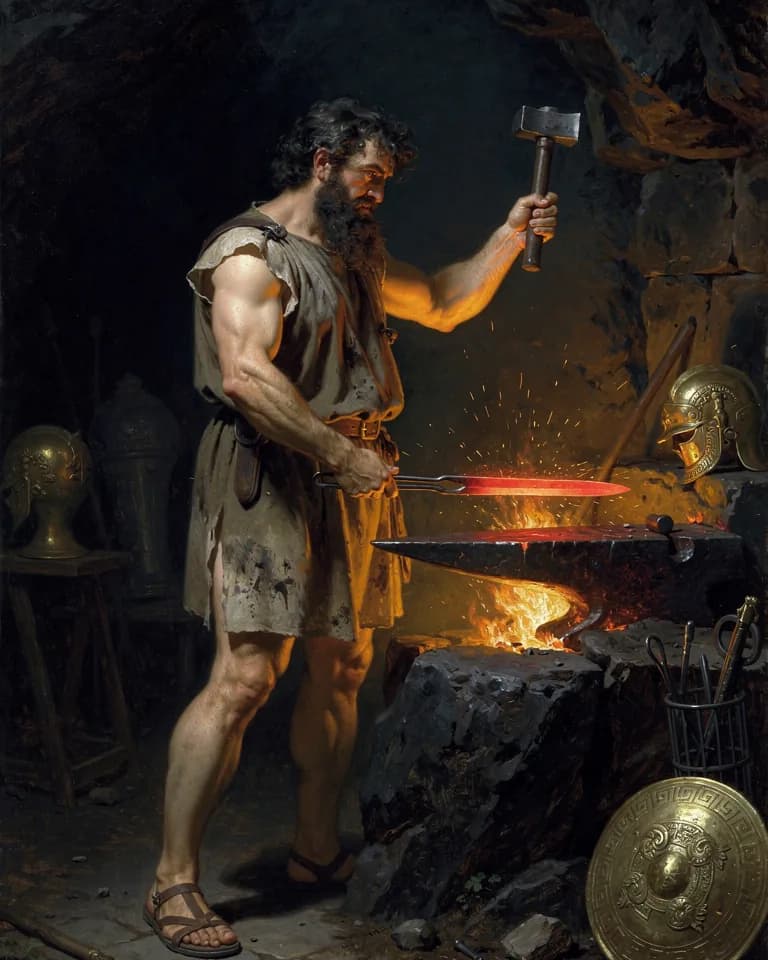
Hephaestus
HephaestusGreek
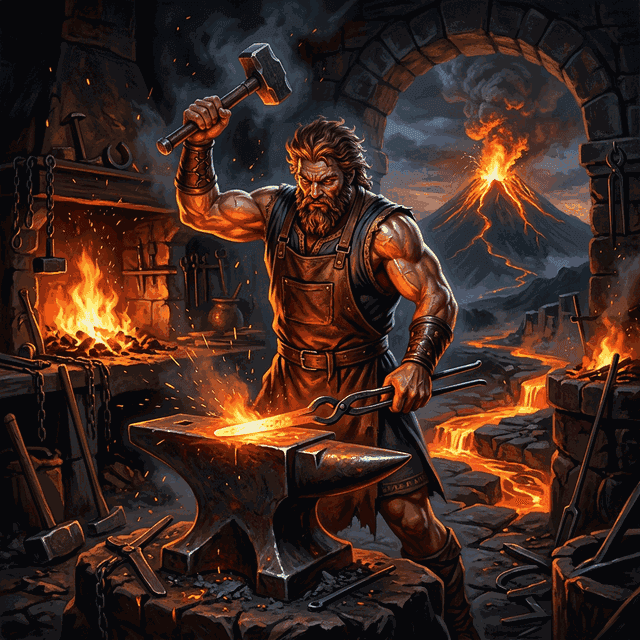
Vulcan
VulcanRoman

Vulcan is the direct Roman equivalent, sharing the same role as divine blacksmith and god of fire and the forge.

At a glance

Hephaestus and Vulcan compared
HephaestusVulcan
TraditionGreek PantheonRoman Pantheon
Domainsfire, metalworking, crafts, sculpturefire, metalworking, forges, volcanoes
Symbolshammer, anvil, tongs, forgeanvil, hammer, tongs, volcano
Also calledVulcan, HephaistosVulcanus

Where they meet

Both are associated with fire and metalworking.

They share symbols: hammer, anvil, and tongs.

  • hammer
  • anvil
  • tongs

Where they part

Only Hephaestus

Associated with crafts and sculpture.

Only Vulcan

Associated with forges and volcanoes.

Why they are compared

Hephaestus is the direct Greek equivalent, god of fire and the forge.

How each was worshipped

Hephaestus

Cult sites
Hephaesteion above the Athenian Agora; Island cult on Lemnos
Festivals
Chalkeia; Hephaisteia

Smiths and fire that can be worked. The Chalkeia linked him with Athena Ergane. Lemnos kept an older, dirtier fire-god. Lameness is myth; the cult is bronze, volcano, and the workshop.

Vulcan

Cult sites
Volcanal, an open altar in the Forum; Temple of Vulcan in the Campus Martius
Festivals
Volcanalia (23 August)

In the dry month Romans threw live fish into the fire to keep the god fed and the city unburned. His altar sat outside the oldest inhabited core, because a fire god inside the pomerium was a bad idea. Smiths and millers kept him.

The two figures

Greek Pantheon

Hephaestus

God of fire, metalworking, and crafts. Son of Hera (and possibly Zeus), cast from Olympus due to his lameness but later readmitted.

Hephaestus is the master blacksmith of the gods, controlling fire and the forge. He is the patron of all craftsmen. Unlike the other beautiful immortals, he was born lame and was cast off Olympus by his mother Hera (or Zeus).

Read the full Hephaestus entry

Roman Pantheon

Vulcan

God of fire, metalworking, and the forge. Craftsman of the gods who forged divine weapons and armor. Roman equivalent of Hephaestus. Associated with volcanic activity.

Vulcan is fire that cooks and fire that burns a street down. As a smith he overlaps Hephaestus: forges, divine weapons, the lame craftsman. As **Volcanus** he is also the dangerous blaze inside a wooden city. The **Vulcanalia** on August 23 included bonfires and offerings meant to keep accidental fire in its place at the driest time of year.

Read the full Vulcan entry
About this comparison

Comparisons pair figures that play a similar role across traditions, or that the myths connect within one. A shared role does not, by itself, establish a shared origin.