Mythos Atlas

Side by sideParallel across traditions

Hephaestus vs Ilmarinen

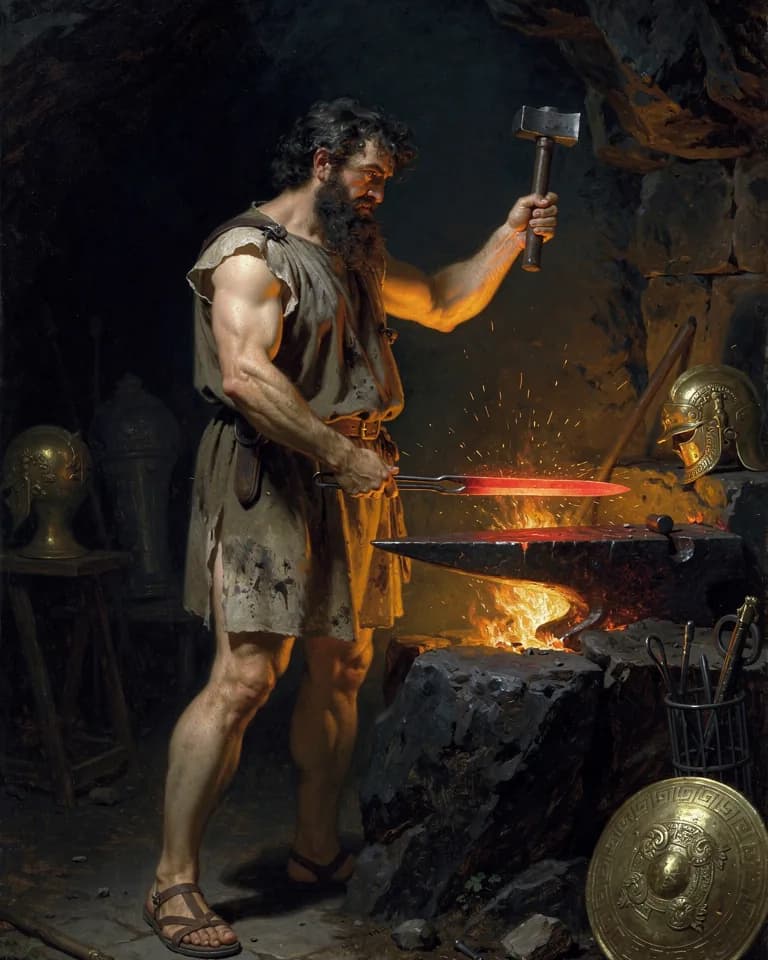
Hephaestus
HephaestusGreek
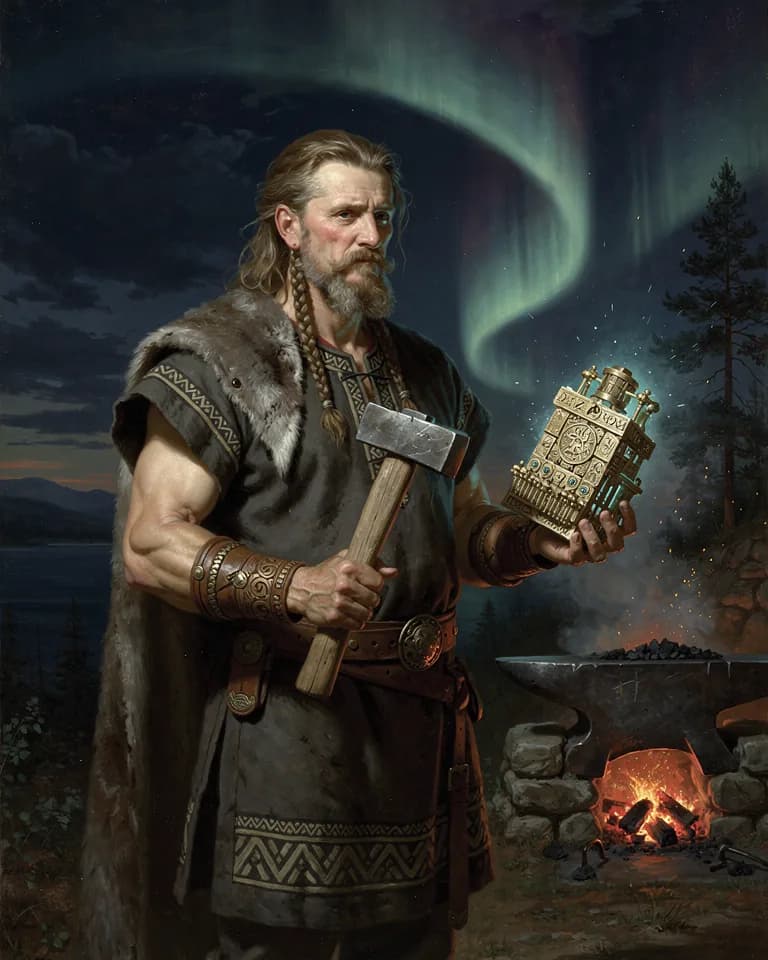
Ilmarinen
IlmarinenFinnish Tradition (Kalevala)

Both are divine master smiths who forge marvels for others, including a manufactured woman (Hephaestus's Pandora, Ilmarinen's golden bride) that brings no good.

At a glance

Hephaestus and Ilmarinen compared
HephaestusIlmarinen
TraditionGreek PantheonFinnish Tradition (Kalevala)
Domainsfire, metalworking, crafts, sculpturesmithcraft, the weather, the forging of the sky
Symbolshammer, anvil, tongs, forgethe hammer and forge, the Sampo, the vault of heaven
Also calledVulcan, HephaistosSeppo Ilmarinen (Ilmarinen the Smith)

Where they meet

The atlas records no domain or symbol that Hephaestus and Ilmarinen share.

They are compared for the part each plays in their own tradition rather than for any attribute in common.

Where they part

Only Hephaestus

Associated with fire, metalworking, crafts, and sculpture.

Only Ilmarinen

Associated with smithcraft, the weather, and the forging of the sky.

How each was worshipped

Hephaestus

Cult sites
Hephaesteion above the Athenian Agora; Island cult on Lemnos
Festivals
Chalkeia; Hephaisteia

Smiths and fire that can be worked. The Chalkeia linked him with Athena Ergane. Lemnos kept an older, dirtier fire-god. Lameness is myth; the cult is bronze, volcano, and the workshop.

Ilmarinen

Invoked in smiths' charms, especially the 'origin of iron'; Agricola records him as a weather god who helped travelers.

The two figures

Greek Pantheon

Hephaestus

God of fire, metalworking, and crafts. Son of Hera (and possibly Zeus), cast from Olympus due to his lameness but later readmitted.

Hephaestus is the master blacksmith of the gods, controlling fire and the forge. He is the patron of all craftsmen. Unlike the other beautiful immortals, he was born lame and was cast off Olympus by his mother Hera (or Zeus).

Read the full Hephaestus entry

Finnish Tradition (Kalevala)

Ilmarinen

The eternal smith of Finnish tradition, who forged the vault of the sky and, in the Kalevala, the Sampo for Louhi of Pohjola; named by Agricola in 1551 as the maker of calm and storm who carried travelers on their way.

In folk poetry, and in the Kalevala's charm of the origin of iron, he is born on a hill of charcoal with a copper hammer in his hand.

Agricola's list of 1551 says Ilmarinen 'made peace and weather and carried travelers forward', a role as a god of the air and winds that matches his name, from *ilma*, 'air, weather'. In the runo-songs he is above all the smith (*seppo*), the one 'who forged the sky, who hammered out the lid of the air', so skilled that no trace of hammer or tongs can be seen on his work.

Read the full Ilmarinen entry
About this comparison

Comparisons pair figures that play a similar role across traditions, or that the myths connect within one. A shared role does not, by itself, establish a shared origin.