Side by sideParallel across traditions

Goibniu vs Vulcan

Goibniu
GoibniuCeltic
Vulcan
VulcanRoman

Both are divine smiths who forge weapons and tools for the other gods.

At a glance

Goibniu and Vulcan compared
GoibniuVulcan
TraditionCeltic PantheonRoman Pantheon
Domainssmithing, weapons, brewing, immortalityfire, metalworking, forges, volcanoes
Symbolsanvil, hammer, aleanvil, hammer, tongs, volcano
Also calledGoibhniu, GovannonVulcanus

Where they meet

They share symbols: anvil and hammer.

  • anvil
  • hammer

Where they part

Only Goibniu

Associated with smithing, weapons, brewing, and immortality.

Only Vulcan

Associated with fire, metalworking, forges, and volcanoes.

Why they are compared

Both are divine smiths who forge weapons and tools for the rest of the pantheon.

How each was worshipped

Goibniu

Cult sites
No attested temple in the surviving record

The smith who hosts the feast of immortality in the literature. Smith-gods leave tools and stories, not parish rolls. Honest absence of a festival list.

Vulcan

Cult sites
Volcanal, an open altar in the Forum; Temple of Vulcan in the Campus Martius
Festivals
Volcanalia (23 August)

In the dry month Romans threw live fish into the fire to keep the god fed and the city unburned. His altar sat outside the oldest inhabited core, because a fire god inside the pomerium was a bad idea. Smiths and millers kept him.

The two figures

Celtic Pantheon

Goibniu

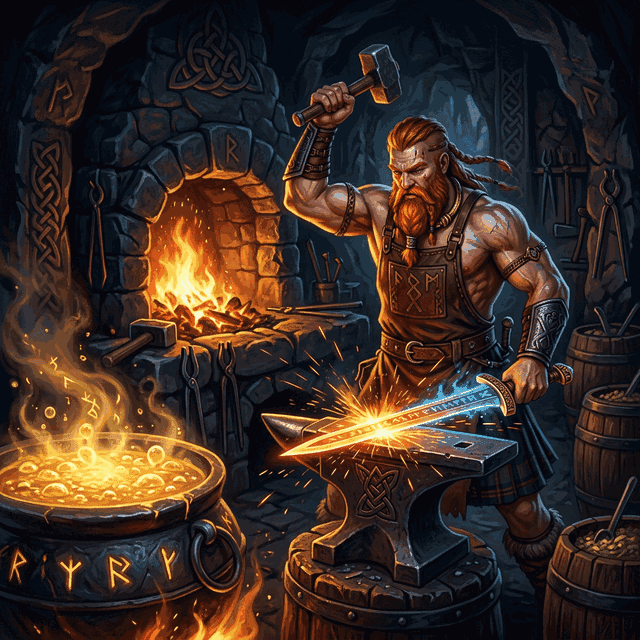
The divine smith who forges weapons that never miss and brews the ale of immortality. His hammer falls three times, and the weapon is complete.

Goibniu is one of the **Trí Dé Dána**, the three gods of skill, alongside his brothers **Creidhne** (the brazier) and **Luchta** (the carpenter). Together they crafted the weapons of the Tuatha Dé Danann for the Second Battle of Mag Tuired. Goibniu worked at legendary speed: three blows of his hammer completed any weapon, and every spear he forged struck true. He also brewed the **Fled Goibnenn** (Feast of Goibniu), an ale that granted those who drank it immunity to age and disease. In the Welsh tradition, he appears as **Gofannon**, brother of the goddess Arianrhod.

Goibniu stands at the forge of the gods, hammer in hand, crafting the weapons that defend the Tuatha Dé Danann against their enemies. He represents the sacred status of the smith in Celtic society, a figure who transforms raw earth into gleaming metal, who shapes the tools of war and agriculture alike.

Read the full Goibniu entry

Roman Pantheon

Vulcan

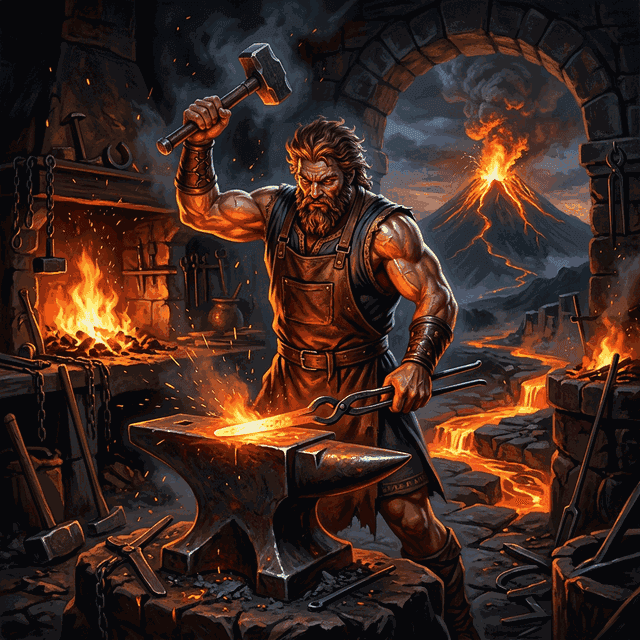
God of fire, metalworking, and the forge. Craftsman of the gods who forged divine weapons and armor. Roman equivalent of Hephaestus. Associated with volcanic activity.

Vulcan is fire that cooks and fire that burns a street down. As a smith he overlaps Hephaestus: forges, divine weapons, the lame craftsman. As **Volcanus** he is also the dangerous blaze inside a wooden city. The **Vulcanalia** on August 23 included bonfires and offerings meant to keep accidental fire in its place at the driest time of year.

Read the full Vulcan entry
About this comparison

Comparisons pair figures that play a similar role across traditions, or that the myths connect within one. A shared role does not, by itself, establish a shared origin.