Side by sideParallel across traditions

Pele vs Vulcan

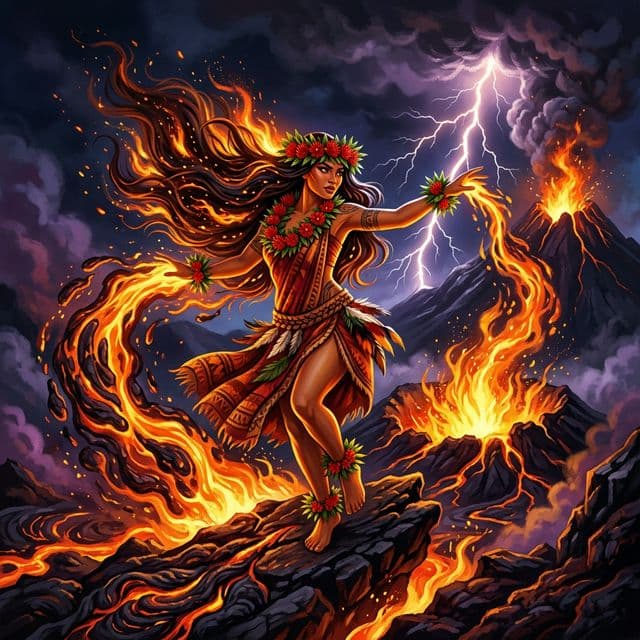
Pele
PelePolynesian
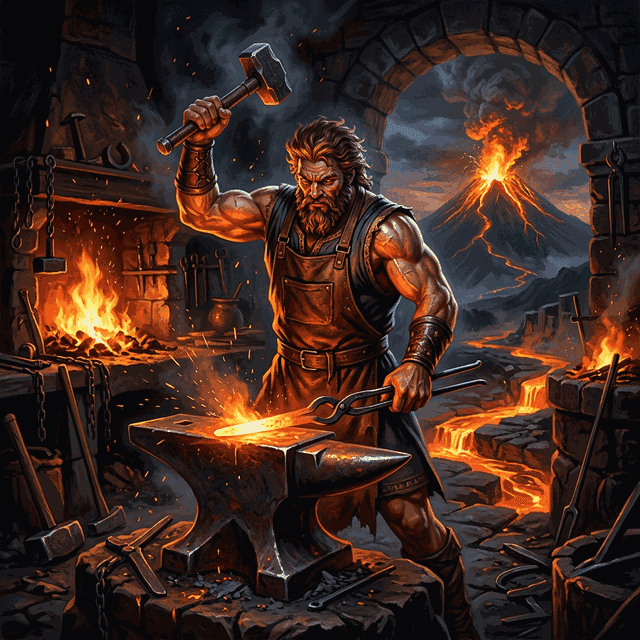
Vulcan
VulcanRoman

Both are associated with volcanic fire and its creative-destructive power.

At a glance

Pele and Vulcan compared
PeleVulcan
TraditionPolynesian PantheonRoman Pantheon
Domainsvolcanoes, fire, lightning, dance, creationfire, metalworking, forges, volcanoes
Symbolsvolcanic fire, ohia lehua flower, pahoehoe lava, lava rockanvil, hammer, tongs, volcano
Also calledPelehonuamea (She who shapes the sacred land), Ka wahine ai honua (The woman who devours the land)Vulcanus

Where they meet

Both are associated with volcanoes and fire.

Where they part

Only Pele

Associated with lightning, dance, and creation.

Only Vulcan

Associated with metalworking and forges.

How each was worshipped

Pele

Cult sites
Halemaumau crater at Kilauea, her living house; Other volcanic sites on Hawai'i Island
Festivals
Offerings of gin, berries, and ohelo; hula for Pele

The volcano is the temple. People still stack ho'okupu at the crater. She is jealousy, fire, and new land. Christian centuries did not empty the pit. Treat living practice as practice, not as folklore leftover.

Vulcan

Cult sites
Volcanal, an open altar in the Forum; Temple of Vulcan in the Campus Martius
Festivals
Volcanalia (23 August)

In the dry month Romans threw live fish into the fire to keep the god fed and the city unburned. His altar sat outside the oldest inhabited core, because a fire god inside the pomerium was a bad idea. Smiths and millers kept him.

The two figures

Polynesian Pantheon

Pele

The Hawaiian goddess of volcanoes, fire, and lightning. Pele is a fierce and passionate deity who creates new land through volcanic eruptions and whose temper is as volatile as the lava she commands.

Pele was born in Kahiki (Tahiti) to Haumea and Ku-waha-ilo. Her fiery nature and affairs angered her sister Namaka, the sea goddess, who drove her from her homeland. Pele traveled across the Pacific, seeking a home for her fires, finally settling in Kilauea volcano on Hawaii, where she remains the living goddess of volcanic creation.

Pele is the most revered deity in Hawaiian mythology, an akua (goddess) whose power is visible in every eruption of Kilauea. She embodies both creation and destruction, as her lava destroys what exists while simultaneously creating new land. She represents the untameable forces of nature and the passionate spirit of Hawaii itself.

Read the full Pele entry

Roman Pantheon

Vulcan

God of fire, metalworking, and the forge. Craftsman of the gods who forged divine weapons and armor. Roman equivalent of Hephaestus. Associated with volcanic activity.

Vulcan is fire that cooks and fire that burns a street down. As a smith he overlaps Hephaestus: forges, divine weapons, the lame craftsman. As **Volcanus** he is also the dangerous blaze inside a wooden city. The **Vulcanalia** on August 23 included bonfires and offerings meant to keep accidental fire in its place at the driest time of year.

Read the full Vulcan entry
About this comparison

Comparisons pair figures that play a similar role across traditions, or that the myths connect within one. A shared role does not, by itself, establish a shared origin.