Greek Pantheon
Dionysus
Also known as Bacchus, Liber

- wine
- festivity
- theater
- madness
- ecstasy
God of wine, festivity, and theater. Son of Zeus and the mortal Semele, the only Olympian born to a mortal parent.
About Dionysus
The God of Wine
Dionysus represents the liberating power of wine and religious ecstasy. He wanders the world spreading the culture of the vine, accompanied by satyrs and maenads (wild female followers).
Twice-Born
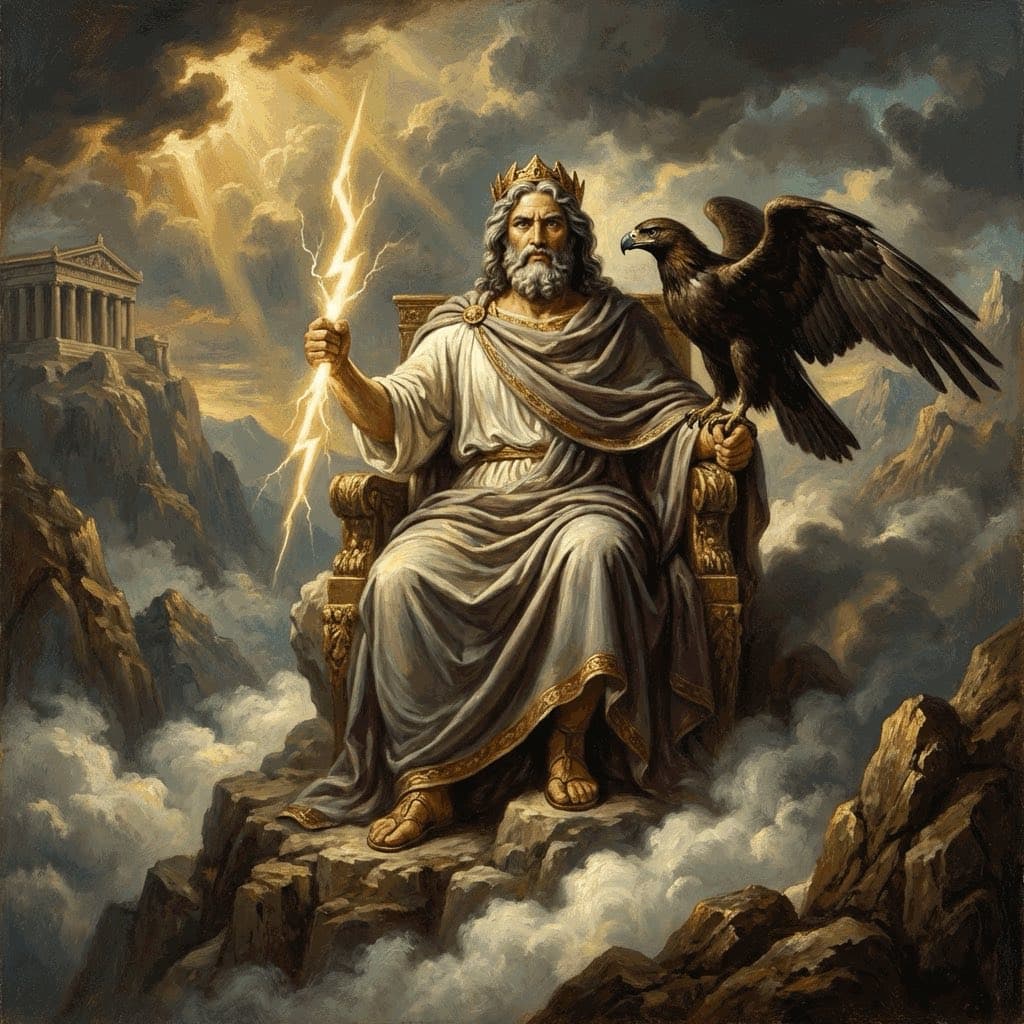
His mother Semele was consumed by Zeus's lightning. Zeus sewed the unborn Dionysus into his thigh until he was ready to be born, making him "twice-born." He is the patron of theater, as Greek drama originated in festivals honoring him.
Across traditions
Parallel figures
Figures who play a role like Dionysus's in other traditions.
 RomanBacchusIllustration
Bacchus is the Roman name for the same wine and ecstasy god
Compare Dionysus and Bacchus side by side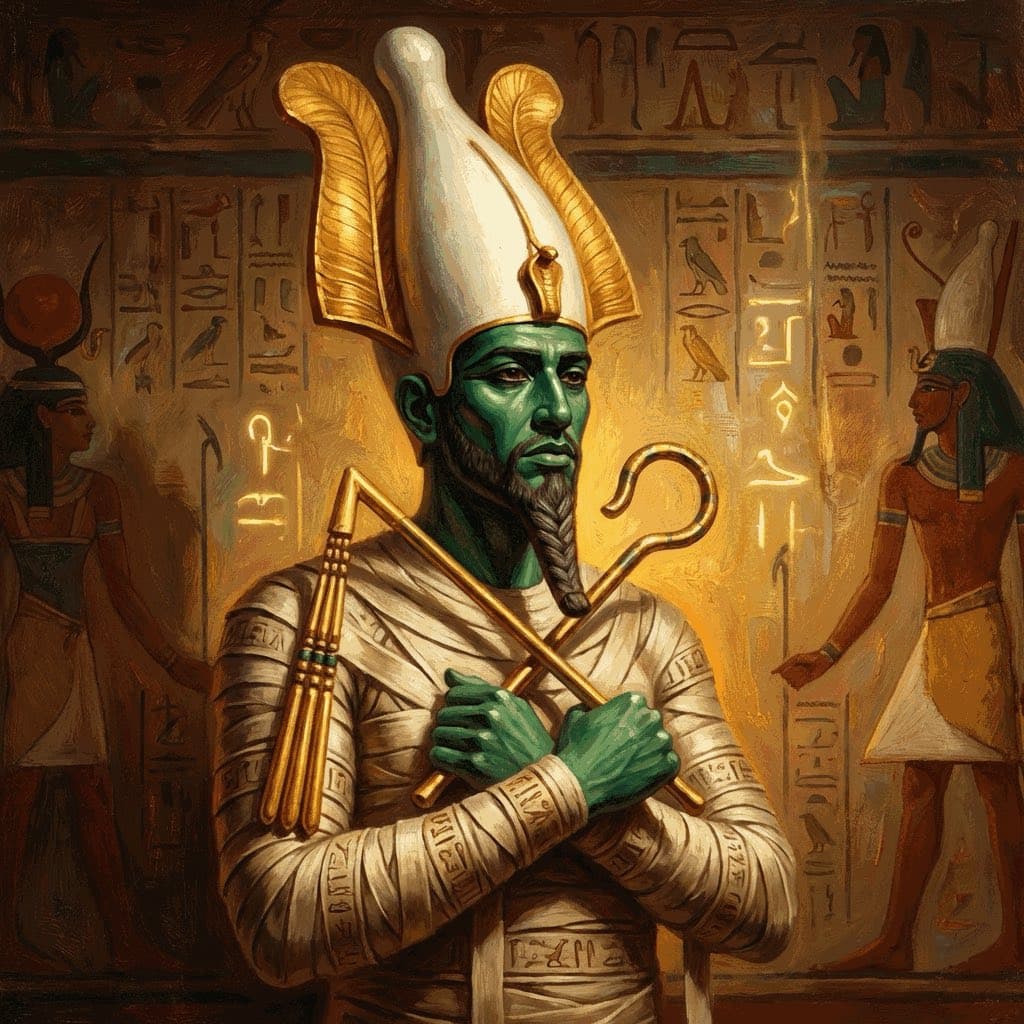 EgyptianOsirisIllustration
Herodotus explicitly identified Dionysus with Osiris; both preside over wine/vegetation, death, and ecstatic resurrection cult
Compare Dionysus and Osiris side by side
Worship and cult
Temples, festivals, and practices recorded for Dionysus
Wine, theater, and the winter opening of jars. The City Dionysia brought tragedies as offerings. The Anthesteria mixed the dead with the new wine. Maenads belong to myth and to real night processions; the civic cult kept both on a leash.
Sacred sites
- Theatre of Dionysus on the south slope of the Acropolis
- Sanctuary of Dionysus Eleuthereus
Festivals
- City Dionysia
- Lenaia
- Anthesteria
- Rural Dionysia
Family
 Dionysus
Relationship sources
Theogony — Zeus parent of Dionysus
Hesiod · Hugh G. Evelyn-White, Hesiod, the Homeric Hymns and Homerica (1914), Project Gutenberg #348 · Theogony 940–942
Questions about Dionysus's family
- Who are Dionysus's parents?
- The atlas's kinship records name one parent of Dionysus: Zeus. Ancient accounts do not always agree on divine parentage.
In the museums
Dionysus in art
Real objects in public collections, released into the public domain by the museums that hold them. Dates refer to when each object was made. Objects made within the tradition come first, later depictions after.
 (opens the museum record)
Ancient object
Terracotta jug in the form of Dionysos (opens the museum record)
A terracotta jug shaped as the head of Dionysos, tagged by the museum with his name. Vessels formed as deity heads were a specialty of Hellenistic pottery workshops.
 (opens the museum record)
Ancient object
Terracotta column-krater (bowl for mixing wine and water) (opens the museum record)
An Archaic Attic mixing bowl painted with a scene the museum tags as showing Dionysos with maenads and satyrs, his usual retinue of ecstatic followers. Vessels of this shape mixed wine and water at the symposium, fitting for imagery of the wine god.
Sources and further reading
Source notes
These references are recorded in the catalog. Their passage wording and translation have not been checked, so quotations are not displayed here.
- Homeric Hymn VII, To Dionysus (trans. Evelyn-White)
Appears in
Ancient and classical works featuring this figure.
God of wine and divine ecstasy who turns Tyrrhenian pirate kidnappers into leaping dolphins (Hymn 7)
About this entry
By Elizabeth Stein for Mythos Atlas. About the author. Editorial notes are grounded in the site's cited sources and can be challenged through the contact page.
Parallels are editorial comparisons across traditions: a shared role does not, by itself, establish a shared origin.
Family relationships come from the atlas's kinship records. Ancient sources often disagree on divine genealogy.
Keep exploring
One myth a week, with its sources in a short email. The sign-up form is just below.
Genealogy
Family tree
Dionysus's parents, consorts, children and rivals, as recorded in the atlas.