Yoruba Tradition
Shango
Also known as Sango, Xango, Chango
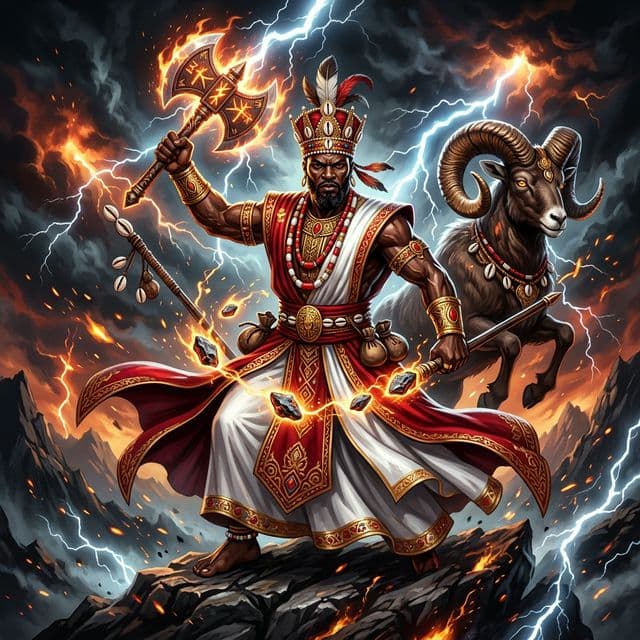
- thunder
- lightning
- fire
- justice
- kingship
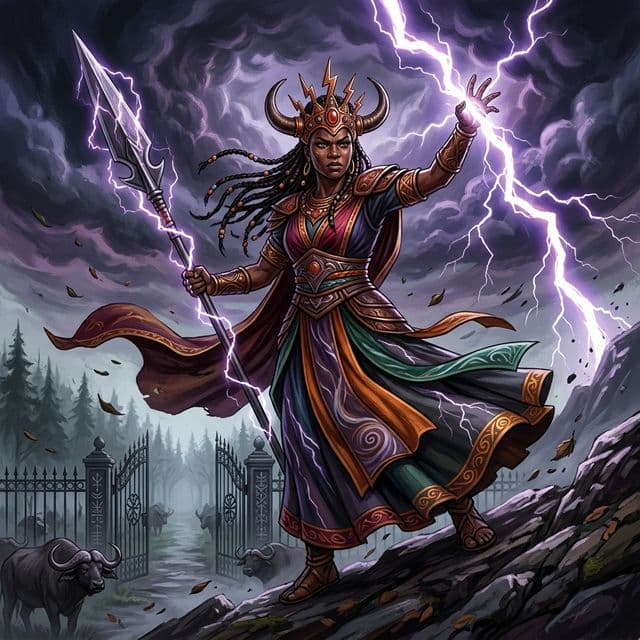
The Orisha of thunder, lightning, and fire. Shango was once a mortal king of Oyo who became deified after death.
About Shango
The Fourth King of Oyo
Shango occupies a unique position among the Orishas as a deified human king. According to tradition, he was the fourth Alaafin (king) of the Oyo Empire, one of West Africa's most powerful states.
Ascension to Divinity
After Shango's death, his followers refused to believe he was truly gone. When lightning struck those who mocked him, the people declared 'Oba koso!' ('The king did not hang!'). Shango had ascended to become the Orisha of thunder.
The Lightning Judge
Shango is called upon to deliver justice. Lightning strikes are believed to be Shango's punishment of thieves, liars, and evildoers. After a lightning strike, Shango's priests would search for thunderstones.
Diaspora Significance
In the Americas, Shango became one of the most prominent Orishas, often syncretized with Saint Barbara. His worship is central to Cuban Santeria and Brazilian Candomble.
Origin story
Shango began as a mortal man who became the fourth king of the Oyo Empire. A powerful ruler who could summon lightning, he was elevated to divine status by his devoted followers after his death.
Across traditions
Parallel figures
Figures who play a role like Shango's in other traditions.
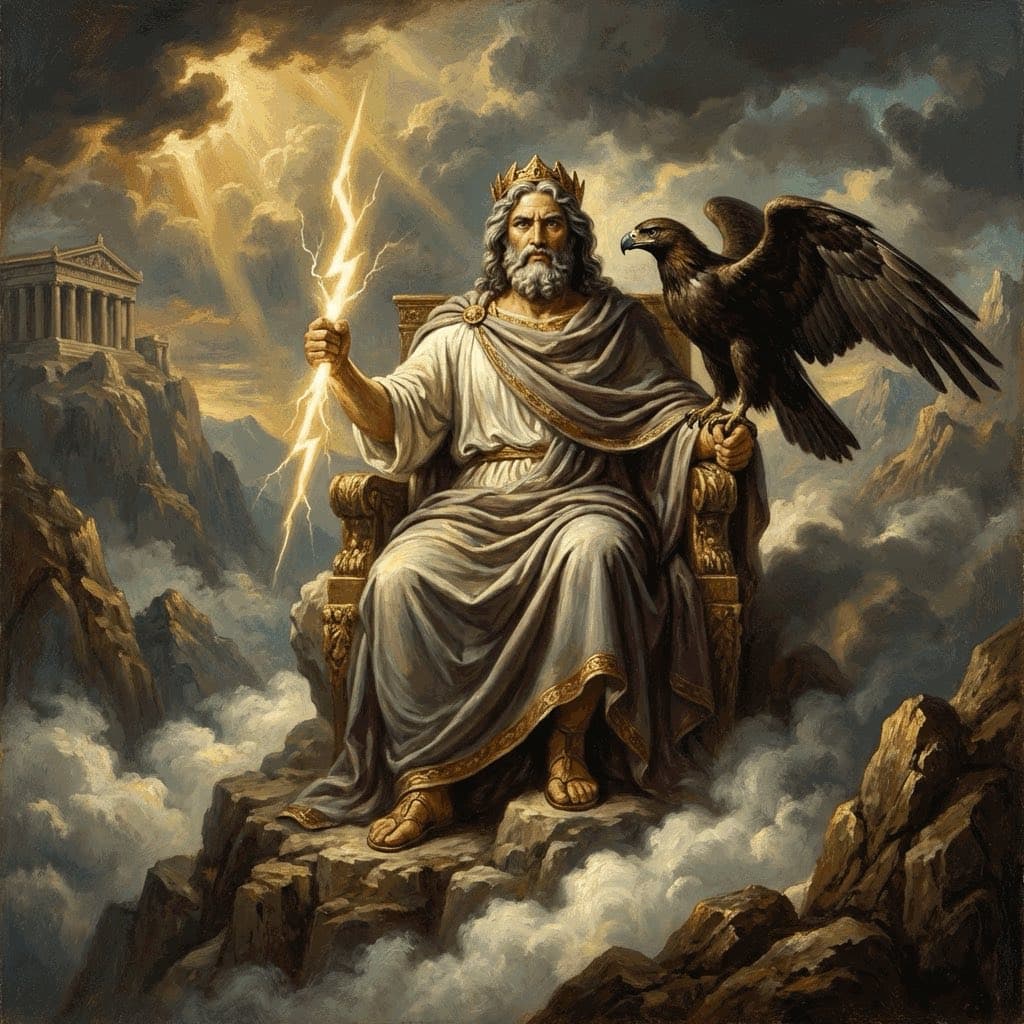 GreekZeusIllustration
Both are thunder gods and kings associated with divine justice
Compare Shango and Zeus side by side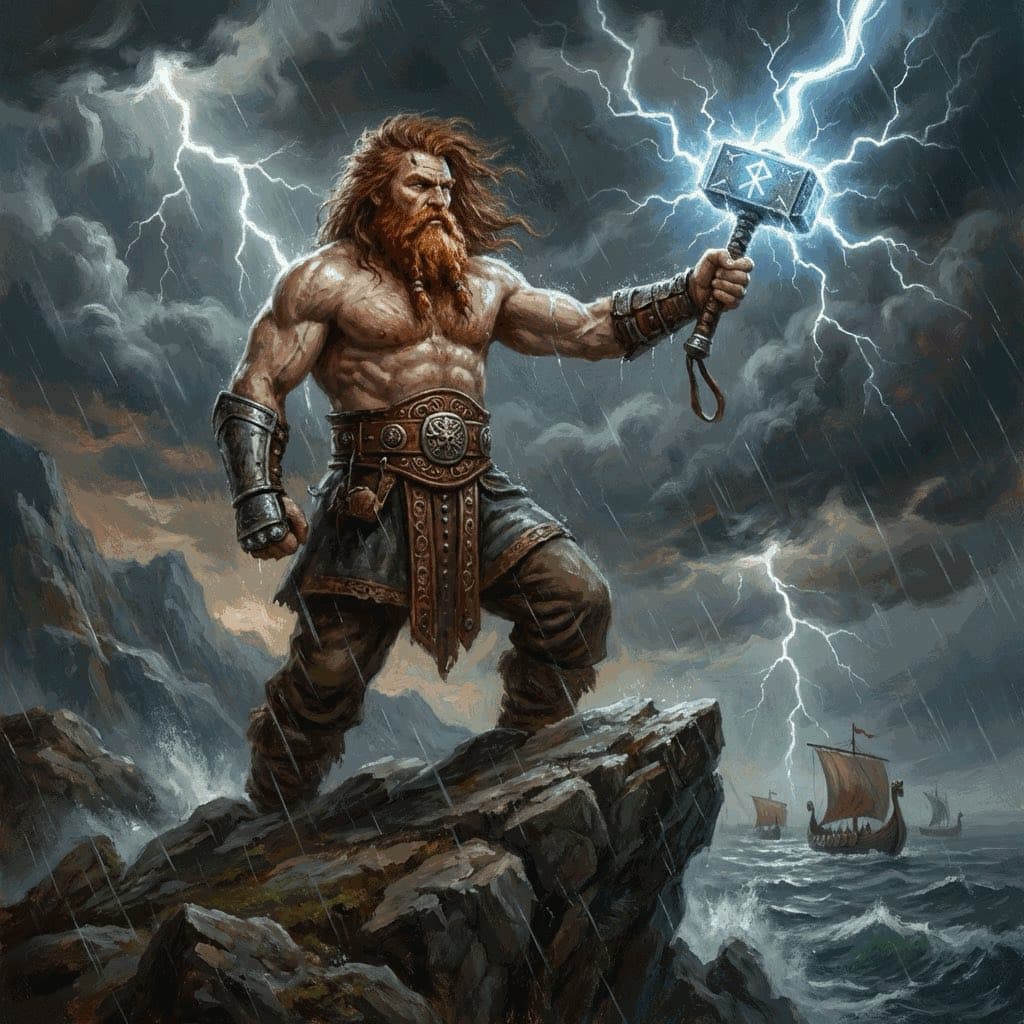 NorseThorIllustration
Both wield thunder and lightning as weapons
Compare Shango and Thor side by side
Worship and cult
Temples, festivals, and practices recorded for Shango
Double axe, ram, and red-and-white. Possession is loud. Oyo's royal thunder is not a metaphor; the drums mean it.
Sacred sites
- Koso at Oyo
- Thunder houses in the diaspora
Festivals
- Sango festival at Oyo
Family

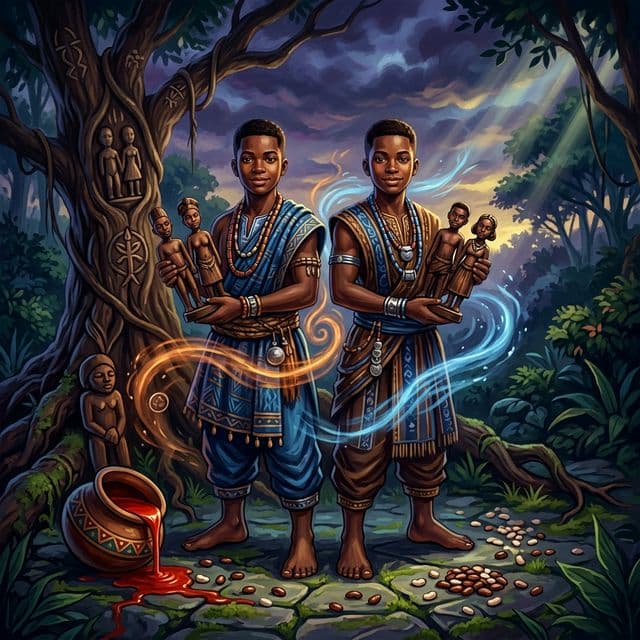
Questions about Shango's family
In the atlas
Where Shango appears
Sources and further reading
Source notes
These references are recorded in the catalog. Their passage wording and translation have not been checked, so quotations are not displayed here.
- Oriki Shango
About this entry
By Elizabeth Stein for Mythos Atlas. About the author. Editorial notes are grounded in the site's cited sources and can be challenged through the contact page.
Parallels are editorial comparisons across traditions: a shared role does not, by itself, establish a shared origin.
Family relationships come from the atlas's kinship records. Ancient sources often disagree on divine genealogy.
Keep exploring
One myth a week, with its sources in a short email. The sign-up form is just below.
Genealogy
Family tree
Shango's parents, consorts, children and rivals, as recorded in the atlas.