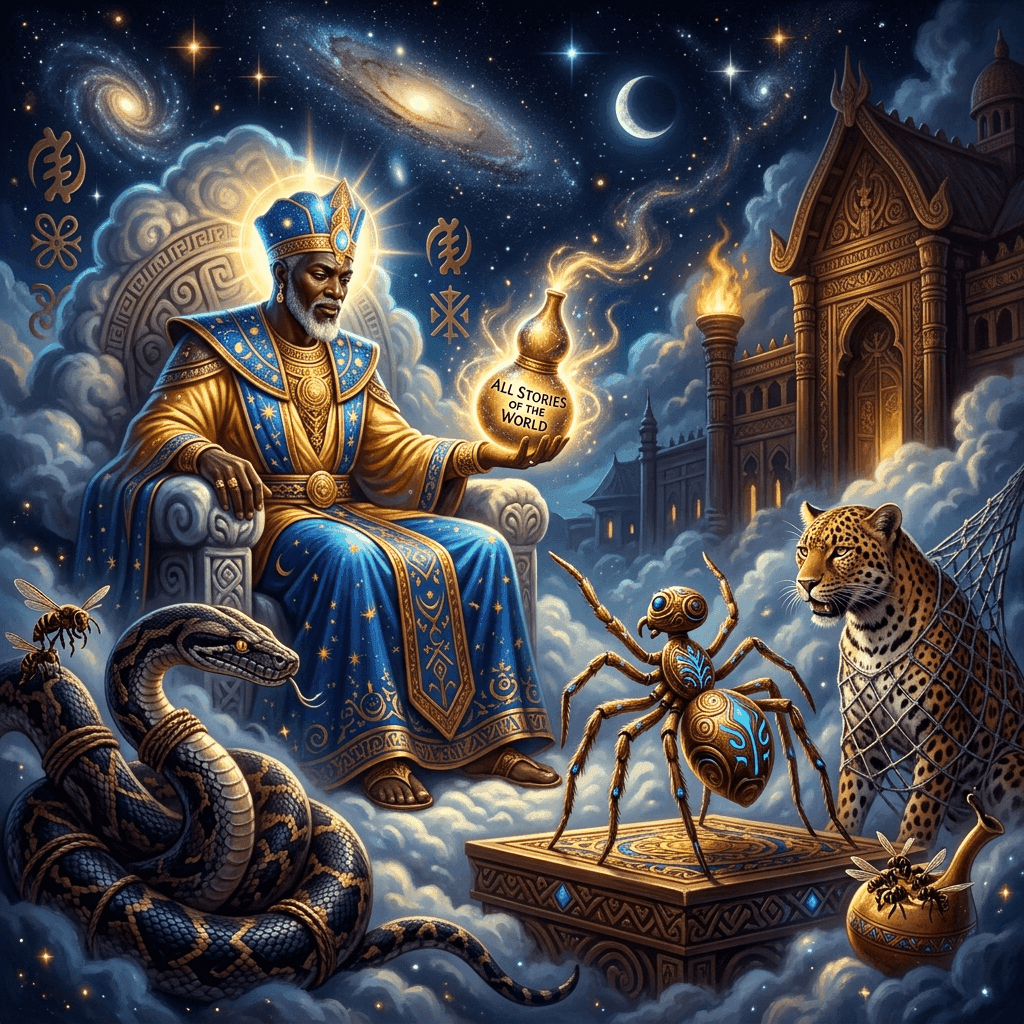
In one Akan-Ashanti account collected by R. S. Rattray, Anansi asks Nyame, the sky god, for the right to call the stories Anansesem—Spider Stories. Nyame sets a price that seems impossible: Onini the python, Osebo the leopard, the Mmoboro hornets, and Mmoatia, a fairy. Anansi also offers his mother, Ya Nsia.
Anansi consults his wife, Aso. To take Onini, he stages an argument about whether the python is longer than a palm branch. Onini stretches beside it to settle the question, and Anansi binds him with creeper rope.
For the hornets, Anansi splashes water on their swarm and himself, then pretends that rain has come. He offers them his gourd for shelter and closes it once they have flown inside. He digs a covered pit for Osebo; when the leopard falls in, Anansi kills him and carries him as part of the payment.
For Mmoatia, Anansi makes a carved wooden figure, coats it with sticky tree sap, and sets out food. When the fairy strikes the unresponsive figure, she becomes stuck. Anansi takes Mmoatia and Ya Nsia to Nyame.
Nyame accepts the payment and gives the name Anansesem to the stories. This is one recorded account among Akan-Ashanti storytelling traditions.
The Storyteller's Frame
Rattray printed the Twi text beside his English translation, and his collection shows how Akan tellers frame such tales: a telling opens with a formula disclaiming that the story is literally true, and closes by handing the story on, asking the listeners to take it elsewhere, whether they found it sweet or not, and to let some come back to the teller. The frame makes storytelling an exchange, which is fitting for a tale about how stories were bought.
The Spider Crosses the Ocean
Enslaved Akan people carried Ananse to the Caribbean and the Americas. He survives as Anansi or Anancy in Jamaica and across the Caribbean, as Nansi in Curaçao, and as Aunt Nancy in the southern United States, and the gum-doll trick used on the mmoatia reappears in the African American tar-baby stories.