Polynesian Pantheonhero
How Hina and Maui Lengthened the Day
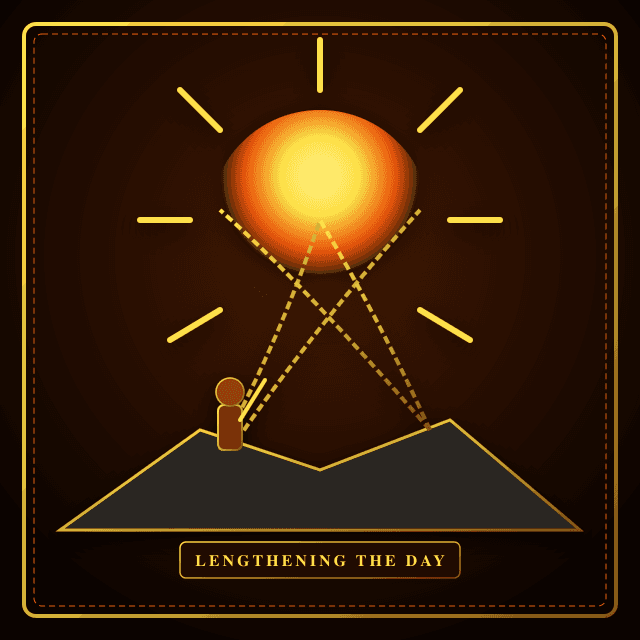
When the sun raced too fast for Hina to dry her bark cloth, Maui and his brothers snared it with ropes of flax (or, in Hawaiian tellings, coconut fibre and hair) until it promised to walk slowly across the sky.
An editorial retelling
The story
Two Tellings
Māui snares the sun in many Polynesian traditions. In the Māori version George Grey published in Polynesian Mythology (1855), Māui and his brothers make the ropes and the sun is Tama-nui-te-rā; in Hawaiian tradition, gathered in collections such as W. D. Westervelt's Legends of Ma-ui (1910), Māui acts for his mother Hina, who cannot dry her kapa cloth, and snares the sun from the summit of Haleakalā on Maui. The retelling below braids the common thread and notes where the traditions diverge.
Cloth That Would Not Dry
Hina beat tapa in the brief light. The sun — Tama-nui-te-rā — rushed from dawn to dusk so swiftly that her cloth stayed damp and days felt stolen.
The Snare
In the Māori telling Maui and his brothers plaited strong ropes of flax; in some Hawaiian tellings the ropes are made of coconut fibre, or from the hair of his sister or of Hina herself. With his brothers he traveled east to the sun’s pit, laid nooses along its path, and when the blazing disk rose, the ropes held. The sun struggled; in Grey's version Maui beat it with the enchanted jawbone of his ancestress Muri-ranga-whenua until, crying out, it revealed its second name and begged for release.
A Slower Path
Released on a vow, the sun thereafter crossed the sky more slowly. Humans gained time to work, worship, and dry their cloth. The myth ties domestic craft (Hina’s tapa) to cosmic negotiation (Maui’s snare) — everyday labor secured by heroic daring.
Haleakalā
The Hawaiian name Haleakalā means 'house of the sun', and the story is attached to the great volcano on the island that bears Māui's name. In many Hawaiian tellings the agreement is that the sun will travel slowly for half the year, which gives the long days of summer, and more quickly for the other half.
Listen or change reading mode
Highlights
When the sun raced too fast for Hina to dry her bark cloth, Maui and his brothers snared it with ropes of sisal and hair until it promised to walk slowly across the sky.
Why it matters
Pairs Maui’s solar feat with Hina’s craft, rooting astronomy in household life across Polynesian tellings.
Quick answers
- What is the story of How Hina and Maui Lengthened the Day about?
- When the sun raced too fast for Hina to dry her bark cloth, Maui and his brothers snared it with ropes of flax (or, in Hawaiian tellings, coconut fibre and hair) until it promised to walk slowly across the sky.
- What themes does How Hina and Maui Lengthened the Day explore?
- The atlas lists these themes for How Hina and Maui Lengthened the Day: cooperation, sun, craft, and cleverness.
Sources and further reading
By Elizabeth Stein for Mythos Atlas. About the author. Editorial notes are grounded in the site's cited sources and can be challenged through the contact page.
Works cited
Hawaiian and Māori solar Maui cycles
Keep exploring
One myth a week, with its sources in a short email. The sign-up form is just below.