Egyptian Pantheontool
Crook and Flail
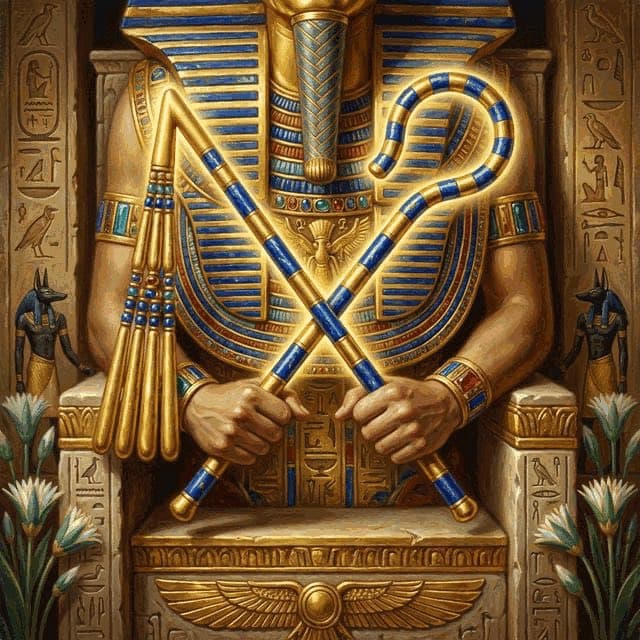
- Royal Authority
- Divine Kingship
- Agricultural Blessing
- Leadership
The twin symbols of pharaonic authority and divine kingship. The crook represents the ruler as shepherd of the people, while the flail symbolizes the power to provide sustenance.
About Crook and Flail
Heqa and nekhakha
Osiris in New Kingdom coffin and temple images holds the crook (heqa) and flail (nekhakha) crossed on the chest: the shepherd-king and the provider, or the flail read as a threshing tool. Tutankhamun's gold coffins show the pair in glass and metal. Pyramid Texts and later Book of the Dead vignettes already give Osiris royal kit; pharaohs copy the pose because they claim his office. These are standard emblems of kingship in relief, not a single named relic with a forging myth or a quest. The objects mean rule, not a story of theft.
Origin
Originally the symbols of Osiris as god-king of Egypt, passed down to all pharaohs as emblems of their divine right to rule.
Sources and further reading
Source notes
These references are recorded in the catalog. Their passage wording and translation have not been checked, so quotations are not displayed here.
- Book of the Dead vignettes and New Kingdom temple / coffin iconography
About this entry
By Elizabeth Stein for Mythos Atlas. About the author. Editorial notes are grounded in the site's cited sources and can be challenged through the contact page.
Keep exploring
One myth a week, with its sources in a short email. The sign-up form is just below.