Side by sideParent and child

Dazhbog vs Svarog

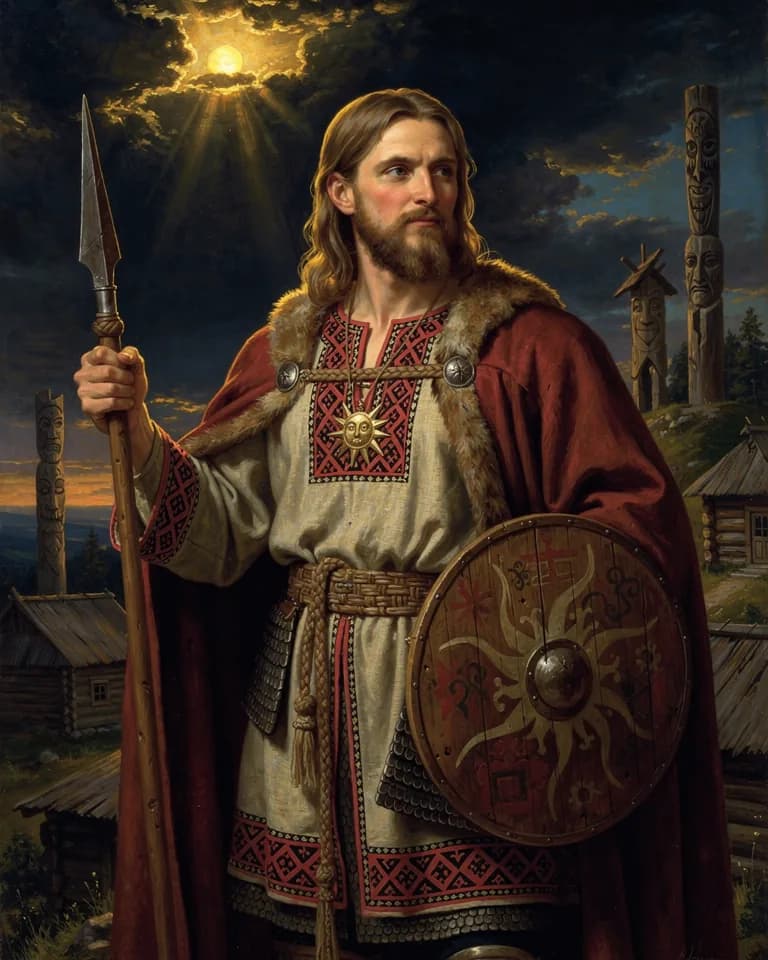
Dazhbog
DazhbogSlavic
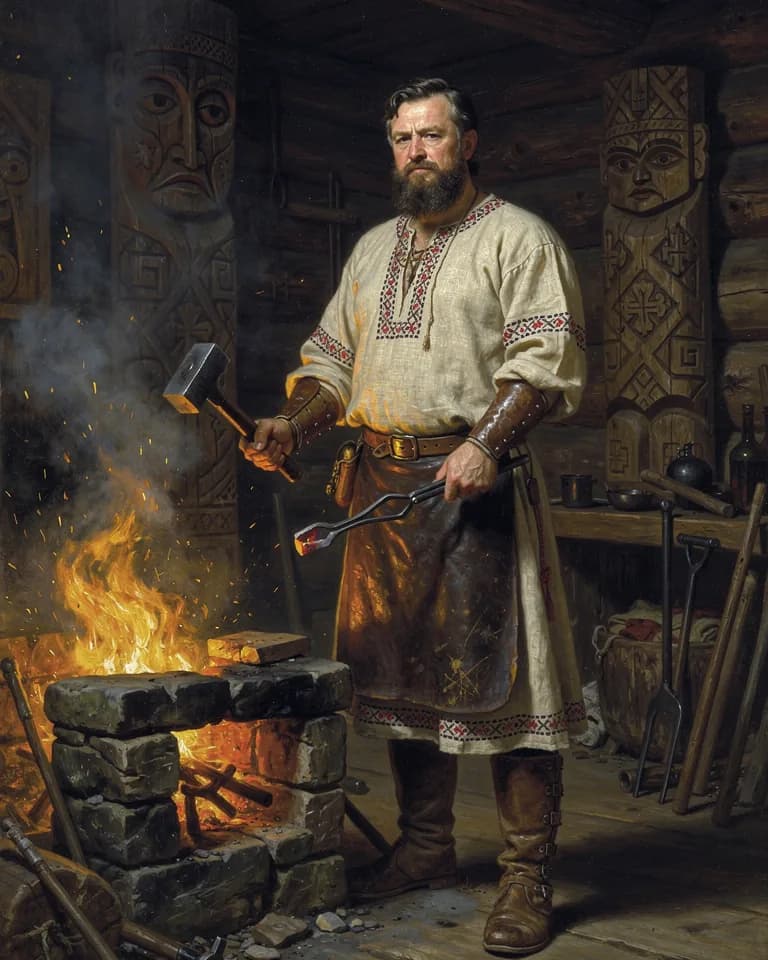
Svarog
SvarogSlavic

Dazhbog and Svarog are recorded as parent and child in the Slavic Pantheon.

At a glance

Dazhbog and Svarog compared
DazhbogSvarog
TraditionSlavic PantheonSlavic Pantheon
Domainsthe sun, fortune, givingsky, fire, smithcraft
Symbolssun disc, goldfire, smith's hammer
Also calledDažbogNone recorded

Where they meet

The atlas records no domain or symbol that Dazhbog and Svarog share.

They are compared because of how the myths connect them, not because of what they rule.

Where they part

Only Dazhbog

Associated with the sun, fortune, and giving.

Only Svarog

Associated with sky, fire, and smithcraft.

How each was worshipped

Dazhbog

Named among the state idols Vladimir installed in 980 and torn down in 988; no separate festival or shrine is recorded for him specifically. His name persisted afterward as a poetic epithet for the Rus' people ("grandsons of Dazhbog") rather than as an active cult title.

Svarog

No medieval source records a temple, festival, or oath sworn to Svarog directly; everything known about him comes from the single 1114 chronicle gloss identifying him with Hephaestus and naming Dazhbog as his son.

The two figures

Slavic Pantheon

Dazhbog

A sun-and-fortune god among Vladimir's 980 idols, called "son of Svarog" in a separate chronicle gloss and invoked as ancestor of the Rus' people in the medieval epic poem the Tale of Igor's Campaign.

The only genealogical claim about Dazhbog comes from the Hypatian Chronicle's 1114 gloss on Malalas, which says he reigned as the sun after his father Svarog; no birth or creation narrative survives.

Dazhbog is named fourth among Vladimir's six idols in the *Russian Primary Chronicle*'s account of 980. A separate strand, the Hypatian Chronicle's 1114 gloss on the Slavonic Malalas translation, identifies him with the sun and calls him "son of Svarog." The *Tale of Igor's Campaign* (*Slovo o polku Igoreve*), a medieval poem describing a failed 1185 Rus' military campaign whose manuscript and dating have drawn scholarly debate, twice calls the Rus' people "Dazhbog's grandsons"; whatever the poem's exact date, it shows the name still carried weight as an ancestral, poetic figure for the audience it was written for.

Read the full Dazhbog entry

Slavic Pantheon

Svarog

A sky and fire god known only from a single learned chronicle gloss that equates him with the Greek smith-god Hephaestus and calls the sun-god Dazhbog his son.

Svarog is not among Vladimir's 980 idols. He appears in a gloss inserted into the Hypatian Chronicle's Slavonic translation of John Malalas's *Chronographia*, under the year 1114, where the Greek smith-god Hephaestus is rendered as Svarog, and the sun (identified as Dazhbog) is called "Svarog's son" who "reigned after him." This is a bookish, learned aside by a Christian scribe explaining Greek mythology through a Slavic name he expected his audience to recognize; most historians treat it as evidence for the name and a rough sky/fire association, not as direct testimony to a living cult with its own myths.

Read the full Svarog entry
About this comparison

Comparisons pair figures that play a similar role across traditions, or that the myths connect within one. A shared role does not, by itself, establish a shared origin.