Japanese Pantheon
Amaterasu
天照大御神(Amaterasu-omikami)
Also known as Amaterasu-omikami
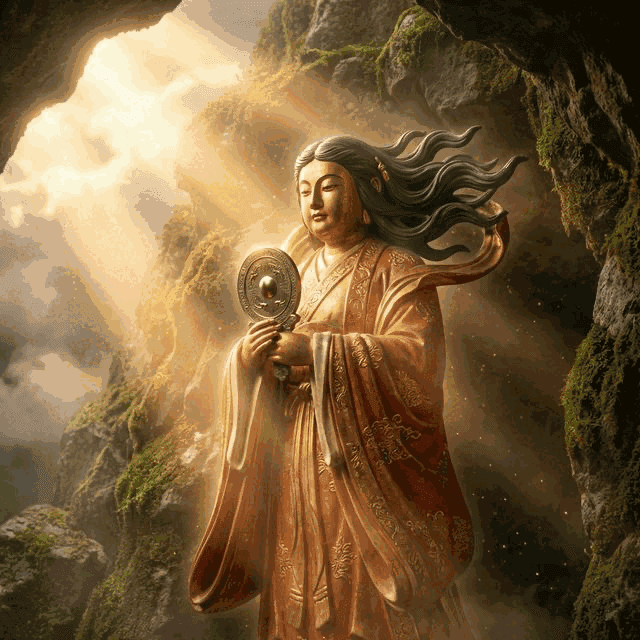
- sun
- light
- universe
- agriculture
- imperial authority
Supreme goddess of the sun and universe. Ruler of the High Celestial Plain. Divine ancestor of the Japanese Imperial family. Most important deity in Shinto.
About Amaterasu
The Supreme Sun Goddess
Amaterasu-omikami stands as the most important deity in Shinto, embodying the sun itself and serving as the divine ancestor of Japan's Imperial family. Her name translates to "Great Divinity Illuminating Heaven," reflecting her role as the source of all light and life in the cosmos.
The Cave Myth
The most famous myth surrounding Amaterasu involves her retreat into the Ama-no-Iwato (Heavenly Rock Cave). After her brother Susanoo's destructive rampage through her rice fields and sacred weaving hall, a grieving Amaterasu hid herself away, plunging the world into darkness. The eight million kami gathered outside the cave, and the goddess Ame-no-Uzume performed a wild, ecstatic dance that provoked such laughter among the gods that Amaterasu's curiosity drew her out. As she emerged, a mirror was held before her, and she was captivated by her own radiant reflection.
Imperial Connection
Amaterasu bestowed upon her grandson Ninigi the Three Sacred Treasures—the mirror Yata no Kagami, the sword Kusanagi, and the jewel Yasakani no Magatama—symbols still central to Japanese imperial regalia today. Through Ninigi's lineage, she is considered the direct ancestor of the Japanese emperors.
Worship and Shrines
The Ise Grand Shrine in Mie Prefecture is Amaterasu's holiest sanctuary, rebuilt every twenty years in an ancient tradition of renewal. Millions of pilgrims visit annually during festivals such as the Kannamesai harvest celebration. She represents not only agricultural fertility but also the spiritual purity and continuity of the Japanese nation.
Origin story
Born from Izanagi's left eye during his purification ritual. She was assigned to rule the heavens. Her grandson Ninigi descended to Earth, becoming ancestor of Japan's emperors.
Across traditions
Parallel figures
Figures who play a role like Amaterasu's in other traditions.
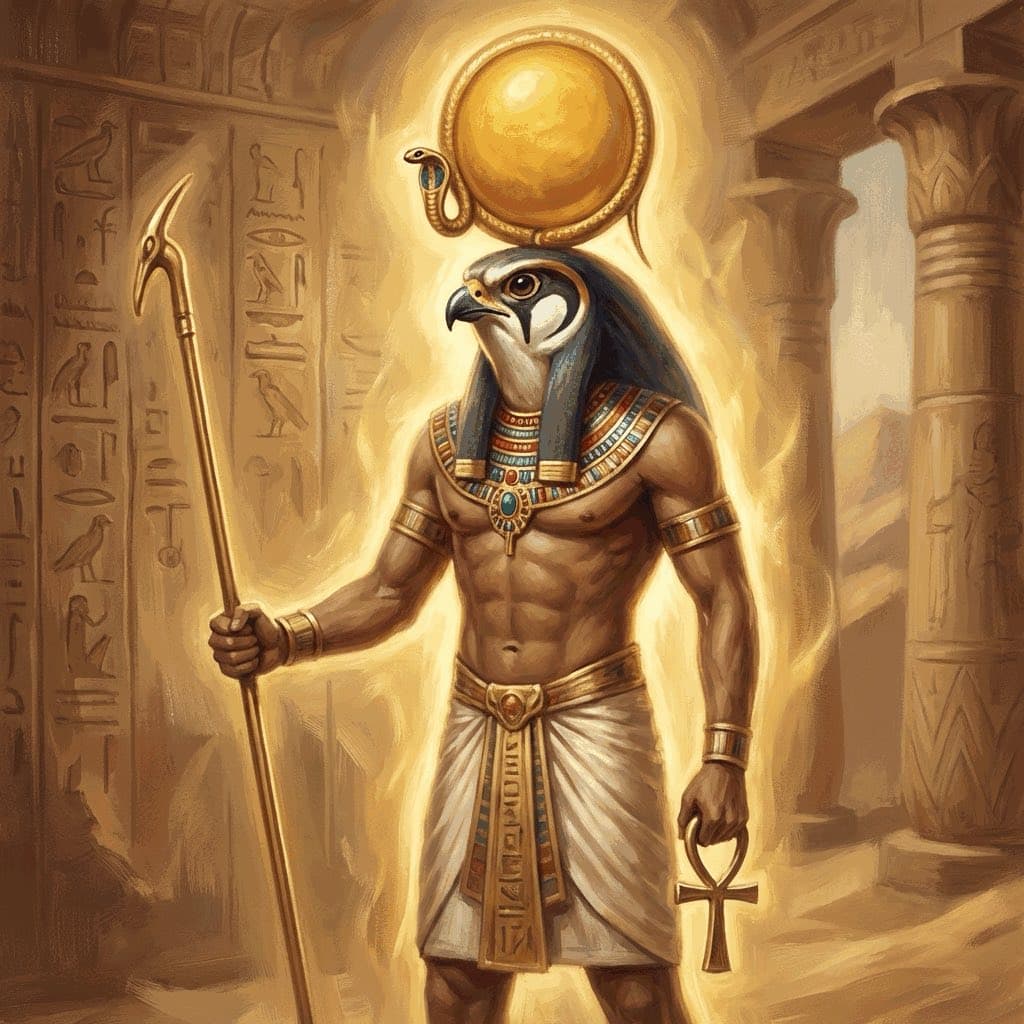 EgyptianRaIllustration
Both are the supreme sun deity and the mythological ancestor/source of legitimate kingship in their culture
Compare Amaterasu and Ra side by side
Worship and cult
Temples, festivals, and practices recorded for Amaterasu
The mirror, the rice, and the imperial line. Ise is not a tourist temple in origin; it is a restricted house of the sun kami. Offerings of first rice and the rebuilding of the shrine are the cult's time-keeping.
Sacred sites
- Ise Grand Shrine (Naiku), rebuilt on a twenty-year cycle
- Atsuta and other shrines holding imperial regalia traditions
Festivals
- Kannamesai
- Shikinen Sengu (periodic rebuilding)
Family
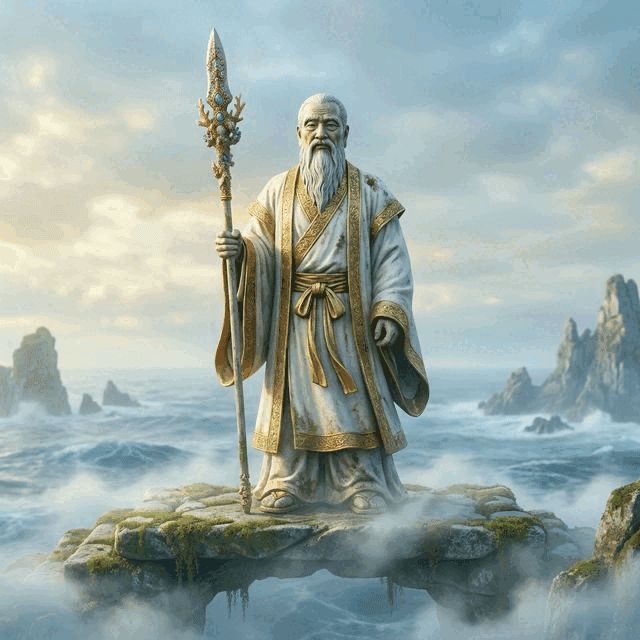
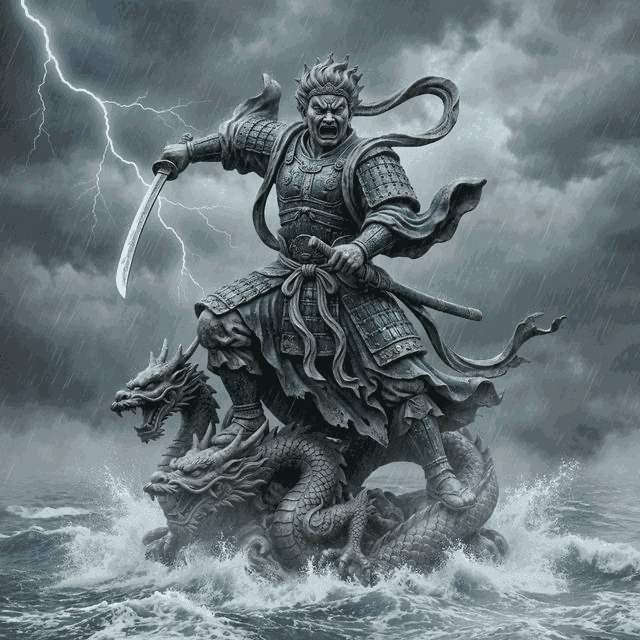
Relationship sources
Kojiki (Records of Ancient Matters) — Amaterasu sibling of Susanoo: Sun and storm siblings
O no Yasumaro · Basil Hall Chamberlain, A Translation of the Ko-ji-ki (1882; reprinted May 1919); Internet Sacred Text Archive transcription · Kojiki, Volume I, Section X (The Purification of the August Person)
Kojiki (Records of Ancient Matters) — Amaterasu sibling of Tsukuyomi: Sun and moon siblings
O no Yasumaro · Basil Hall Chamberlain, A Translation of the Ko-ji-ki (1882; reprinted May 1919); Internet Sacred Text Archive transcription · Kojiki, Volume I, Section X (The Purification of the August Person)
O no Yasumaro · Basil Hall Chamberlain, A Translation of the Ko-ji-ki (1882; reprinted May 1919); Internet Sacred Text Archive transcription · Kojiki, Volume I, Section X (The Purification of the August Person)
O no Yasumaro · Basil Hall Chamberlain, A Translation of the Ko-ji-ki (1882; reprinted May 1919); Internet Sacred Text Archive transcription · Kojiki, Volume I, Section XVI (The Door of the Heavenly Rock-Dwelling)
In the atlas
Where Amaterasu appears
Play the myth
Branching retellings featuring Amaterasu: your choices decide the ending.
In the museums
Amaterasu in art
Real objects in public collections, released into the public domain by the museums that hold them. Dates refer to when each object was made. Objects made within the tradition come first, later depictions after.
 (opens the museum record)
Later depiction
Luring the Sun Goddess Amaterasu Out of a Cave with Music; Death of the Historical Buddha (opens the museum record)
A pair of Meiji-period hanging scrolls whose title the museum gives as Luring the Sun Goddess Amaterasu Out of a Cave with Music, depicting the myth in which the other gods coax her out of hiding to restore light to the world.
Sources and further reading
Ancient sources
Quotations, paraphrases and verification notes. Each passage states what has been checked.
“So when the Heaven-Shining-Great-August-Deity had come forth, both the Plain of High Heaven and the Central-Land-of-Reed-Plains of course again became light.”
Kojiki, Part I, Section XVI · Closing sentence before footnote 35
Translation: Basil Hall Chamberlain
1882 translation, 1919 edition transcription at Sacred Texts. English transcription checked 2026-09-23. Replaces prior unverified wording; no original-language text is supplied or certified.
Read sourceAppears in
Ancient and classical works featuring this figure.
Kojiki (Records of Ancient Matters)
Great August Sun Goddess born from Izanagi's left eye, sovereign ruler of Takamagahara (High Plain of Heaven) (Chapters 11-17)
Nihon Shoki (Chronicles of Japan)
Supreme solar ruler whose divine decree commands her grandson Ninigi to govern the terrestrial realm (Age of the Gods, Books I-II)
About this entry
By Elizabeth Stein for Mythos Atlas. About the author. Editorial notes are grounded in the site's cited sources and can be challenged through the contact page.
Parallels are editorial comparisons across traditions: a shared role does not, by itself, establish a shared origin.
Family relationships come from the atlas's kinship records. Ancient sources often disagree on divine genealogy.
Keep exploring
One myth a week, with its sources in a short email. The sign-up form is just below.
Genealogy
Family tree
Amaterasu's parents, consorts, children and rivals, as recorded in the atlas.