Japanese Pantheon
Izanami
Also known as Izanami-no-Mikoto
- creation
- death
- underworld
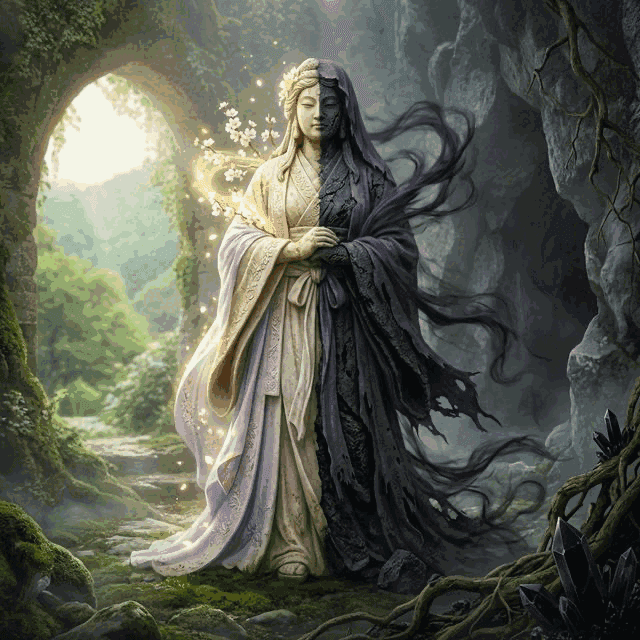
Female primordial deity who created the Japanese islands and kami with Izanagi. After dying in childbirth, she became goddess of death and ruler of Yomi.
About Izanami
Izanami of the underworld
Izanami-no-Mikoto is the female half of the creating pair. With Izanagi she births the islands and a long catalogue of kami. The birth of Kagutsuchi, the fire kami, burns her and she dies. Death does not remove her from the story. It changes her office. She becomes a ruler of Yomi, the land of the dead, and a goddess who can no longer be looked at in the light.
The failed rescue
Izanagi's descent imitates a pattern known from other mythologies, but the Kojiki keeps a harsher ending. There is no bargain that restores her. She is seen, she is shamed, she is sealed behind a rock. The marriage that made the land ends in a shouted exchange of daily death and daily birth.
Mother, then danger
Before Yomi she is a world-maker. After it she is the reason corpses pollute. Both are Izanami. Later worship sometimes softens her into a maternal earth figure; the early chronicles do not. They let the creating mother and the furious dead woman occupy the same name.
Origin story
Izanami died giving birth to the fire god Kagutsuchi. Grief-stricken, Izanagi followed her to Yomi but fled when he saw her decaying form. She swore to kill 1,000 people each day.
Across traditions
Parallel figures
Figures who play a role like Izanami's in other traditions.
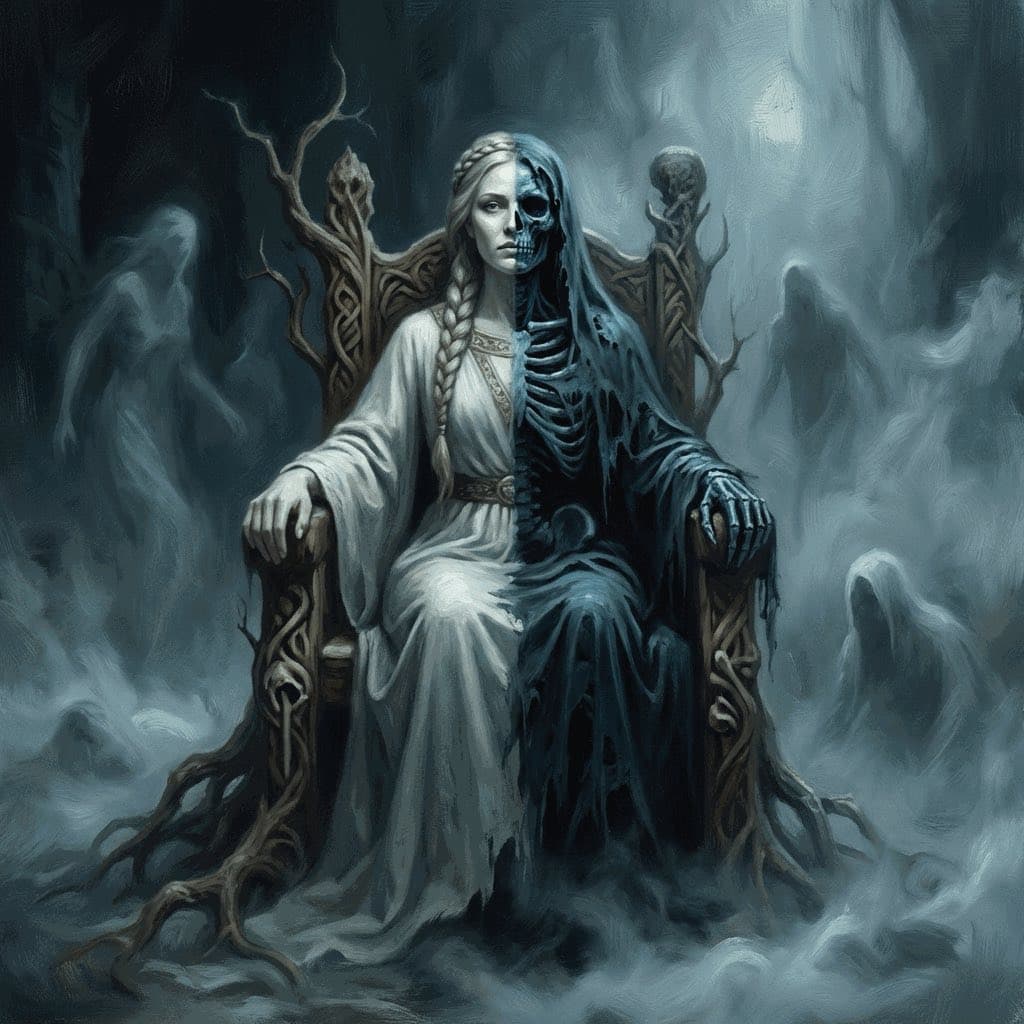 NorseHelIllustration
Both are goddesses who preside over a realm of the dead after their own death/transformation, ruling over spirits who did not achieve a heroic afterlife
Compare Izanami and Hel side by side
Worship and cult
Temples, festivals, and practices recorded for Izanami
After the divorce at Yomi she is death, fire's cost, and the land of the dead. Some shrines keep her as a fierce underworld kami; others still pair her with Izanagi as the first couple. You do not call her lightly. The Kojiki makes that the point of the broken marriage.
Sacred sites
- Izanami no Mikoto shrines, including sites in Kumano that treat her as a kami of the dead
- Paired worship with Izanagi where the marriage and the break are both remembered
Festivals
- Kumano rites
- Memorial offerings
Family
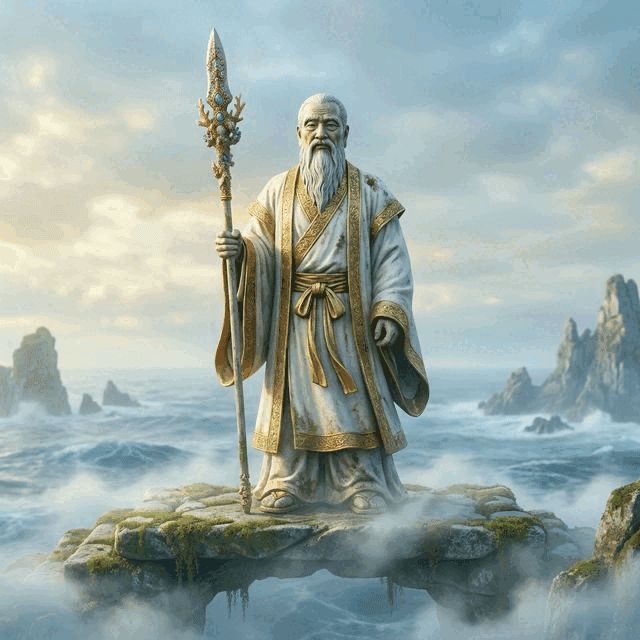 IzanagiIzanami
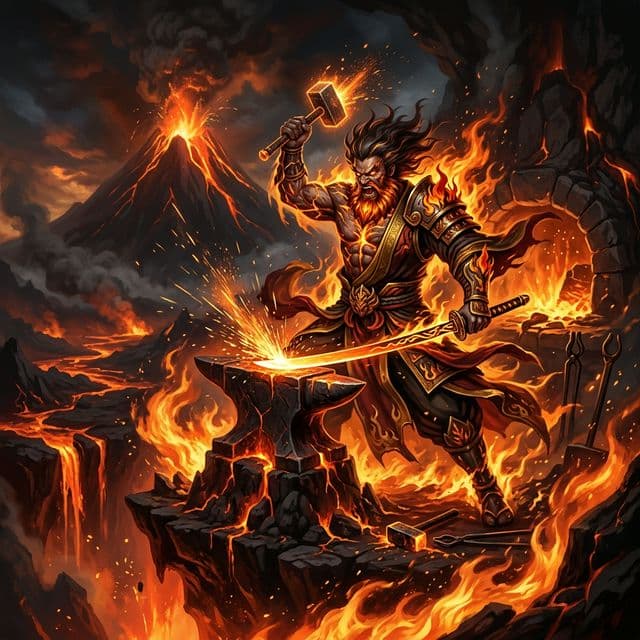
Relationship sources
Kojiki (Records of Ancient Matters) — Izanagi spouse of Izanami: Divine couple who created Japan
O no Yasumaro · Basil Hall Chamberlain, A Translation of the Ko-ji-ki (1882; reprinted May 1919); Internet Sacred Text Archive transcription · Kojiki, Volume I, Section V (Birth of the Eight Islands)
Kojiki (Records of Ancient Matters) — Izanagi spouse of Izanami: Divine couple who created Japan
O no Yasumaro · Basil Hall Chamberlain, A Translation of the Ko-ji-ki (1882; reprinted May 1919); Internet Sacred Text Archive transcription · Kojiki, Volume I, Section IV (Courtship of the Deities The Male-Who-Invites and the Female Who-Invites)
O no Yasumaro · Basil Hall Chamberlain, A Translation of the Ko-ji-ki (1882; reprinted May 1919); Internet Sacred Text Archive transcription · Kojiki, Volume I, Section VII (Retirement of Her Augustness The Princess-Who-Invites)
O no Yasumaro · Basil Hall Chamberlain, A Translation of the Ko-ji-ki (1882; reprinted May 1919); Internet Sacred Text Archive transcription · Kojiki, Volume I, Section VI (Birth of the Various Deities), note 26
Questions about Izanami's family
- Who are Izanami's children?
- Children of Izanami recorded in the atlas: Kagutsuchi.
- Who were Izanami's spouses and consorts?
- Spouses and consorts of Izanami recorded in the atlas: Izanagi.
In the atlas
Where Izanami appears
In the museums
Izanami in art
Real objects in public collections, released into the public domain by the museums that hold them. Dates refer to when each object was made. Objects made within the tradition come first, later depictions after.
 (opens the museum record)
Later depiction
The God Izanagi and Goddess Izanami (opens the museum record)
An Edo-period hanging scroll the museum titles The God Izanagi and Goddess Izanami, depicting the primordial couple credited in Shinto myth with creating the islands of Japan.
Sources and further reading
Source notes
These references are recorded in the catalog. Their passage wording and translation have not been checked, so quotations are not displayed here.
- Kojiki (trans. Chamberlain), Sect. IX
Appears in
Ancient and classical works featuring this figure.
Kojiki (Records of Ancient Matters)
The Female-Who-Invites, creator who died giving birth to the fire god Kagutsuchi and became ruler of Yomi (Chapters 3-9)
Nihon Shoki (Chronicles of Japan)
Primordial female deity whose binding covenant created mortal life cycles (Age of the Gods, Book I)
About this entry
By Elizabeth Stein for Mythos Atlas. About the author. Editorial notes are grounded in the site's cited sources and can be challenged through the contact page.
Parallels are editorial comparisons across traditions: a shared role does not, by itself, establish a shared origin.
Family relationships come from the atlas's kinship records. Ancient sources often disagree on divine genealogy.
Keep exploring
One myth a week, with its sources in a short email. The sign-up form is just below.
Genealogy
Family tree
Izanami's parents, consorts, children and rivals, as recorded in the atlas.