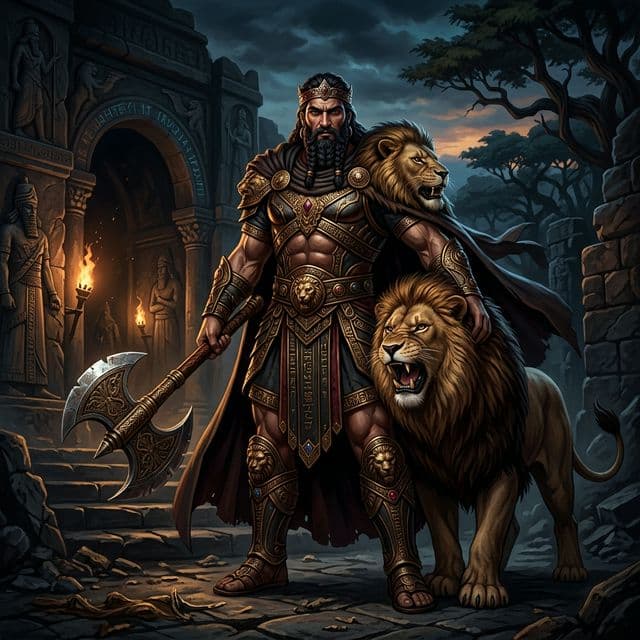
Gilgamesh
The legendary king of Uruk, two-thirds divine and one-third mortal. Gilgamesh is the protagonist of humanity's oldest epic and a deified hero who became a judge of the underworld.
Divine domains
14 deities from 10 traditions whose entries in this atlas list underworld among their domains, grouped by tradition.
The legendary king of Uruk, two-thirds divine and one-third mortal. Gilgamesh is the protagonist of humanity's oldest epic and a deified hero who became a judge of the underworld.
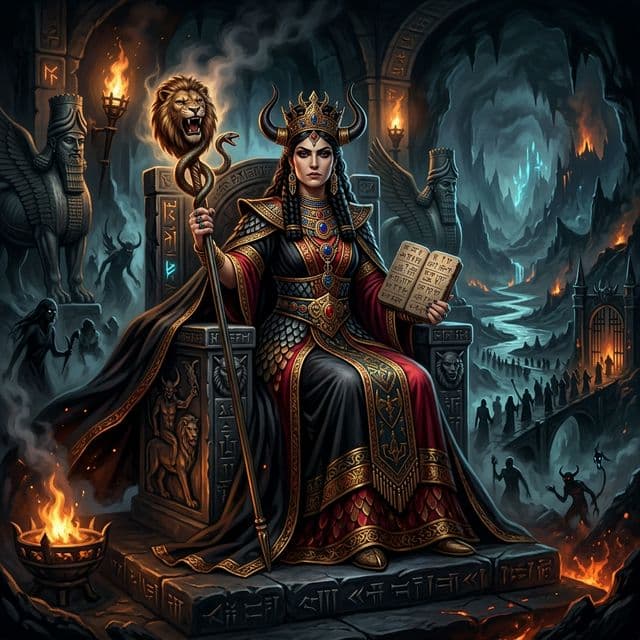
Queen of the Underworld and sister of Inanna. Ereshkigal rules the land of no return with absolute authority, from which no one, god or mortal, escapes unchanged.
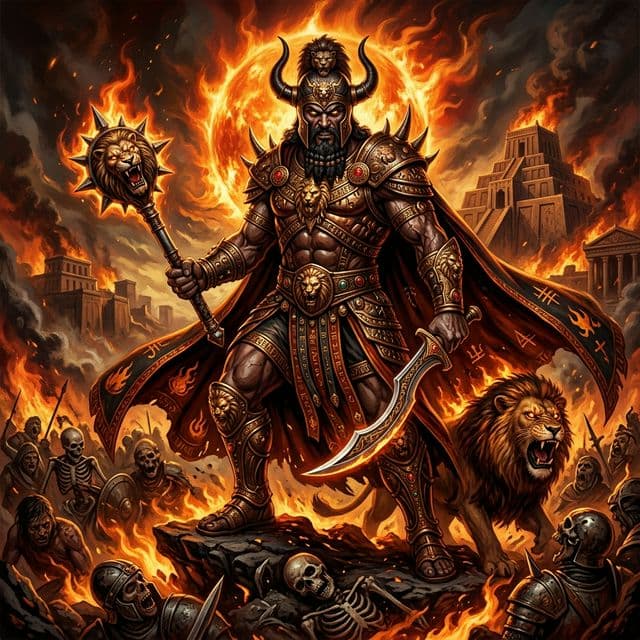
God of war, plague, and the destructive aspects of the sun. Nergal embodies death in its violent forms and co-rules the underworld with his wife Ereshkigal.
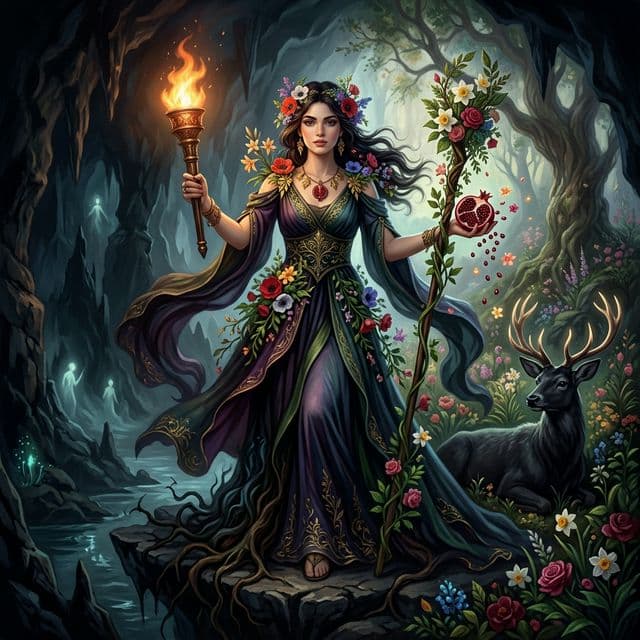
Queen of the Underworld and goddess of spring growth. Daughter of Zeus and Demeter, wife of Hades. Her annual return from the underworld brings spring; her descent brings winter.
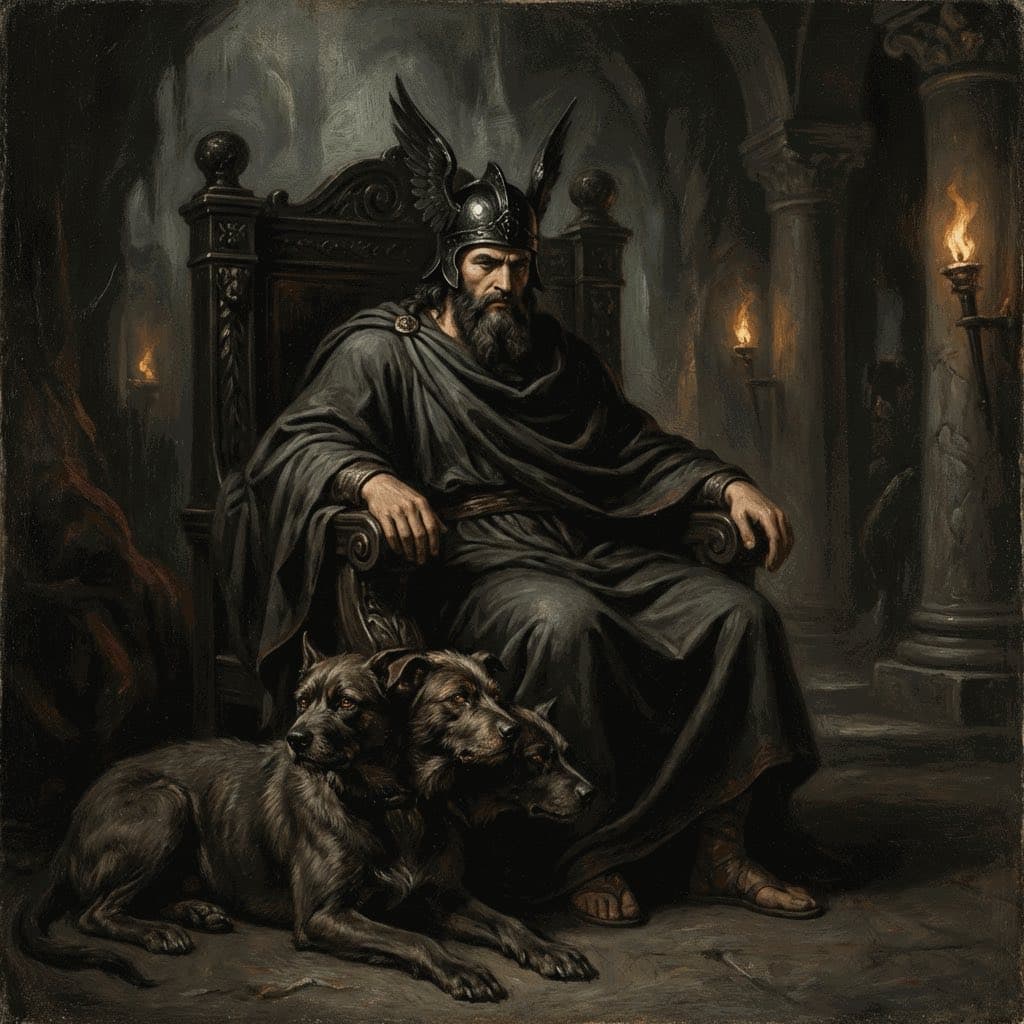
God of the underworld and the dead. Ruler of the realm of Hades, rarely leaving his kingdom.
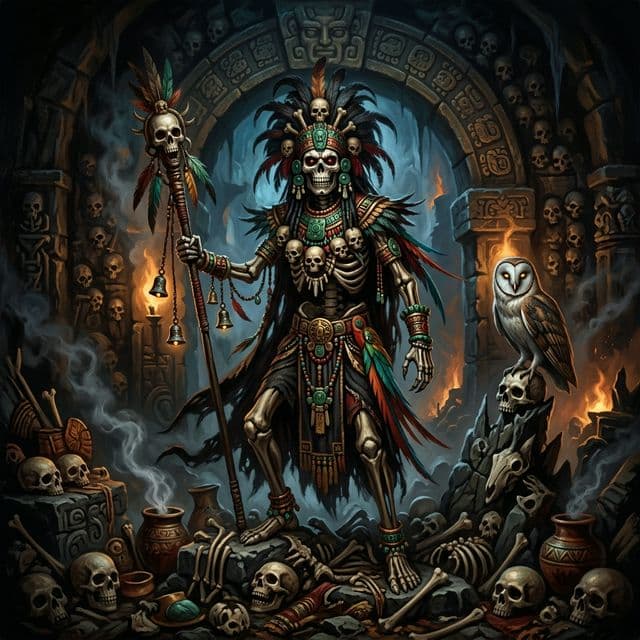
The Maya god of death and ruler of Metnal, the lowest level of the underworld. Depicted as a skeletal figure with exposed bones and decay, Ah Puch represents the terror of death.
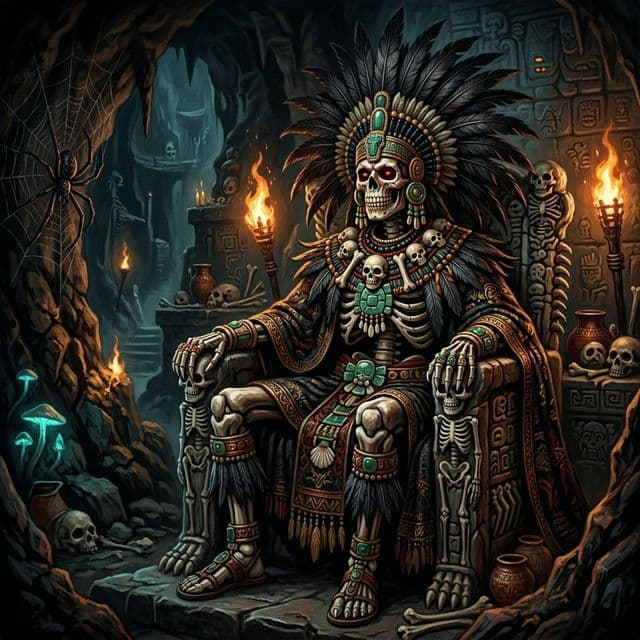
The Aztec god of death and ruler of Mictlan, the deepest underworld realm. A skeletal figure wearing owl feathers, Mictlantecuhtli received the souls of those who died of natural causes.
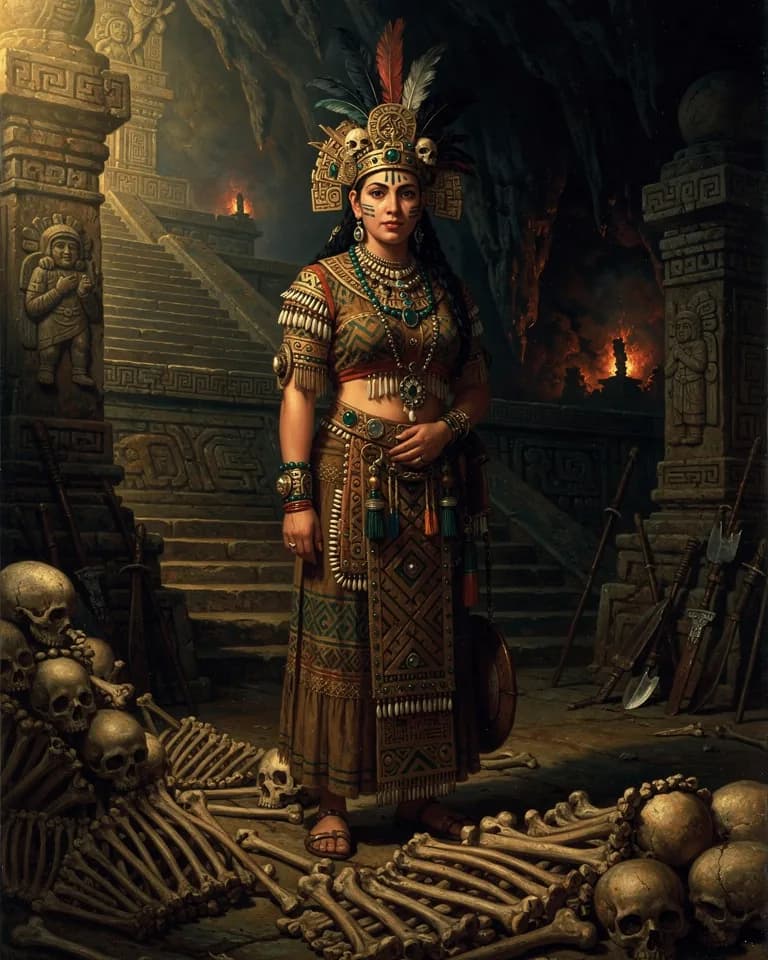
Queen of Mictlan, the Aztec underworld, ruling alongside her husband Mictlantecuhtli over the ninth and deepest level of the land of the dead. Mictecacihuatl presided over the bones of the deceased and the festivals honoring the dead within the Aztec calendar.
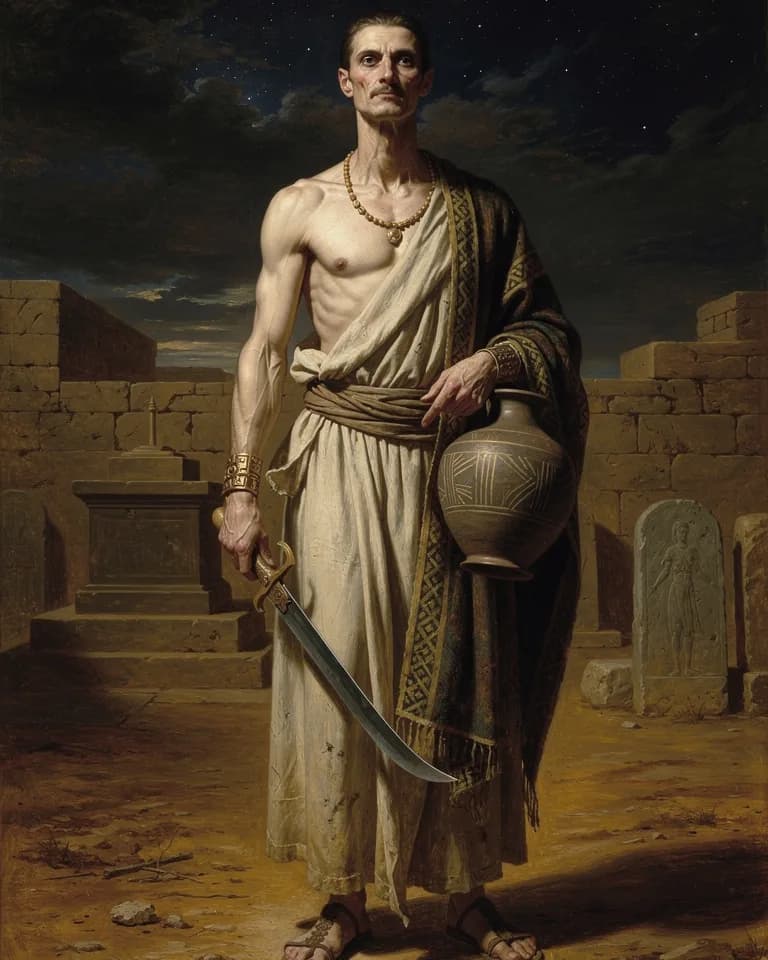
Death personified, whose throat reaches to the heavens and whose lip touches the earth, who swallows Baal and is himself destroyed by Anat and then fights Baal to a standstill.
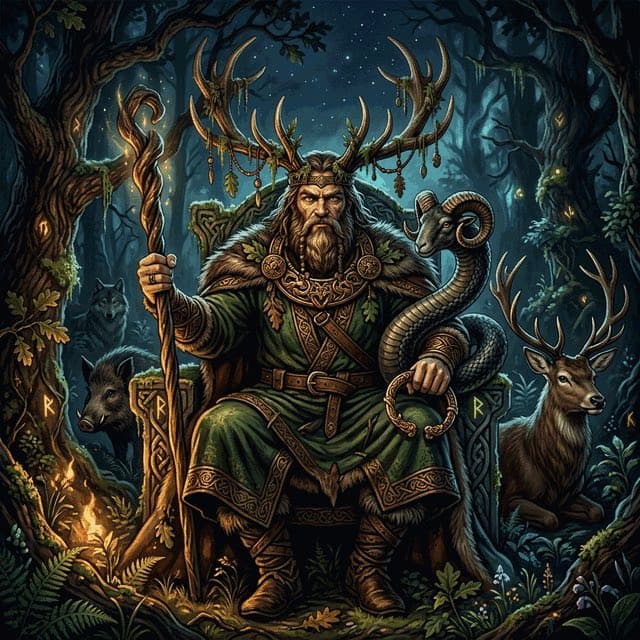
The horned god of wild places and untamed nature. He sits cross-legged, lord of beasts, holding a torc in one hand and a serpent in the other.
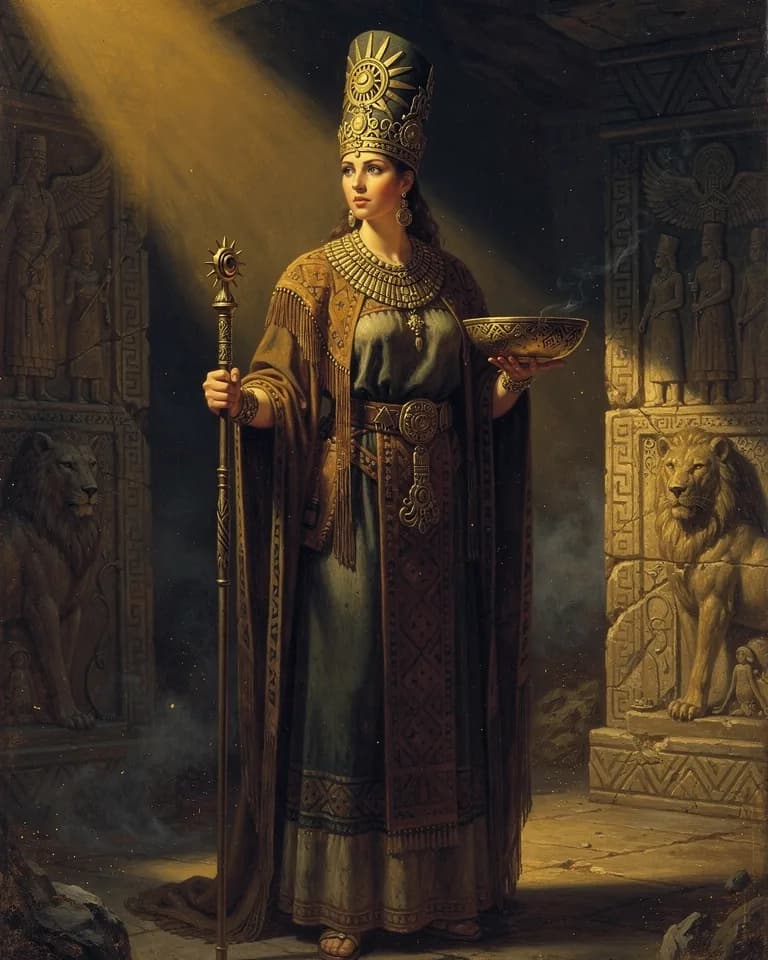
The Hittite ruler of the underworld, the 'Dark Earth', identified with the Hurrian Allani and the Mesopotamian Ereškigal: the sun as it travels beneath the earth at night.
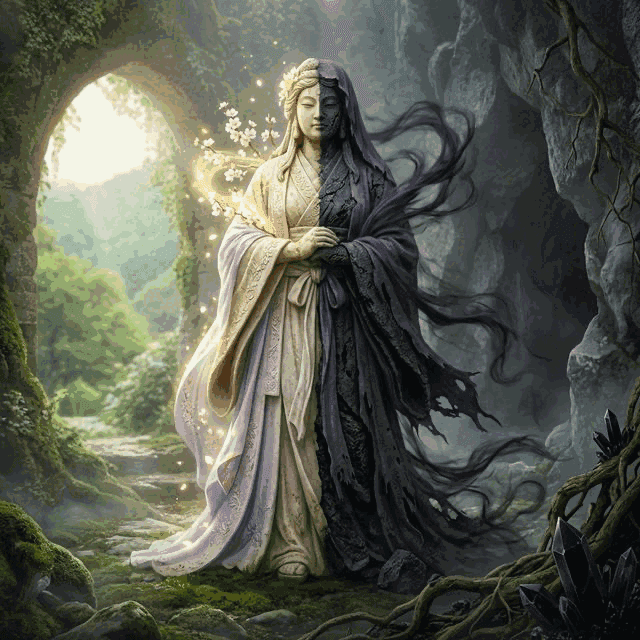
Female primordial deity who created the Japanese islands and kami with Izanagi. After dying in childbirth, she became goddess of death and ruler of Yomi.
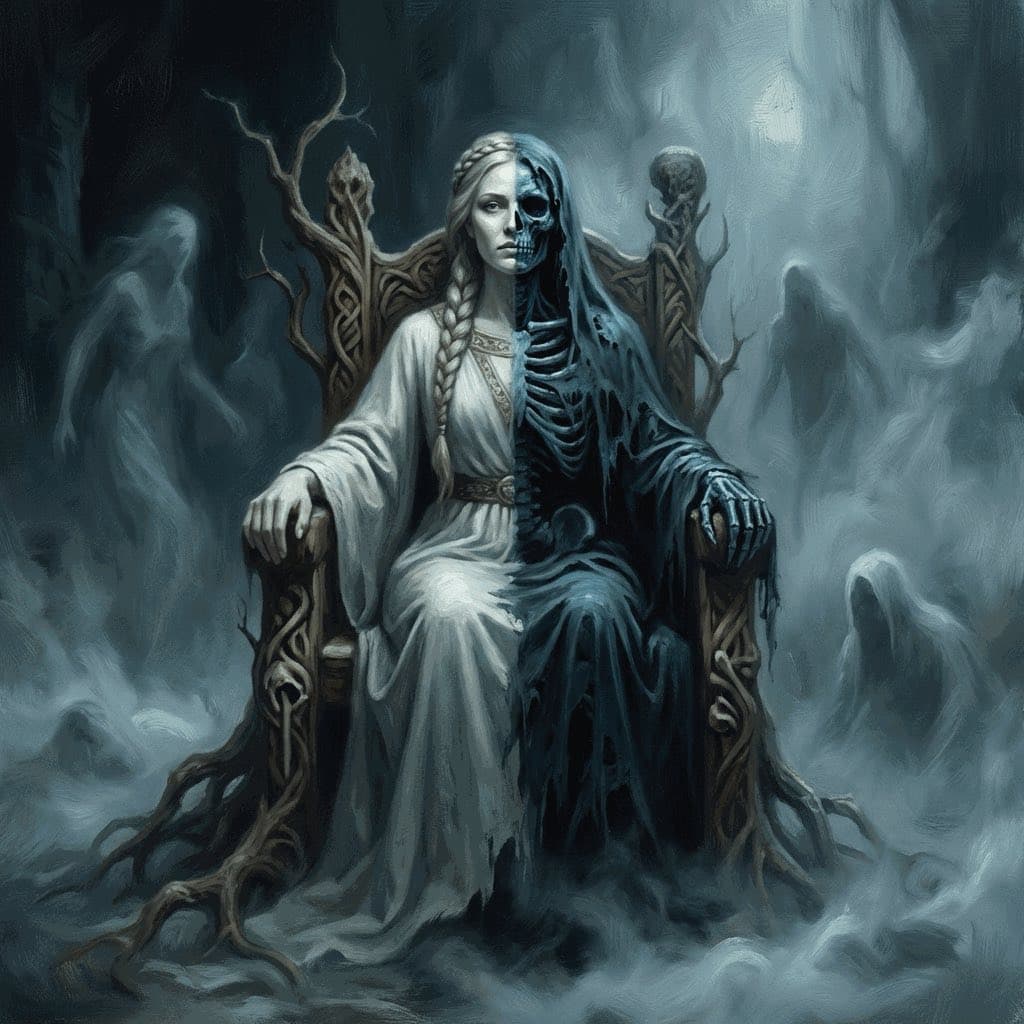
Goddess and ruler of the underworld realm of the dead (also called Hel or Helheim). Daughter of Loki. Her realm receives those who die of sickness or old age.
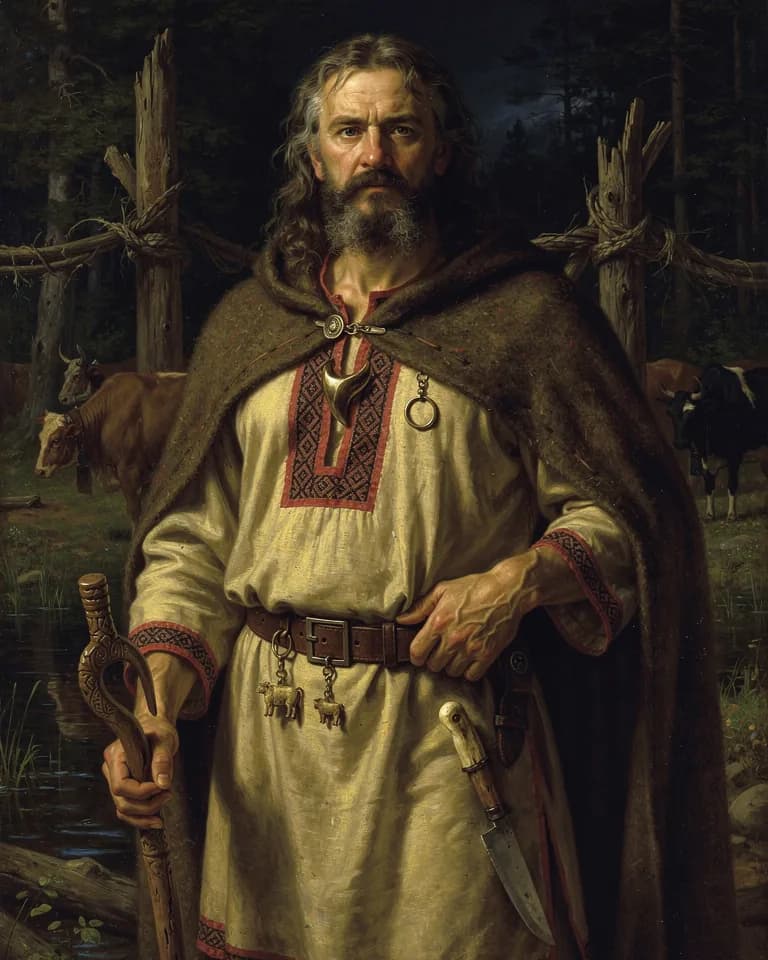
The "cattle god" (skotii bog) of the treaty oaths, sworn by beside Perun in 907 and 945, and left off Vladimir's 980 hilltop pantheon in a way scholars have long puzzled over.
Editorial comparisons recorded on these entries; a shared role does not establish a shared origin.
Both rule realms of the dead that receive those who did not die gloriously in battle
Compare Hades and HelHel (Norse) and Ereshkigal (Mesopotamian)
Ereshkigal already lists Hel; both are goddesses who preside grimly over a shadowy realm of the dead
Compare Hel and EreshkigalHel (Norse) and Izanami (Japanese)
Both are goddesses who, after their own death, become ruler of an underworld realm that receives the dead
Compare Hel and IzanamiEreshkigal (Mesopotamian) and Hades (Greek)
Both rule the underworld with absolute authority
Compare Ereshkigal and HadesAh Puch (Mesoamerican) and Mictlantecuhtli (Mesoamerican)
Both are skeletal death gods ruling the underworld
Compare Ah Puch and MictlantecuhtliAh Puch (Mesoamerican) and Hades (Greek)
Both rule realms of the dead
Compare Ah Puch and HadesMictlantecuhtli (Mesoamerican) and Hades (Greek)
Both rule underworld realms that receive ordinary dead
Compare Mictlantecuhtli and HadesPersephone (Greek) and Ereshkigal (Mesopotamian)
Both are queens of the underworld, though Ereshkigal was always a chthonic deity rather than an abducted goddess
Compare Persephone and EreshkigalMictecacihuatl (Aztec) and Ereshkigal (Mesopotamian)
Both are queens who rule the underworld jointly with, or alongside, a consort presiding over the realm of the dead
Compare Mictecacihuatl and EreshkigalSun-goddess of the Earth (Hittite) and Ereshkigal (Mesopotamian)
Ancient god-lists equate the Hurrian Allani, the Hittite Sun-goddess of the Earth, and Ereškigal as rulers of the underworld.
Compare Sun-goddess of the Earth and EreshkigalMot (Canaanite) and Hades (Greek)
Both are gods of death who hold a divine figure in the underworld; unlike Hades, Mot is death itself rather than the ruler of the dead, and he never rules a structured realm of souls.
Compare Mot and HadesBuilt from each deity's catalog entry (matching “the underworld”, “underworld”). See every domain side by side on Divine Domains, or browse every cross-pantheon parallel.