Mythos Atlas

Side by sideParallel across traditions

Ereshkigal vs Sun-goddess of the Earth

Ereshkigal
EreshkigalMesopotamian
Sun-goddess of the Earth
Sun-goddess of the EarthHittite

Ancient god-lists equate the Hurrian Allani, the Hittite Sun-goddess of the Earth, and Ereškigal as rulers of the underworld.

At a glance

Ereshkigal and Sun-goddess of the Earth compared
EreshkigalSun-goddess of the Earth
TraditionMesopotamian PantheonHittite Pantheon
Domainsunderworld, death, darkness, judgmentthe underworld, the dead, purification
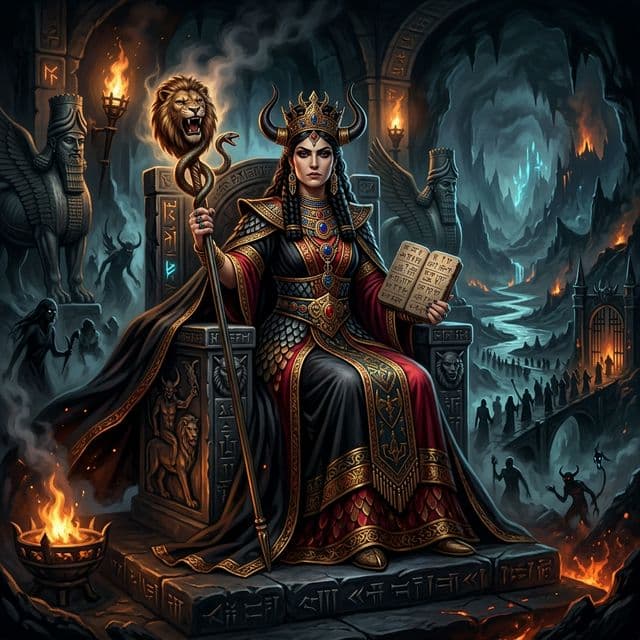
Symbolslion-headed staff, tablets of the deadthe Dark Earth, the doors and bolts of the underworld
Also calledIrkalla, AllatuAllani (Hurrian), Ereškigal (by equation), Lelwani (associated)

Where they meet

The atlas records no domain or symbol that Ereshkigal and Sun-goddess of the Earth share.

They are compared for the part each plays in their own tradition rather than for any attribute in common.

Where they part

Only Ereshkigal

Associated with underworld, death, darkness, and judgment.

Only Sun-goddess of the Earth

Associated with the underworld, the dead, and purification.

How each was worshipped

Ereshkigal

Cult sites
Irkalla has no welcoming temple on earth

Queen of the dead in Inanna's descent. Cult to the underworld was cautious and thin compared with Inanna's. Absence is the point: you do not throw a street fair for the grave.

Sun-goddess of the Earth

Invoked in purification rituals that sent impurity and evil into the Dark Earth, and in rites for the dead.

The two figures

Mesopotamian Pantheon

Ereshkigal

Queen of the Underworld and sister of Inanna. Ereshkigal rules the land of no return with absolute authority, from which no one, god or mortal, escapes unchanged.

When the cosmos was divided among the gods, Ereshkigal received the underworld as her domain. Abducted to the underworld in her youth (or given it as a dowry), she became its eternal queen. She was wed to Gugalanna, the Bull of Heaven, and later to the war god Nergal.

Ereshkigal is the absolute ruler of the underworld (Kur or Irkalla), a vast realm beneath the earth where the dead dwell in eternal twilight. Unlike later concepts of hell, the Mesopotamian underworld was not a place of punishment but simply the inevitable destination of all mortals. Ereshkigal reigns there with cold, implacable authority.

Read the full Ereshkigal entry

Hittite Pantheon

Sun-goddess of the Earth

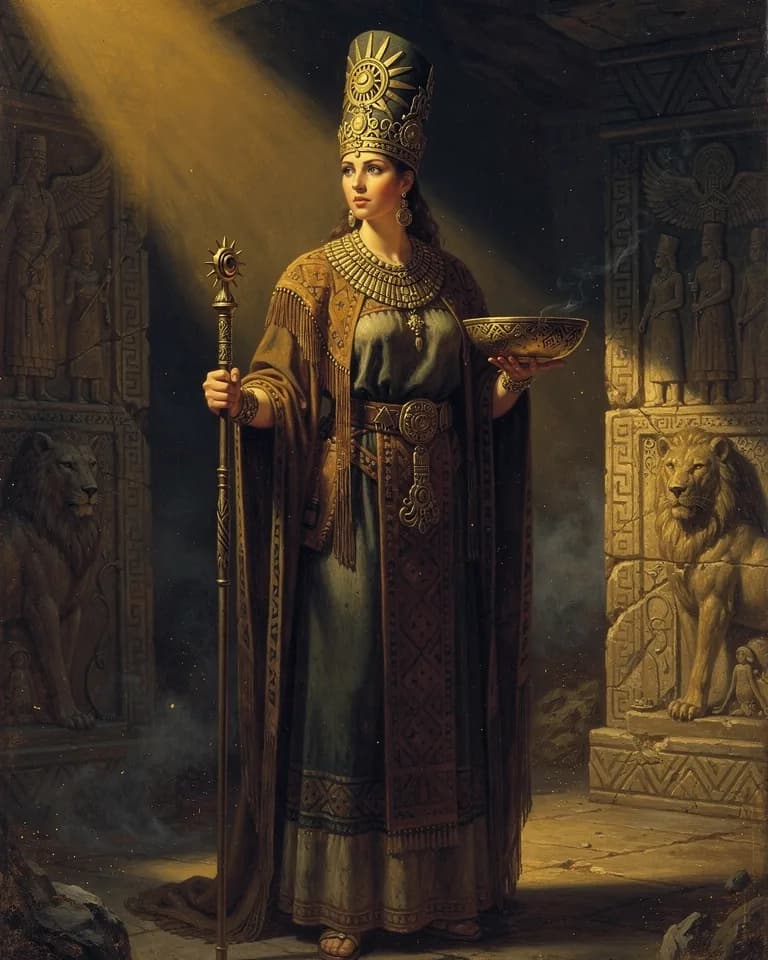
The Hittite ruler of the underworld, the 'Dark Earth', identified with the Hurrian Allani and the Mesopotamian Ereškigal: the sun as it travels beneath the earth at night.

The Hittites imagined a sun deity of the underworld, the Sun-goddess of the Earth, who ruled the "Dark Earth" (dankui tekan) beneath the land of the living. The idea seems to be that the sun passes through the underworld at night; the goddess who governs that realm is its solar counterpart. In Hurrian texts she corresponds to Allani, the lady of the underworld, and god-lists equate her with the Mesopotamian Ereškigal.

Read the full Sun-goddess of the Earth entry
About this comparison

Comparisons pair figures that play a similar role across traditions, or that the myths connect within one. A shared role does not, by itself, establish a shared origin.