Side by sideParallel across traditions

Ereshkigal vs Hel

Ereshkigal
EreshkigalMesopotamian
Hel
HelNorse

Both are goddesses who preside grimly over a shadowy realm of the dead.

At a glance

Ereshkigal and Hel compared
EreshkigalHel
TraditionMesopotamian PantheonNorse Pantheon
Domainsunderworld, death, darkness, judgmentdeath, underworld, disease
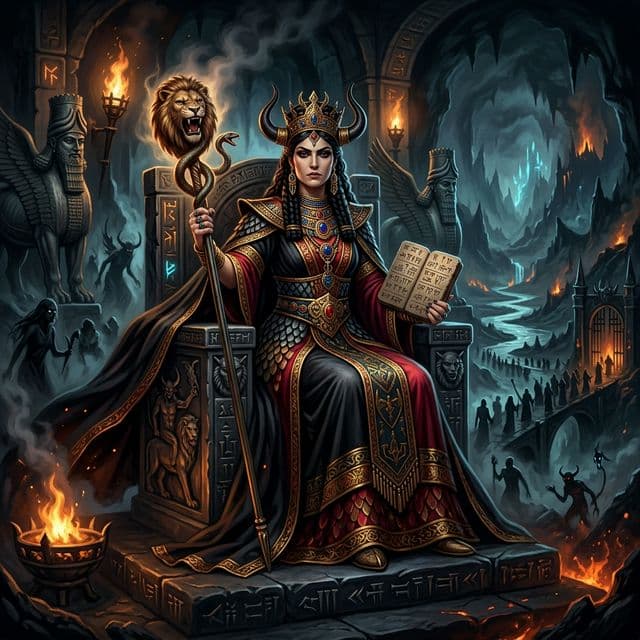
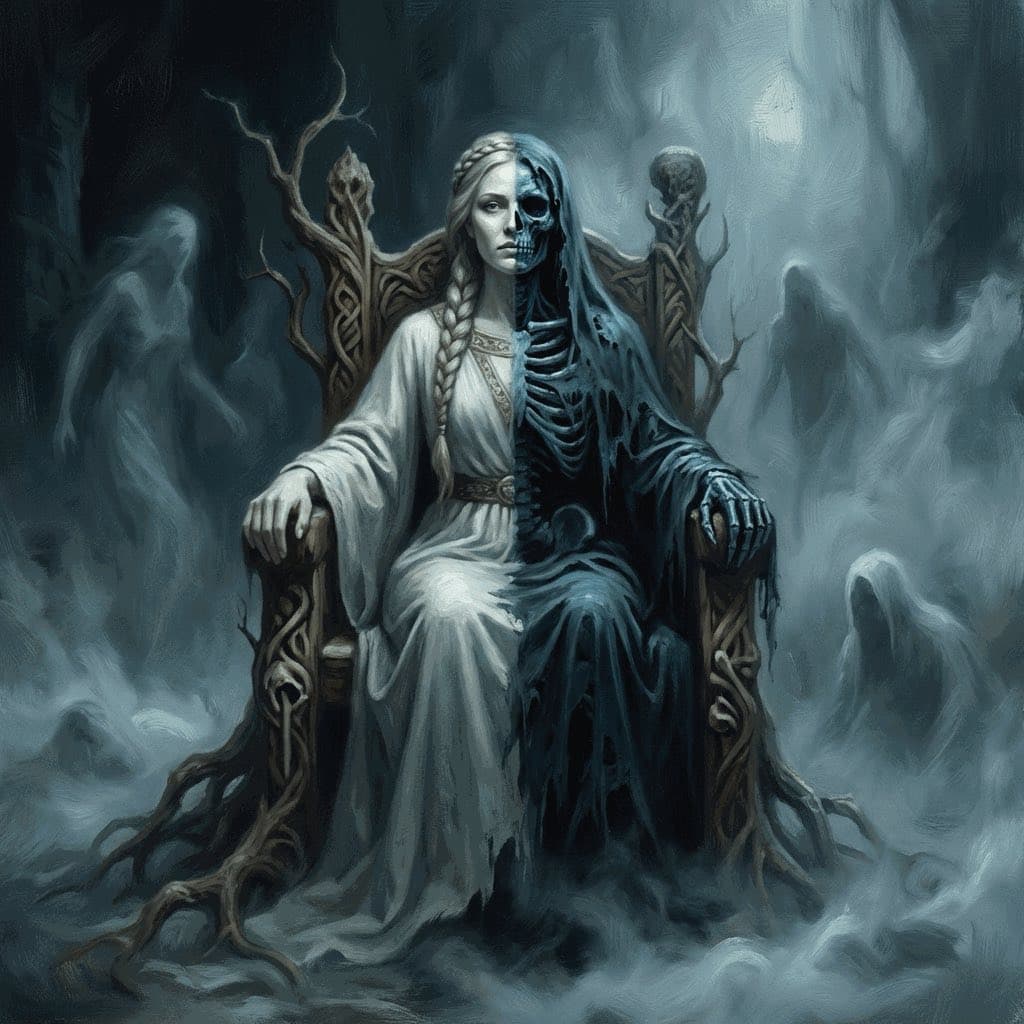
Symbolslion-headed staff, tablets of the deadhalf living/half dead appearance, realm Niflheim
Also calledIrkalla, AllatuHela

Where they meet

Both are associated with underworld and death.

Where they part

Only Ereshkigal

Associated with darkness and judgment.

Only Hel

Associated with disease.

Why they are compared

Both are female rulers of realms of the dead.

How each was worshipped

Ereshkigal

Cult sites
Irkalla has no welcoming temple on earth

Queen of the dead in Inanna's descent. Cult to the underworld was cautious and thin compared with Inanna's. Absence is the point: you do not throw a street fair for the grave.

Hel

Cult sites
No temple; the grave and the road to Hel are the 'precinct'

Not worshipped as a blessing-goddess in the surviving record. She receives the dead who do not go to Odin or Freyja. Offerings to the dead are not the same as a Hel-cult, and the texts do not invent one.

The two figures

Mesopotamian Pantheon

Ereshkigal

Queen of the Underworld and sister of Inanna. Ereshkigal rules the land of no return with absolute authority, from which no one, god or mortal, escapes unchanged.

When the cosmos was divided among the gods, Ereshkigal received the underworld as her domain. Abducted to the underworld in her youth (or given it as a dowry), she became its eternal queen. She was wed to Gugalanna, the Bull of Heaven, and later to the war god Nergal.

Ereshkigal is the absolute ruler of the underworld (Kur or Irkalla), a vast realm beneath the earth where the dead dwell in eternal twilight. Unlike later concepts of hell, the Mesopotamian underworld was not a place of punishment but simply the inevitable destination of all mortals. Ereshkigal reigns there with cold, implacable authority.

Read the full Ereshkigal entry

Norse Pantheon

Hel

Goddess and ruler of the underworld realm of the dead (also called Hel or Helheim). Daughter of Loki. Her realm receives those who die of sickness or old age.

Hel was born to Loki and the giantess Angrboda in the iron forests of Jotunheim, alongside her brothers Fenrir and Jormungandr. From birth, she was marked as different - half of her body was that of a beautiful woman, while the other half was black and decaying like a corpse. When the gods brought Loki's monstrous children to Asgard, Odin cast Hel down into the primordial realm of Niflheim and gave her authority over all those who die of sickness or old age. There she built her hall Eljudnir and awaits the dead with her plate Hunger and her knife Famine. Her realm, also called Hel, became the final destination for the inglorious dead.

Hel is the ruler of **Helheim**, the realm of the dead (for those who did not die a warrior's death). She is half living flesh and half rotting corpse.

Read the full Hel entry
About this comparison

Comparisons pair figures that play a similar role across traditions, or that the myths connect within one. A shared role does not, by itself, establish a shared origin.