Side by sideParallel across traditions

Ereshkigal vs Mictecacihuatl

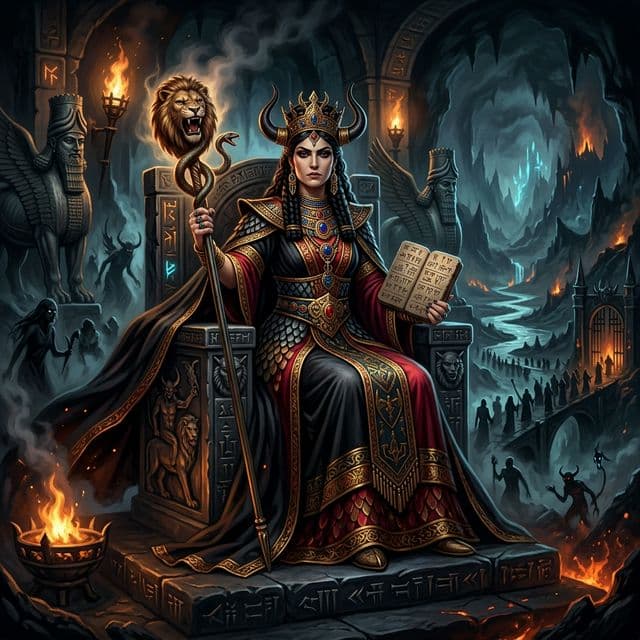
Ereshkigal
EreshkigalMesopotamian
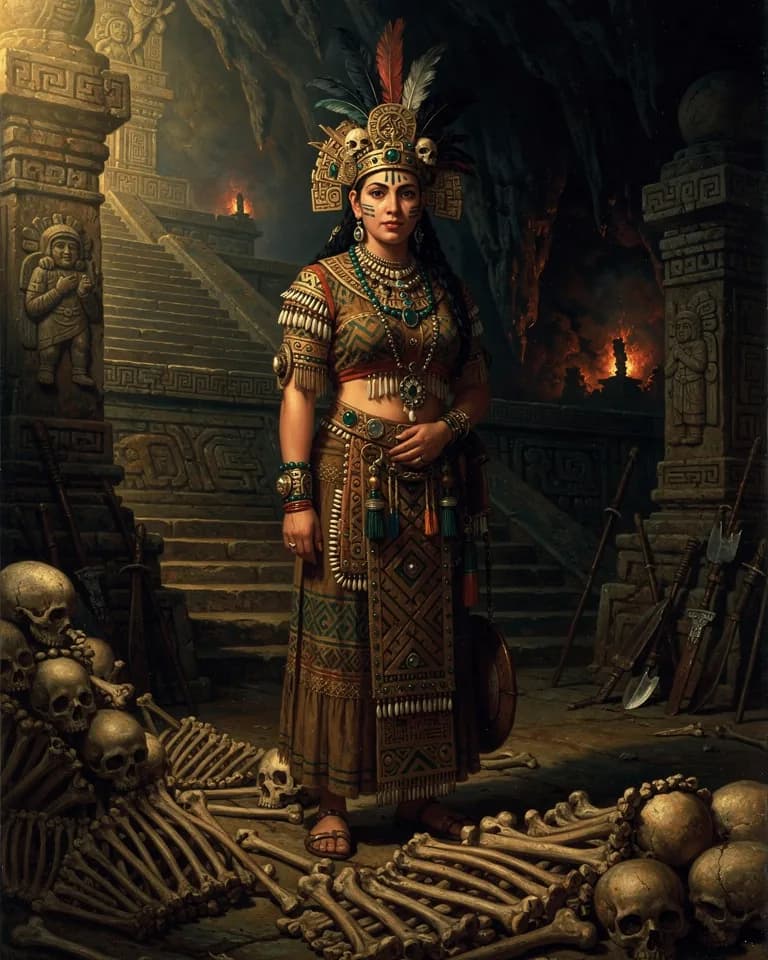
Mictecacihuatl
MictecacihuatlAztec

Both are queens who rule the underworld jointly with, or alongside, a consort presiding over the realm of the dead.

At a glance

Ereshkigal and Mictecacihuatl compared
EreshkigalMictecacihuatl
TraditionMesopotamian PantheonAztec Pantheon
Domainsunderworld, death, darkness, judgmentthe underworld, death, the bones of the dead
Symbolslion-headed staff, tablets of the deadskull face and jaw, bones
Also calledIrkalla, AllatuLady of Mictlan

Where they meet

Both are associated with death.

Where they part

Only Ereshkigal

Associated with underworld, darkness, and judgment.

Only Mictecacihuatl

Associated with the underworld and the bones of the dead.

How each was worshipped

Ereshkigal

Cult sites
Irkalla has no welcoming temple on earth

Queen of the dead in Inanna's descent. Cult to the underworld was cautious and thin compared with Inanna's. Absence is the point: you do not throw a street fair for the grave.

Mictecacihuatl

Cult sites
Honored within broader Mictlan-focused ritual rather than a single dedicated major temple
Festivals
Miccailhuitontli (ninth month) and Hueymiccaílhuitl (tenth month), festivals of the dead recorded in the Florentine Codex

Mictecacihuatl was honored jointly with Mictlantecuhtli through calendar festivals dedicated to the dead and through funerary ritual concerned with the fate of the bones and the soul's long journey through Mictlan, rather than through a single grand state temple in her name alone.

The two figures

Mesopotamian Pantheon

Ereshkigal

Queen of the Underworld and sister of Inanna. Ereshkigal rules the land of no return with absolute authority, from which no one, god or mortal, escapes unchanged.

When the cosmos was divided among the gods, Ereshkigal received the underworld as her domain. Abducted to the underworld in her youth (or given it as a dowry), she became its eternal queen. She was wed to Gugalanna, the Bull of Heaven, and later to the war god Nergal.

Ereshkigal is the absolute ruler of the underworld (Kur or Irkalla), a vast realm beneath the earth where the dead dwell in eternal twilight. Unlike later concepts of hell, the Mesopotamian underworld was not a place of punishment but simply the inevitable destination of all mortals. Ereshkigal reigns there with cold, implacable authority.

Read the full Ereshkigal entry

Aztec Pantheon

Mictecacihuatl

Queen of Mictlan, the Aztec underworld, ruling alongside her husband Mictlantecuhtli over the ninth and deepest level of the land of the dead. Mictecacihuatl presided over the bones of the deceased and the festivals honoring the dead within the Aztec calendar.

Mictecacihuatl rules Mictlan, the ninth and deepest level of the Aztec underworld, alongside her husband Mictlantecuhtli. According to Sahagun's Florentine Codex, most souls who died ordinary deaths journeyed for four years through Mictlan's upper levels before reaching her and her husband's realm, where she presided over the bones of the dead.

Mictecacihuatl is the queen of Mictlan, the deepest and final level of the nine-layered Aztec underworld, ruling jointly with her husband Mictlantecuhtli. Spanish friar Bernardino de Sahagun's *Florentine Codex*, compiled from Nahua informants in the 16th century, describes the pair as the great lord and lady presiding over the land of the dead, to whom the souls of most people who died ordinary deaths would eventually travel after a difficult four-year journey through Mictlan's other levels.

Read the full Mictecacihuatl entry
About this comparison

Comparisons pair figures that play a similar role across traditions, or that the myths connect within one. A shared role does not, by itself, establish a shared origin.