Side by sideParallel across traditions

Ereshkigal vs Hades

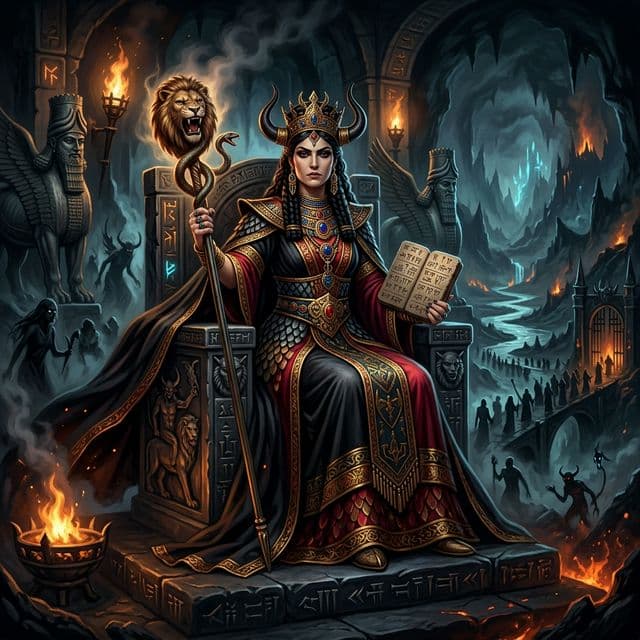
Ereshkigal
EreshkigalMesopotamian
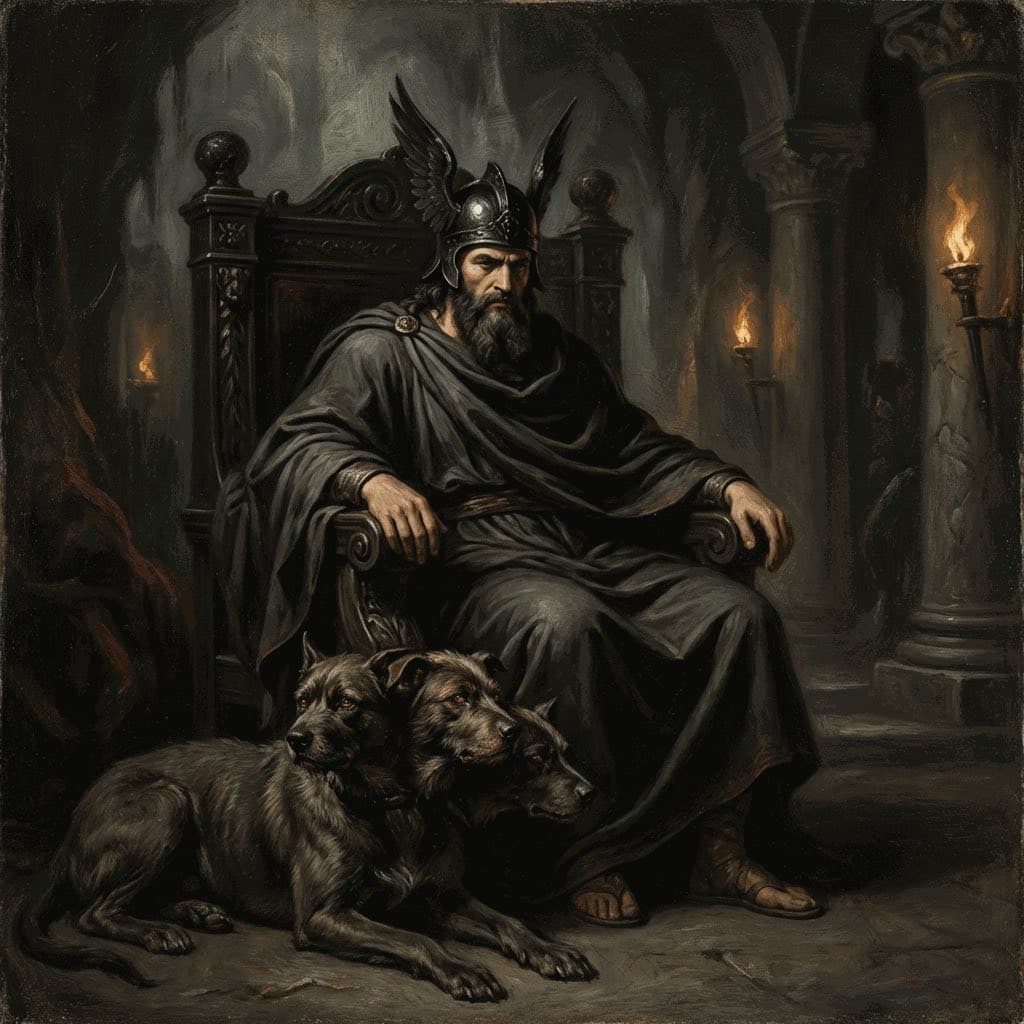
Hades
HadesGreek

Both rule the underworld with absolute authority.

At a glance

Ereshkigal and Hades compared
EreshkigalHades
TraditionMesopotamian PantheonGreek Pantheon
Domainsunderworld, death, darkness, judgmentunderworld, death, wealth
Symbolslion-headed staff, tablets of the deadhelm of darkness, bident, Cerberus, cornucopia
Also calledIrkalla, AllatuPluto, Plouton

Where they meet

Both are associated with underworld and death.

Where they part

Only Ereshkigal

Associated with darkness and judgment.

Only Hades

Associated with wealth.

How each was worshipped

Ereshkigal

Cult sites
Irkalla has no welcoming temple on earth

Queen of the dead in Inanna's descent. Cult to the underworld was cautious and thin compared with Inanna's. Absence is the point: you do not throw a street fair for the grave.

Hades

Cult sites
Few civic temples; the Nekromanteion at Ephyra; Eleusis, where he is named with Persephone
Festivals
Eleusinian Mysteries (as receiver of Kore); Averted offerings

Greeks preferred not to build him a house in town. They poured to the ground, used black victims, and often would not say his name. Eleusis is the public exception: the husband of the grain's daughter, not a devil.

The two figures

Mesopotamian Pantheon

Ereshkigal

Queen of the Underworld and sister of Inanna. Ereshkigal rules the land of no return with absolute authority, from which no one, god or mortal, escapes unchanged.

When the cosmos was divided among the gods, Ereshkigal received the underworld as her domain. Abducted to the underworld in her youth (or given it as a dowry), she became its eternal queen. She was wed to Gugalanna, the Bull of Heaven, and later to the war god Nergal.

Ereshkigal is the absolute ruler of the underworld (Kur or Irkalla), a vast realm beneath the earth where the dead dwell in eternal twilight. Unlike later concepts of hell, the Mesopotamian underworld was not a place of punishment but simply the inevitable destination of all mortals. Ereshkigal reigns there with cold, implacable authority.

Read the full Ereshkigal entry

Greek Pantheon

Hades

God of the underworld and the dead. Ruler of the realm of Hades, rarely leaving his kingdom.

Hades rules the underworld not as a devil figure but as a stern, lawful monarch of the dead. Greek religion treats him as unavoidable, distant, and powerful rather than chaotic. He governs the wealth hidden in the earth as well as the souls that descend beneath it, which is why later traditions also call him Plouton, "the wealthy one."

Read the full Hades entry
About this comparison

Comparisons pair figures that play a similar role across traditions, or that the myths connect within one. A shared role does not, by itself, establish a shared origin.