Side by sideParent and child

Cronus vs Hades

Cronus
CronusGreek
Hades
HadesGreek

Cronus and Hades are recorded as parent and child in the Greek Pantheon.

At a glance

Cronus and Hades compared
CronusHades
TraditionGreek PantheonGreek Pantheon
Domainsthe harvest, the Golden Age, kingship among the Titans, time (later folk association)underworld, death, wealth
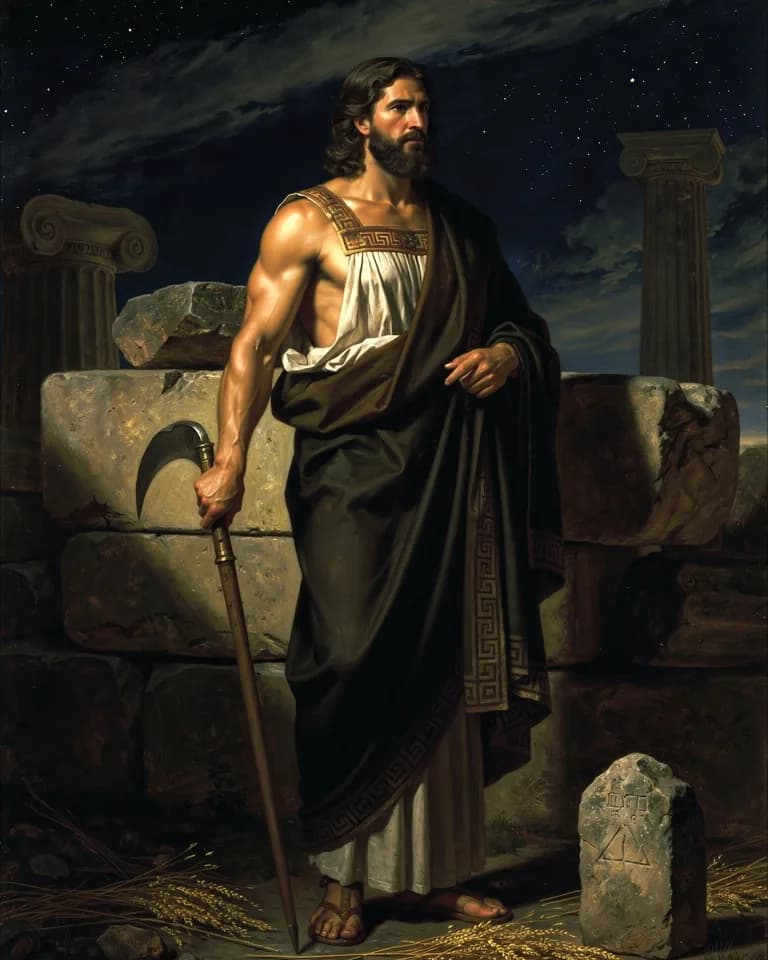
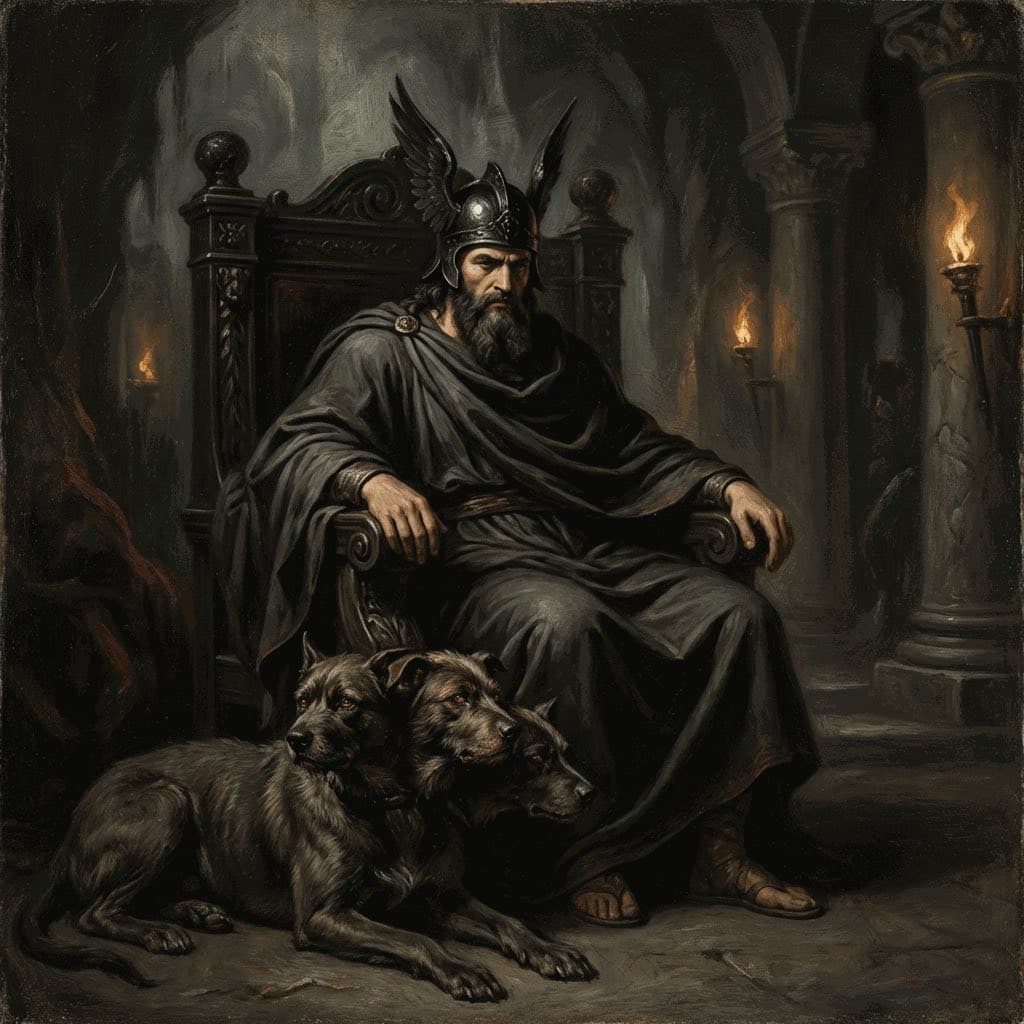
Symbolssickle (harpe), scythe, grainhelm of darkness, bident, Cerberus, cornucopia
Also calledKronos, Saturn (Roman)Pluto, Plouton

Where they meet

The atlas records no domain or symbol that Cronus and Hades share.

They are compared because of how the myths connect them, not because of what they rule.

Where they part

Only Cronus

Associated with the harvest, the golden age, kingship among the titans, and time (later folk association).

Only Hades

Associated with underworld, death, and wealth.

How each was worshipped

Cronus

Cult sites
No major dedicated temple; honored chiefly through festival, not a standing cult site
Festivals
Kronia (Athens, midsummer)

The Kronia briefly inverted social order, with masters and slaves feasting together, a ritual echo of the Golden Age he was said to have ruled. His Roman counterpart Saturn had a far larger cult (Saturnalia); the two figures should not be treated as mythologically identical.

Hades

Cult sites
Few civic temples; the Nekromanteion at Ephyra; Eleusis, where he is named with Persephone
Festivals
Eleusinian Mysteries (as receiver of Kore); Averted offerings

Greeks preferred not to build him a house in town. They poured to the ground, used black victims, and often would not say his name. Eleusis is the public exception: the husband of the grain's daughter, not a devil.

The two figures

Greek Pantheon

Cronus

Youngest of the twelve Titans, son of Uranus and Gaia. Cronus castrated his father to seize the sky's rule, presided over the mythical Golden Age, and was in turn overthrown by his own son Zeus after swallowing his children to avoid the same fate.

Cronus was born to Uranus (Sky) and Gaia (Earth), the youngest of the twelve Titans. When Uranus imprisoned his children within Gaia, she gave Cronus an adamantine sickle and urged him to castrate his father, which he did, ending Uranus's reign and beginning his own.

Cronus was the youngest and, in Hesiod's words, "the most terrible" of the twelve Titans born to Uranus (Sky) and Gaia (Earth). At his mother's urging, he ended his father's oppressive rule of the cosmos and became king of the Titans, ruling during what later poets called the Golden Age, a time of ease and abundance before toil and old age.

Read the full Cronus entry

Greek Pantheon

Hades

God of the underworld and the dead. Ruler of the realm of Hades, rarely leaving his kingdom.

Hades rules the underworld not as a devil figure but as a stern, lawful monarch of the dead. Greek religion treats him as unavoidable, distant, and powerful rather than chaotic. He governs the wealth hidden in the earth as well as the souls that descend beneath it, which is why later traditions also call him Plouton, "the wealthy one."

Read the full Hades entry
About this comparison

Comparisons pair figures that play a similar role across traditions, or that the myths connect within one. A shared role does not, by itself, establish a shared origin.