Mythos Atlas

Side by sideParallel across traditions

Cronus vs El (Ilu)

Cronus
CronusGreek
El (Ilu)
El (Ilu)Canaanite Pantheon (Ugarit)

The Phoenician History attributed to Philo of Byblos (preserved by Eusebius) renders El as Kronos.

At a glance

Cronus and El (Ilu) compared
CronusEl (Ilu)
TraditionGreek PantheonCanaanite Pantheon (Ugarit)
Domainsthe harvest, the Golden Age, kingship among the Titans, time (later folk association)kingship over the gods, creation, wisdom, the divine assembly
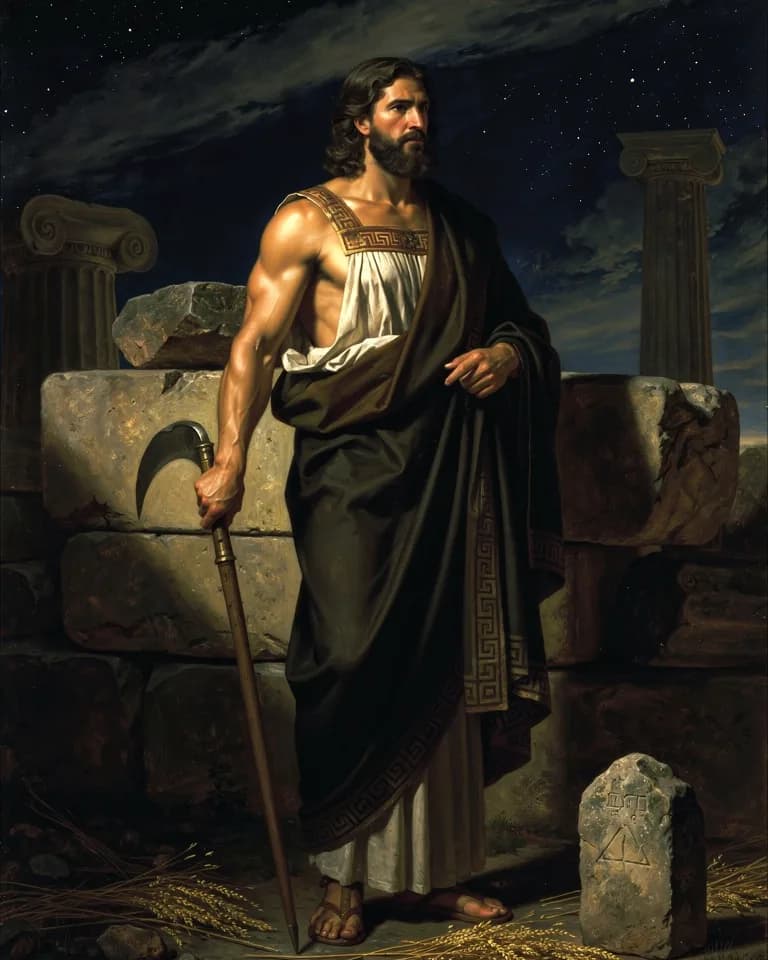
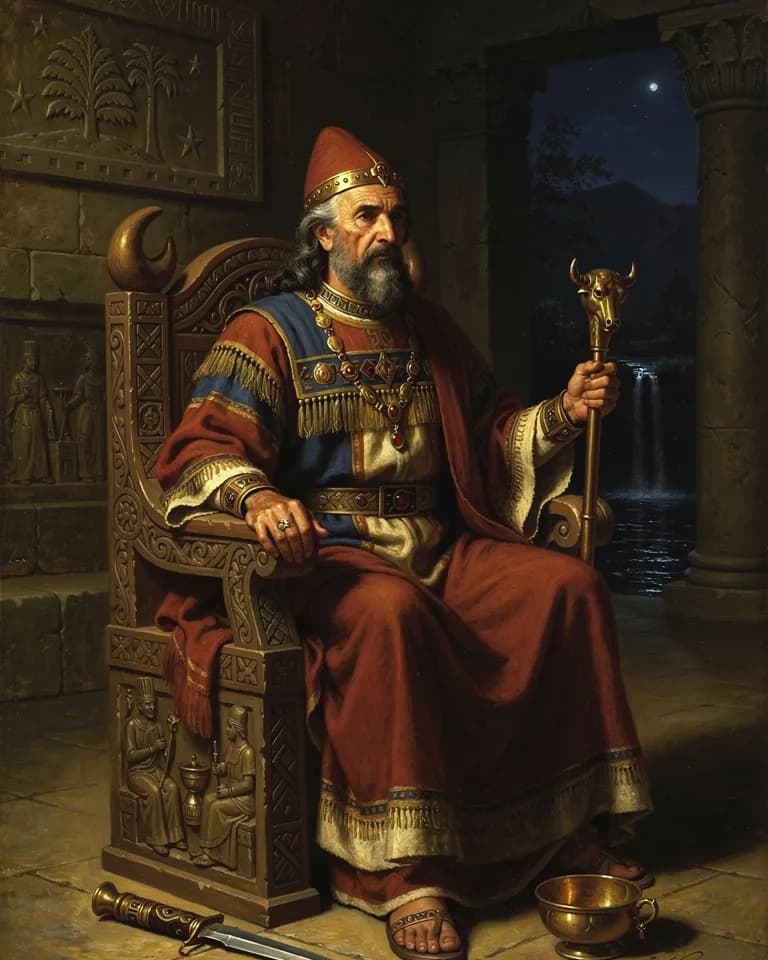
Symbolssickle (harpe), scythe, grainthe bull, grey beard, the tent at the source of the two rivers
Also calledKronos, Saturn (Roman)Ilu, Bull El (ṯr il), Father of Years (ab šnm), Creator of Creatures (bny bnwt)

Where they meet

The atlas records no domain or symbol that Cronus and El (Ilu) share.

They are compared for the part each plays in their own tradition rather than for any attribute in common.

Where they part

Only Cronus

Associated with the harvest, the golden age, kingship among the titans, and time (later folk association).

Only El (Ilu)

Associated with kingship over the gods, creation, wisdom, and the divine assembly.

How each was worshipped

Cronus

Cult sites
No major dedicated temple; honored chiefly through festival, not a standing cult site
Festivals
Kronia (Athens, midsummer)

The Kronia briefly inverted social order, with masters and slaves feasting together, a ritual echo of the Golden Age he was said to have ruled. His Roman counterpart Saturn had a far larger cult (Saturnalia); the two figures should not be treated as mythologically identical.

El (Ilu)

El heads the Ugaritic offering lists; no temple at Ugarit is securely identified as his.

The two figures

Greek Pantheon

Cronus

Youngest of the twelve Titans, son of Uranus and Gaia. Cronus castrated his father to seize the sky's rule, presided over the mythical Golden Age, and was in turn overthrown by his own son Zeus after swallowing his children to avoid the same fate.

Cronus was born to Uranus (Sky) and Gaia (Earth), the youngest of the twelve Titans. When Uranus imprisoned his children within Gaia, she gave Cronus an adamantine sickle and urged him to castrate his father, which he did, ending Uranus's reign and beginning his own.

Cronus was the youngest and, in Hesiod's words, "the most terrible" of the twelve Titans born to Uranus (Sky) and Gaia (Earth). At his mother's urging, he ended his father's oppressive rule of the cosmos and became king of the Titans, ruling during what later poets called the Golden Age, a time of ease and abundance before toil and old age.

Read the full Cronus entry

Canaanite Pantheon (Ugarit)

El (Ilu)

The aged king and father of the gods at Ugarit, 'Bull El', 'Father of Years', who presides over the divine assembly from his dwelling at the source of the two rivers and whose permission every younger god seeks.

El's name is simply the common Semitic word for "god". At Ugarit he is the head of the pantheon, the "Father of Years" and "Creator of Creatures", with a grey beard that other gods praise for its wisdom. He dwells far from the other gods "at the source of the two rivers, in the midst of the springs of the two deeps", in a tent or pavilion, and the assembly of the gods meets on his mountain. His consort is Athirat, and the gods are collectively "the sons of El".

Read the full El (Ilu) entry
About this comparison

Comparisons pair figures that play a similar role across traditions, or that the myths connect within one. A shared role does not, by itself, establish a shared origin.