Side by sideParent and child

Cronus vs Hestia

Cronus
CronusGreek
Hestia
HestiaGreek

Cronus and Hestia are recorded as parent and child in the Greek Pantheon.

At a glance

Cronus and Hestia compared
CronusHestia
TraditionGreek PantheonGreek Pantheon
Domainsthe harvest, the Golden Age, kingship among the Titans, time (later folk association)hearth, home, domesticity, family
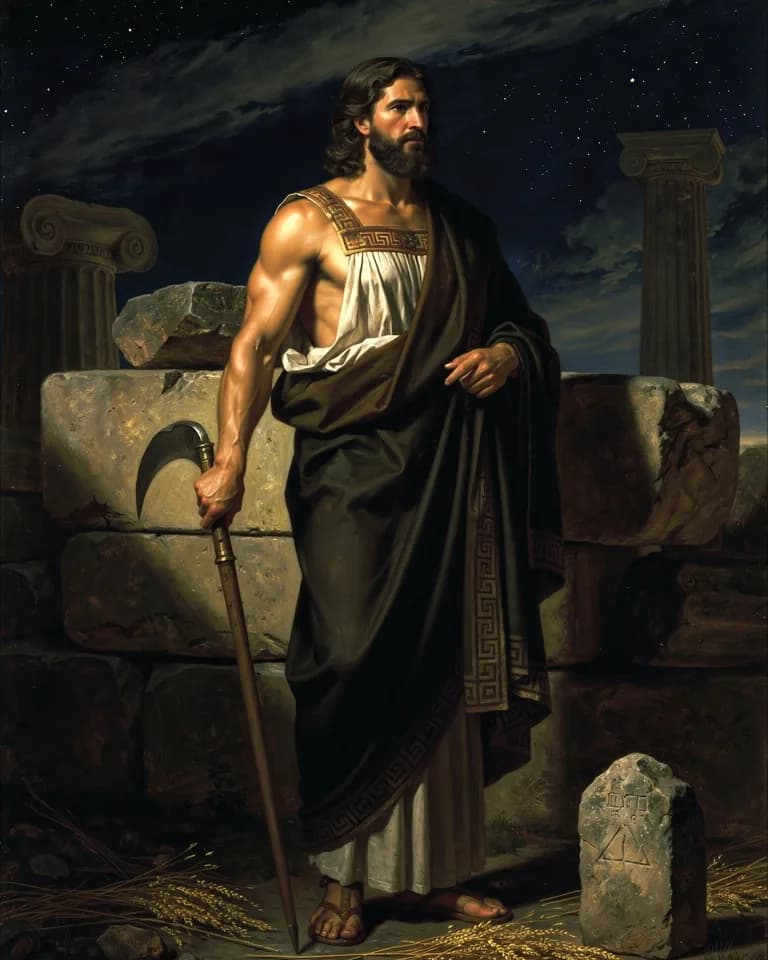
Symbolssickle (harpe), scythe, grainhearth, fire, kettle
Also calledKronos, Saturn (Roman)Vesta

Where they meet

The atlas records no domain or symbol that Cronus and Hestia share.

They are compared because of how the myths connect them, not because of what they rule.

Where they part

Only Cronus

Associated with the harvest, the golden age, kingship among the titans, and time (later folk association).

Only Hestia

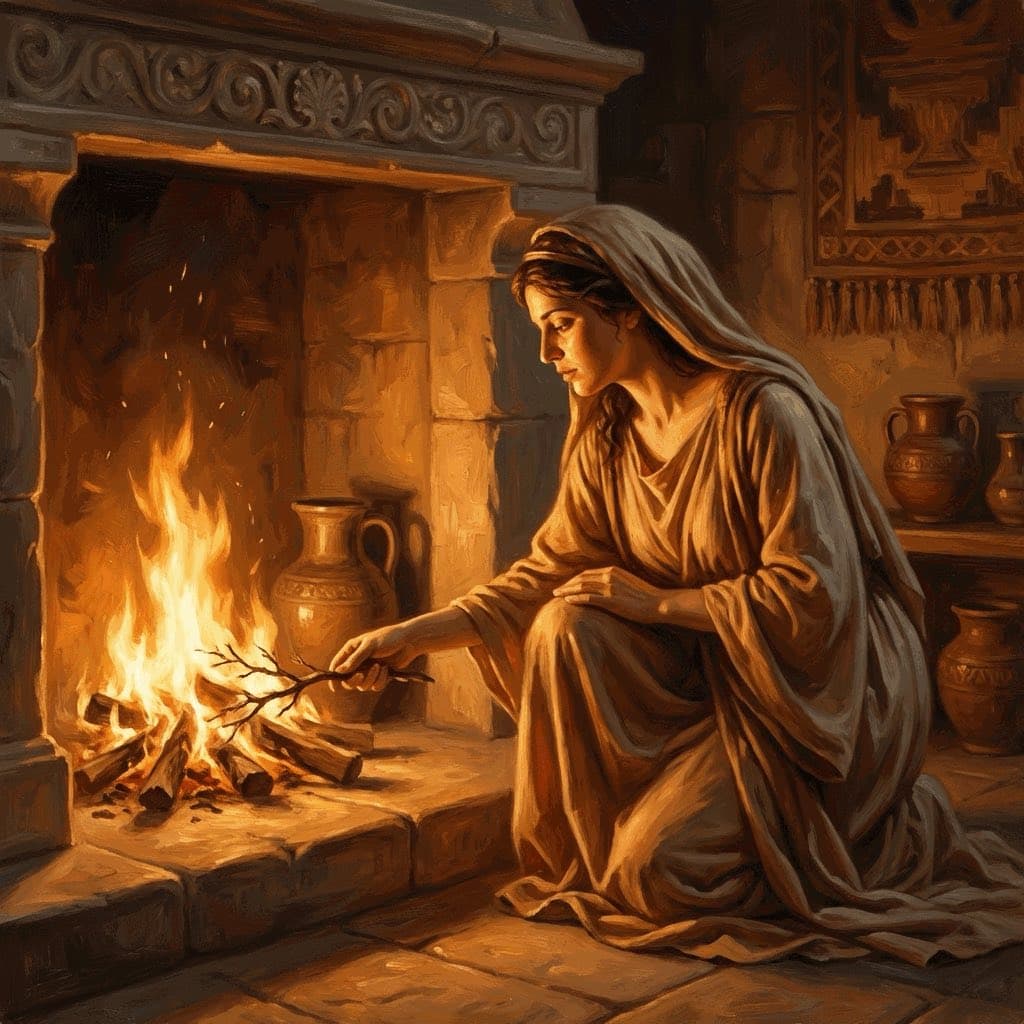
Associated with hearth, home, domesticity, and family.

How each was worshipped

Cronus

Cult sites
No major dedicated temple; honored chiefly through festival, not a standing cult site
Festivals
Kronia (Athens, midsummer)

The Kronia briefly inverted social order, with masters and slaves feasting together, a ritual echo of the Golden Age he was said to have ruled. His Roman counterpart Saturn had a far larger cult (Saturnalia); the two figures should not be treated as mythologically identical.

Hestia

Cult sites
No major independent temple; the hearth of every house; Prytaneion hearths of Greek cities
Festivals
Household offerings at the hearth; Prytaneia

She is the first and last libation, the round hearth, the fire that must not go out. Public Hestia lived in the town hall. There is almost no personality cult because the goddess is the fixture.

The two figures

Greek Pantheon

Cronus

Youngest of the twelve Titans, son of Uranus and Gaia. Cronus castrated his father to seize the sky's rule, presided over the mythical Golden Age, and was in turn overthrown by his own son Zeus after swallowing his children to avoid the same fate.

Cronus was born to Uranus (Sky) and Gaia (Earth), the youngest of the twelve Titans. When Uranus imprisoned his children within Gaia, she gave Cronus an adamantine sickle and urged him to castrate his father, which he did, ending Uranus's reign and beginning his own.

Cronus was the youngest and, in Hesiod's words, "the most terrible" of the twelve Titans born to Uranus (Sky) and Gaia (Earth). At his mother's urging, he ended his father's oppressive rule of the cosmos and became king of the Titans, ruling during what later poets called the Golden Age, a time of ease and abundance before toil and old age.

Read the full Cronus entry

Greek Pantheon

Hestia

Goddess of the hearth, home, and family. The firstborn of Cronus and Rhea, she maintained eternal virginity and tended the sacred fire of Olympus.

Hestia is the gentle goddess of the hearth fire (*hestia*), which burned in the center of every Greek home and city. She received the first offering at every sacrifice.

Read the full Hestia entry
About this comparison

Comparisons pair figures that play a similar role across traditions, or that the myths connect within one. A shared role does not, by itself, establish a shared origin.