Mythos Atlas

Side by sideParallel across traditions

Cronus vs Kumarbi

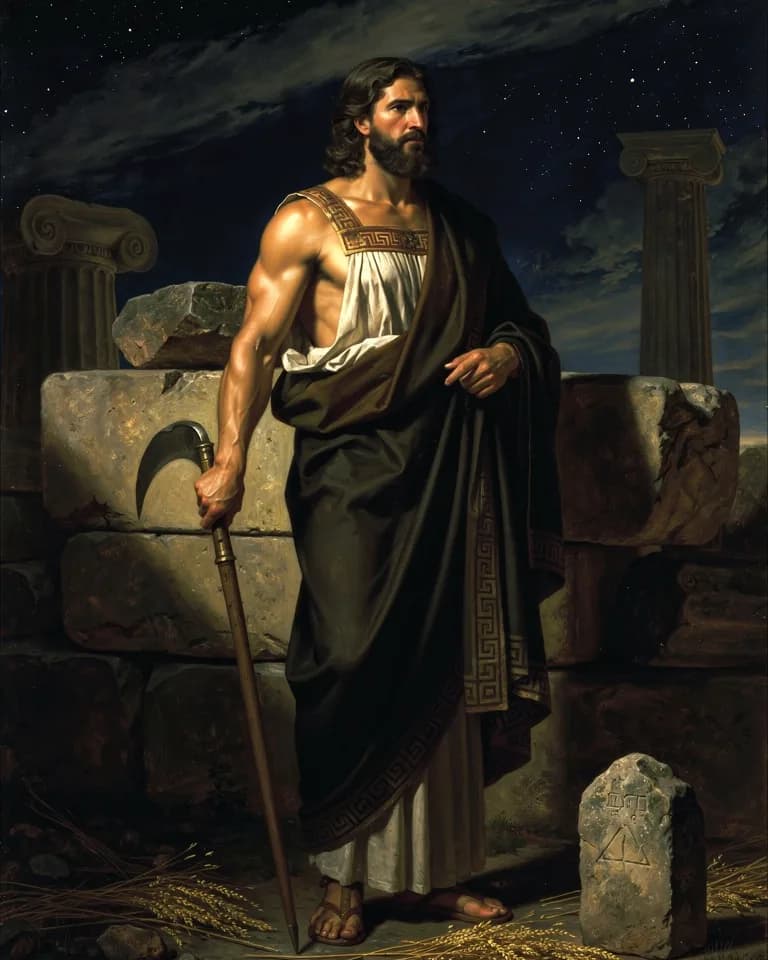
Cronus
CronusGreek
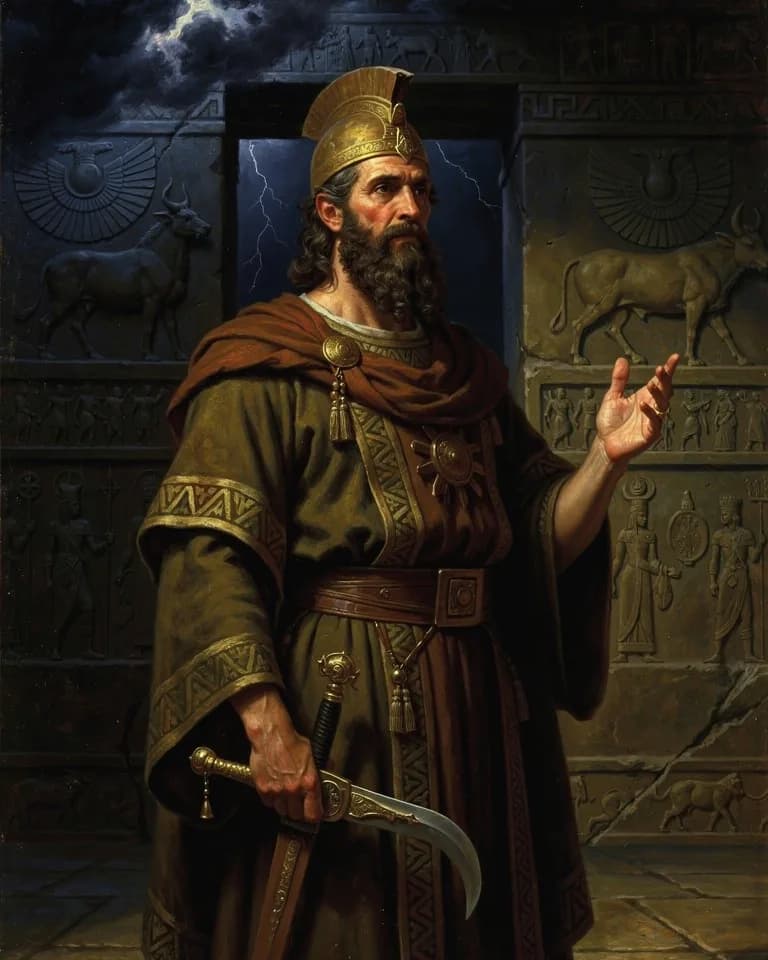
Kumarbi
KumarbiHittite

Both are second-generation sky-kings who mutilate their predecessor, swallow what they should not, and are displaced by a storm-god; Güterbock's 1948 study made this the best-known Near Eastern parallel to Hesiod.

At a glance

Cronus and Kumarbi compared
CronusKumarbi
TraditionGreek PantheonHittite Pantheon
Domainsthe harvest, the Golden Age, kingship among the Titans, time (later folk association)the older order of gods, grain, kingship in heaven
Symbolssickle (harpe), scythe, grainthe city of Urkeš, the swallowed stone
Also calledKronos, Saturn (Roman)Father of the gods (Hurrian)

Where they meet

The atlas records no domain or symbol that Cronus and Kumarbi share.

They are compared for the part each plays in their own tradition rather than for any attribute in common.

Where they part

Only Cronus

Associated with the harvest, the golden age, kingship among the titans, and time (later folk association).

Only Kumarbi

Associated with the older order of gods, grain, and kingship in heaven.

How each was worshipped

Cronus

Cult sites
No major dedicated temple; honored chiefly through festival, not a standing cult site
Festivals
Kronia (Athens, midsummer)

The Kronia briefly inverted social order, with masters and slaves feasting together, a ritual echo of the Golden Age he was said to have ruled. His Roman counterpart Saturn had a far larger cult (Saturnalia); the two figures should not be treated as mythologically identical.

Kumarbi

Cult sites
Urkeš (Tell Mozan), his traditional Hurrian cult city

Kumarbi received offerings in Hurrian cult lists (kaluti) alongside other gods of the Hurrian pantheon; he is far more prominent in myth than in recorded Hittite state ritual.

The two figures

Greek Pantheon

Cronus

Youngest of the twelve Titans, son of Uranus and Gaia. Cronus castrated his father to seize the sky's rule, presided over the mythical Golden Age, and was in turn overthrown by his own son Zeus after swallowing his children to avoid the same fate.

Cronus was born to Uranus (Sky) and Gaia (Earth), the youngest of the twelve Titans. When Uranus imprisoned his children within Gaia, she gave Cronus an adamantine sickle and urged him to castrate his father, which he did, ending Uranus's reign and beginning his own.

Cronus was the youngest and, in Hesiod's words, "the most terrible" of the twelve Titans born to Uranus (Sky) and Gaia (Earth). At his mother's urging, he ended his father's oppressive rule of the cosmos and became king of the Titans, ruling during what later poets called the Golden Age, a time of ease and abundance before toil and old age.

Read the full Cronus entry

Hittite Pantheon

Kumarbi

Hurrian father of the gods who seizes kingship in heaven by biting off the sky-god Anu's loins, unwittingly conceives the storm-god Teššub, and spends the rest of the Kumarbi cycle fathering monsters to overthrow him.

Kumarbi belongs to the Hurrian pantheon of northern Syria and Upper Mesopotamia. His city was Urkeš (modern Tell Mozan in northeastern Syria), one of the oldest Hurrian centres, and he was equated in god-lists with the Mesopotamian grain-god Dagan and with Enlil. Everything known of his mythology comes from Hurrian songs preserved mainly in Hittite translation at Hattusa: the Song of Kumarbi (CTH 344), the Song of Hedammu (CTH 348), and the Song of Ullikummi (CTH 345).

Read the full Kumarbi entry
About this comparison

Comparisons pair figures that play a similar role across traditions, or that the myths connect within one. A shared role does not, by itself, establish a shared origin.