Canaanite Pantheon (Ugarit)
El (Ilu)
il(ʾIlu)
Also known as Ilu, Bull El (ṯr il), Father of Years (ab šnm), Creator of Creatures (bny bnwt)
- kingship over the gods
- creation
- wisdom
- the divine assembly
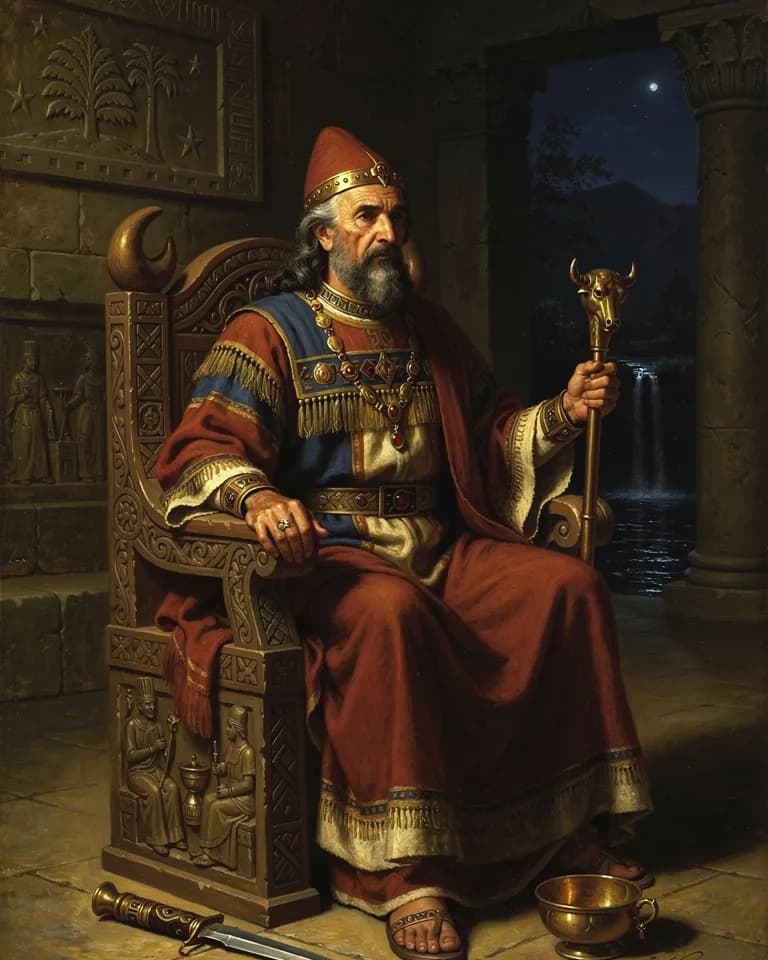
The aged king and father of the gods at Ugarit, 'Bull El', 'Father of Years', who presides over the divine assembly from his dwelling at the source of the two rivers and whose permission every younger god seeks.
About El (Ilu)
The father of the gods
El's name is simply the common Semitic word for "god". At Ugarit he is the head of the pantheon, the "Father of Years" and "Creator of Creatures", with a grey beard that other gods praise for its wisdom. He dwells far from the other gods "at the source of the two rivers, in the midst of the springs of the two deeps", in a tent or pavilion, and the assembly of the gods meets on his mountain. His consort is Athirat, and the gods are collectively "the sons of El".
The king who grants permission
In the Baal Cycle El rarely acts; he decides. He proclaims Yamm's name and kingship, gives in to Yamm's demand for Baal, grants Baal's palace after Anat's threats and Athirat's persuasion, mourns Baal's death by gashing himself and pouring dust on his head, proposes a replacement king, and at last dreams that Baal is alive. His authority is real but can be pressured, and scholars debate how far the Baal Cycle reflects a real rise of Baal at El's expense.
Kindly El
In the epics of Kirta and Aqhat, El is the compassionate "Kindly El, the Benevolent" (lṭpn il d pid), who appears to the grieving Kirta in a dream, blesses Danel with a son, and creates a healing figure to cure Kirta when no other god will act. This benevolent father is a different emphasis from the pressured king of the Baal Cycle, and both belong to the same god.
Beyond Ugarit
Ugaritic god-lists equate El with the Hurrian Kumarbi, and the Phoenician History attributed to Philo of Byblos equates him with the Greek Kronos. The name and several of El's titles appear in the Hebrew Bible, a connection much discussed by historians of religion.
Across traditions
Parallel figures
Figures who play a role like El (Ilu)'s in other traditions.
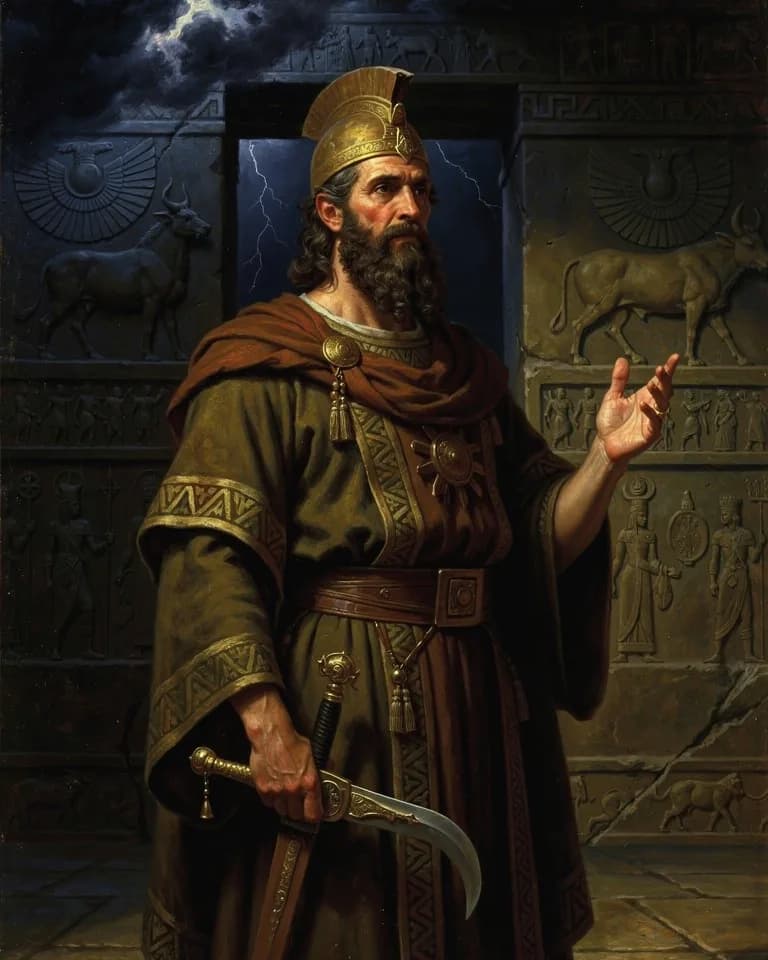 HittiteKumarbi
Ugaritic multilingual god-lists equate El with the Hurrian father of the gods Kumarbi.
Compare El (Ilu) and Kumarbi side by side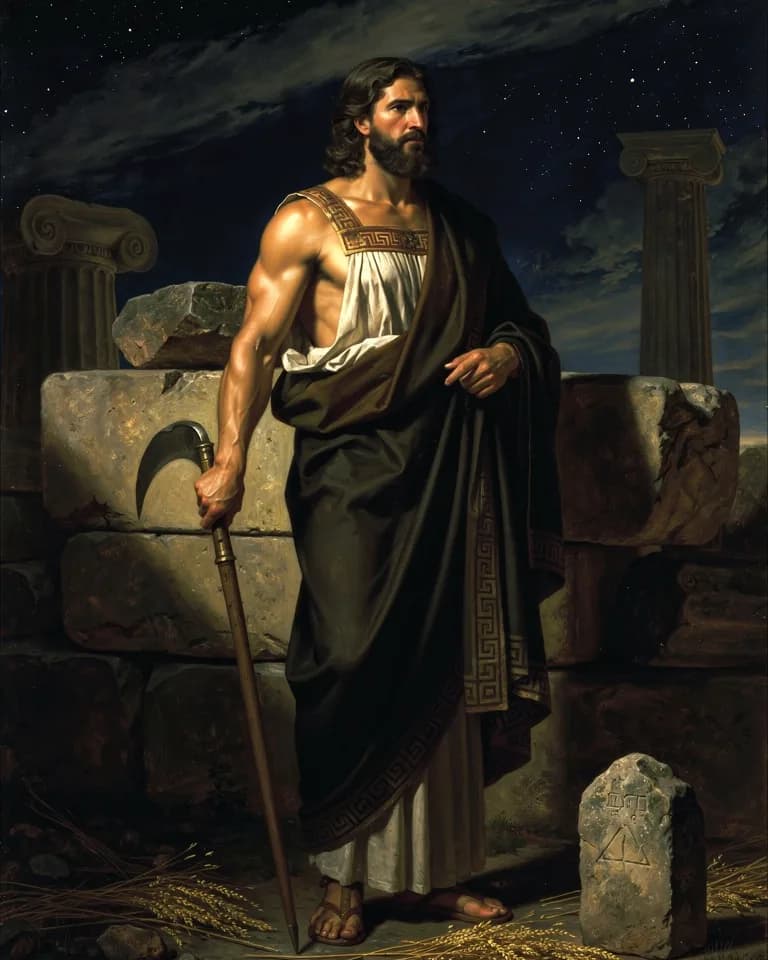 GreekCronus
The Phoenician History attributed to Philo of Byblos (preserved by Eusebius) renders El as Kronos.
Compare El (Ilu) and Cronus side by side
Worship and cult
Temples, festivals, and practices recorded for El (Ilu)
El heads the Ugaritic offering lists; no temple at Ugarit is securely identified as his.
Family
El (Ilu)'s family at a glance
- Who are El (Ilu)'s children?
- Children of El (Ilu) recorded in the atlas: Yam (Yammu) and Mot.
- Who were El (Ilu)'s spouses and consorts?
- Spouses and consorts of El (Ilu) recorded in the atlas: Athirat (Asherah).
In the atlas
Where El (Ilu) appears
Play the myth
Branching retellings featuring El (Ilu): your choices decide the ending.
The Judgment of Paris
Step into the sandals of Paris, prince of Troy. Three goddesses stand before you, each offering a gift beyond mortal dreams. But every choice carries consequences that will echo through eternity.
5-8 min3 endingsThor's Journey to Jotunheim
Accompany Thor, god of thunder, on a perilous journey to the realm of giants. Will you rely on Mjolnir's might, or discover that sometimes wisdom serves better than strength?
8-12 min4 endingsOrpheus in the Underworld
Descend into the realm of the dead as Orpheus, the greatest musician who ever lived. Can your love for Eurydice triumph over death itself? The choice that awaits you has haunted lovers for millennia.
6-10 min4 endingsInanna's Descent
Go down to the underworld as Inanna, Queen of Heaven. Each gate will take a piece of your power. Whether you return depends on who you trusted before you left.
6-9 min4 endingsAmaterasu and the Cave
Play as Ame-no-Uzume. The sun goddess has sealed herself in the rock cave after Susanoo's rampage. The world is dark. Someone has to get her to look out.
5-8 min3 endings
Sources and further reading
Source notes
These references are recorded in the catalog. Their passage wording and translation have not been checked, so quotations are not displayed here.
- Baal Cycle, KTU 1.4 IV and parallels
- Epic of Kirta, KTU 1.14 I
Appears in
Ancient and classical works featuring this figure.
the aged king of the gods who grants and withholds permission (KTU 1.1-1.6)
The Epic of Aqhat (KTU 1.17-1.19)
blesses Danel with a son; permits Anat's revenge (KTU 1.17 I; 1.18 I)
The Epic of Kirta (KTU 1.14-1.16)
appears to Kirta in a dream, blesses his marriage, and heals him (KTU 1.14 I-III; 1.15 II; 1.16 V)
Further reading
El as king of the divine assembly
The Epic of Kirta (KTU 1.14-1.16)
El as the compassionate father
- Cross, Frank Moore. Canaanite Myth and Hebrew Epic (Harvard University Press, 1973), ch. 1-2.
About this entry
By Elizabeth Stein for Mythos Atlas. About the author. Editorial notes are grounded in the site's cited sources and can be challenged through the contact page.
Parallels are editorial comparisons across traditions: a shared role does not, by itself, establish a shared origin.
Family relationships come from the atlas's kinship records. Ancient sources often disagree on divine genealogy.
Genealogy
Family tree
El (Ilu)'s parents, consorts, children and rivals, as recorded in the atlas.