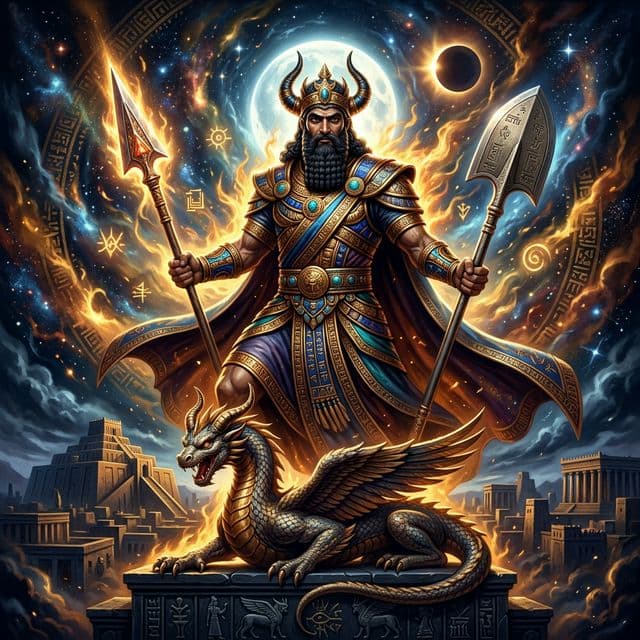
Marduk
Chief god of Babylon and slayer of Tiamat. Marduk rose from a minor deity to supreme god of the Babylonian pantheon after defeating the primordial chaos dragon and creating the world from her body.
Divine domains
26 deities from 16 traditions whose entries in this atlas list creation among their domains, grouped by tradition.
Chief god of Babylon and slayer of Tiamat. Marduk rose from a minor deity to supreme god of the Babylonian pantheon after defeating the primordial chaos dragon and creating the world from her body.
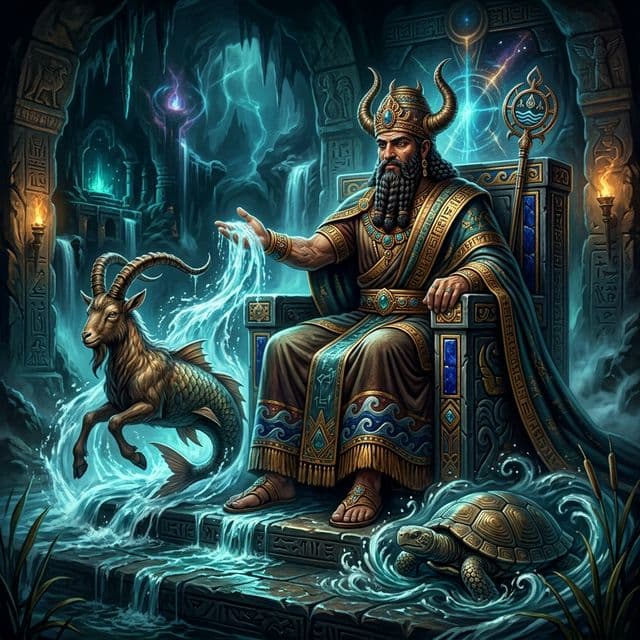
God of wisdom, fresh water, and creation. Enki is the cleverest of the gods, creator of humanity, and the cunning protector of mortals against divine wrath.
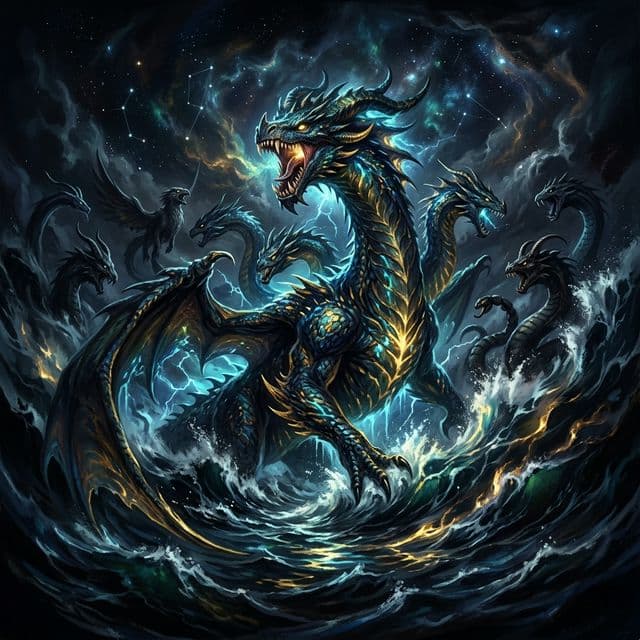
The primordial goddess of the salt sea and chaos dragon. Tiamat is the mother of the first gods and, after being slain by Marduk, became the raw material from which the universe was fashioned.
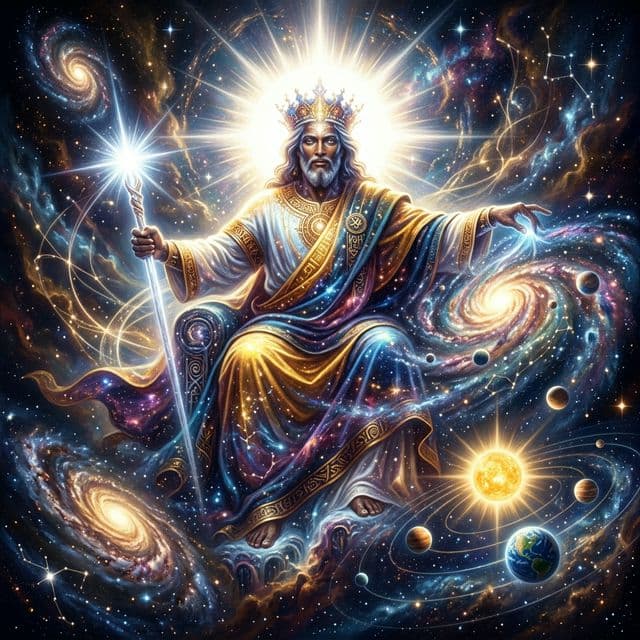
The supreme creator deity in Yoruba religion, who exists beyond human comprehension. Olodumare created the universe and delegated specific powers to the Orishas, who serve as intermediaries between the supreme being and humanity.
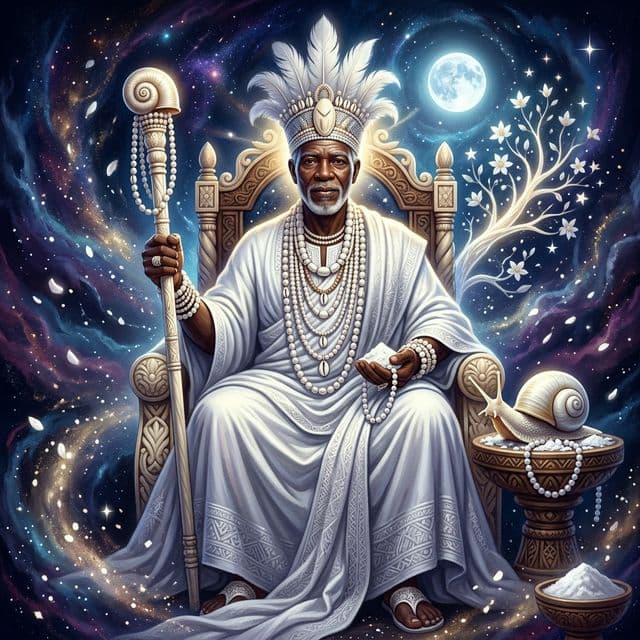
The Orisha of creation, purity, and wisdom. Obatala was tasked by Olodumare with creating land from the primordial waters and shaping human bodies from clay.
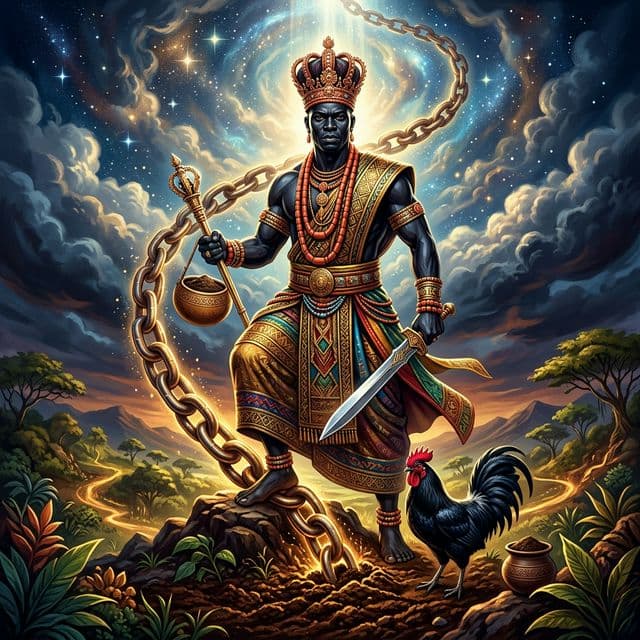
The progenitor deity of the Yoruba people and legendary first king of Ife. Oduduwa descended from heaven to create the earth and establish human civilization.
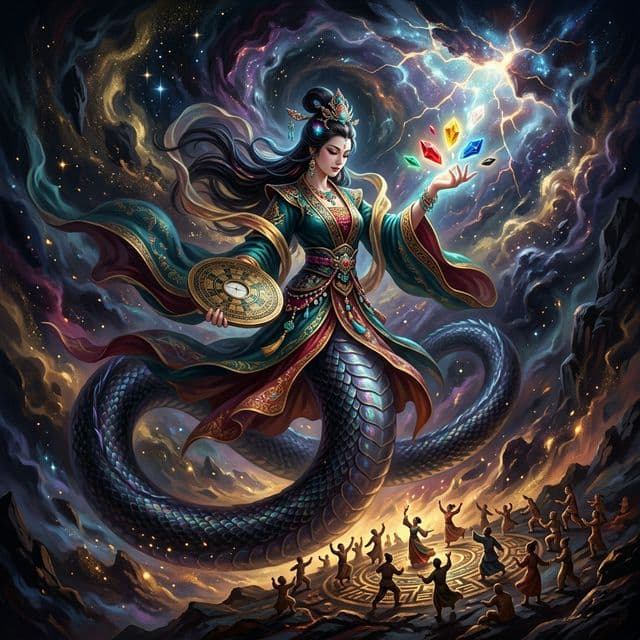
The serpent-bodied goddess who created humanity from yellow clay and repaired the broken sky after a great catastrophe. She is the mother of mankind and establisher of marriage.
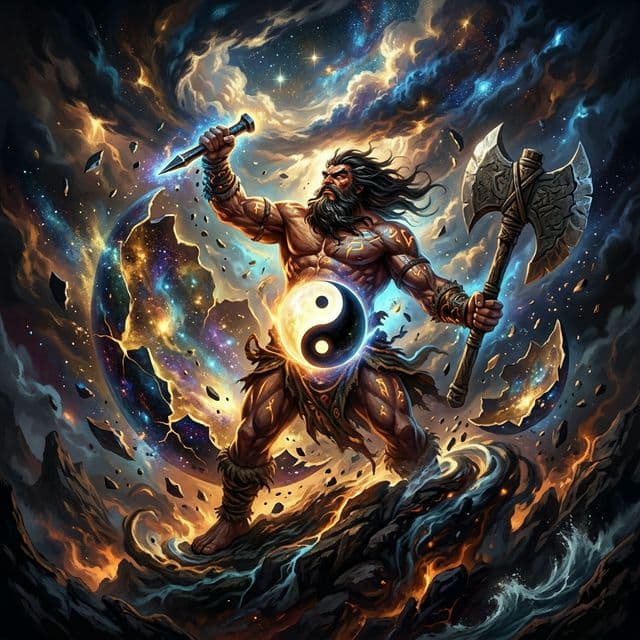
The primordial giant who created the world by separating yin and yang, Heaven and Earth. After holding them apart for 18,000 years, his body became the features of the universe.
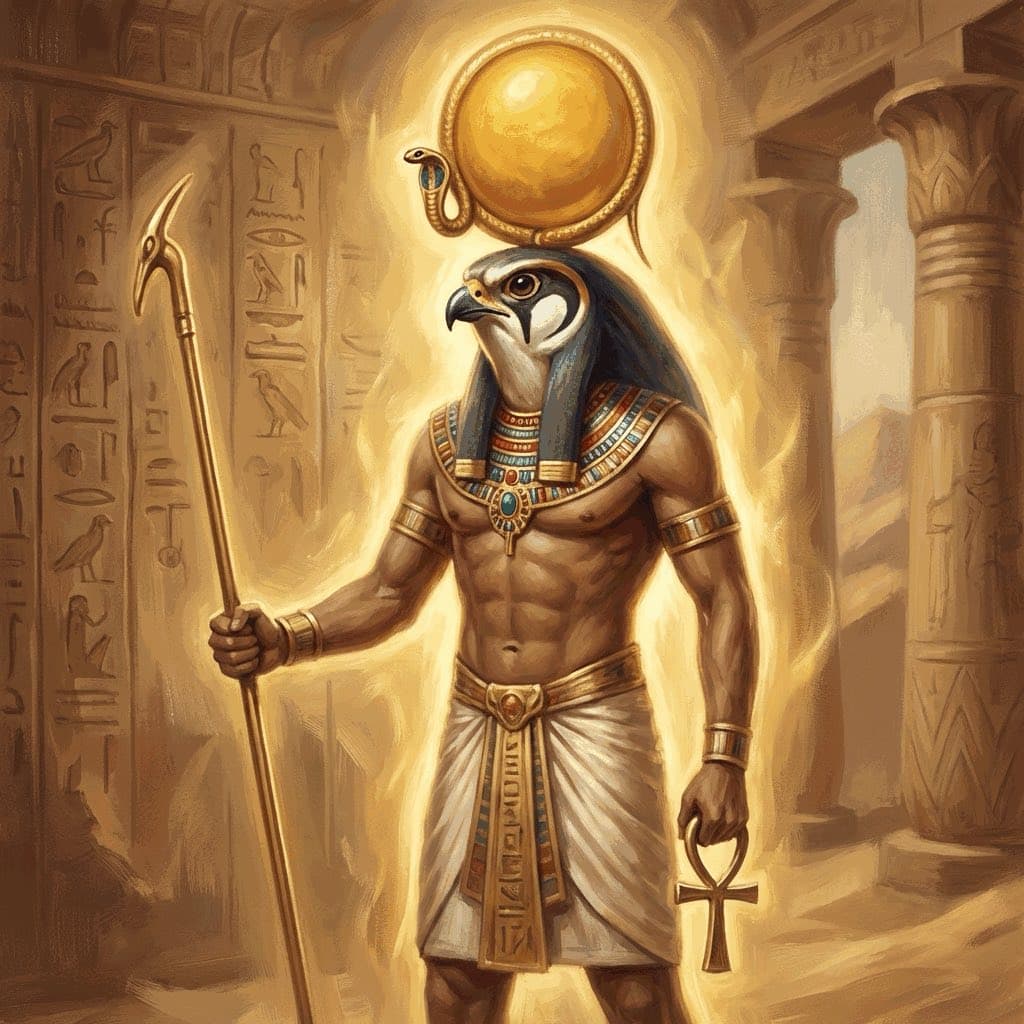
The supreme solar deity and creator god. Ra travels across the sky each day in his solar barque and through the underworld each night, battling the serpent Apophis.
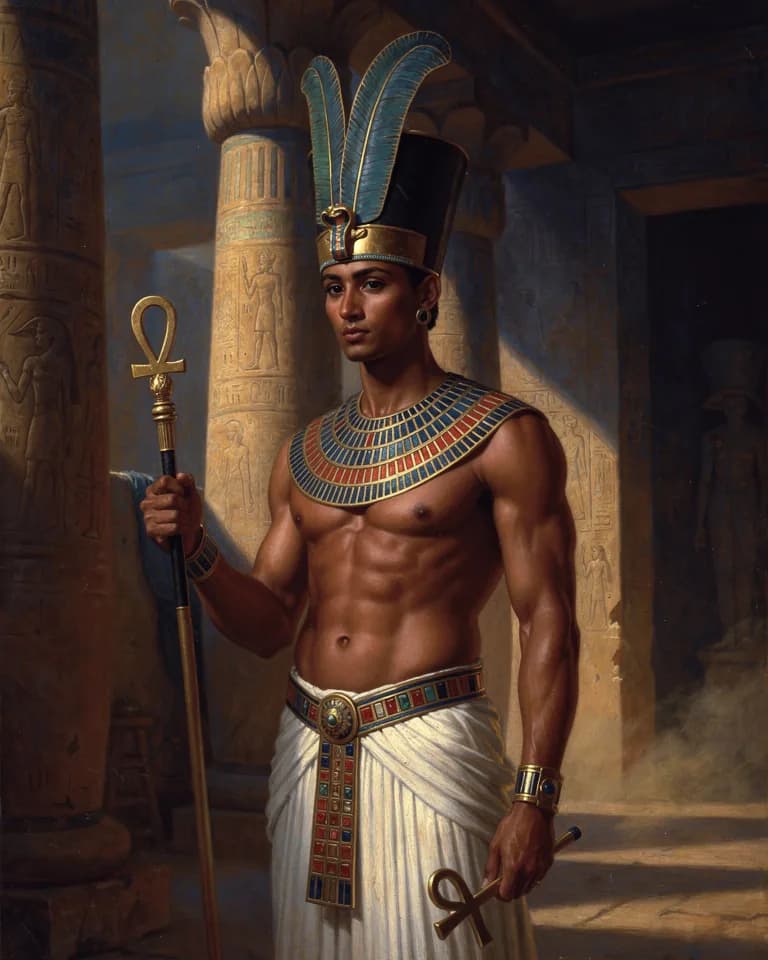
Originally a primordial member of the Hermopolitan Ogdoad, Amun rose to become the state god of Thebes and, fused with the sun god Ra as Amun-Ra, the supreme deity of Egypt's New Kingdom empire, worshipped at the vast Karnak temple complex.

The woman who falls from the Sky World through a hole torn open when a great tree is uprooted, and is caught and set on the back of the Great Turtle, whose back becomes Turtle Island.
The good-minded twin grandson of Sky Woman, who in Haudenosaunee tradition shapes the world's fertile land, food plants, and easy rivers, opposite his hard-minded brother Flint.
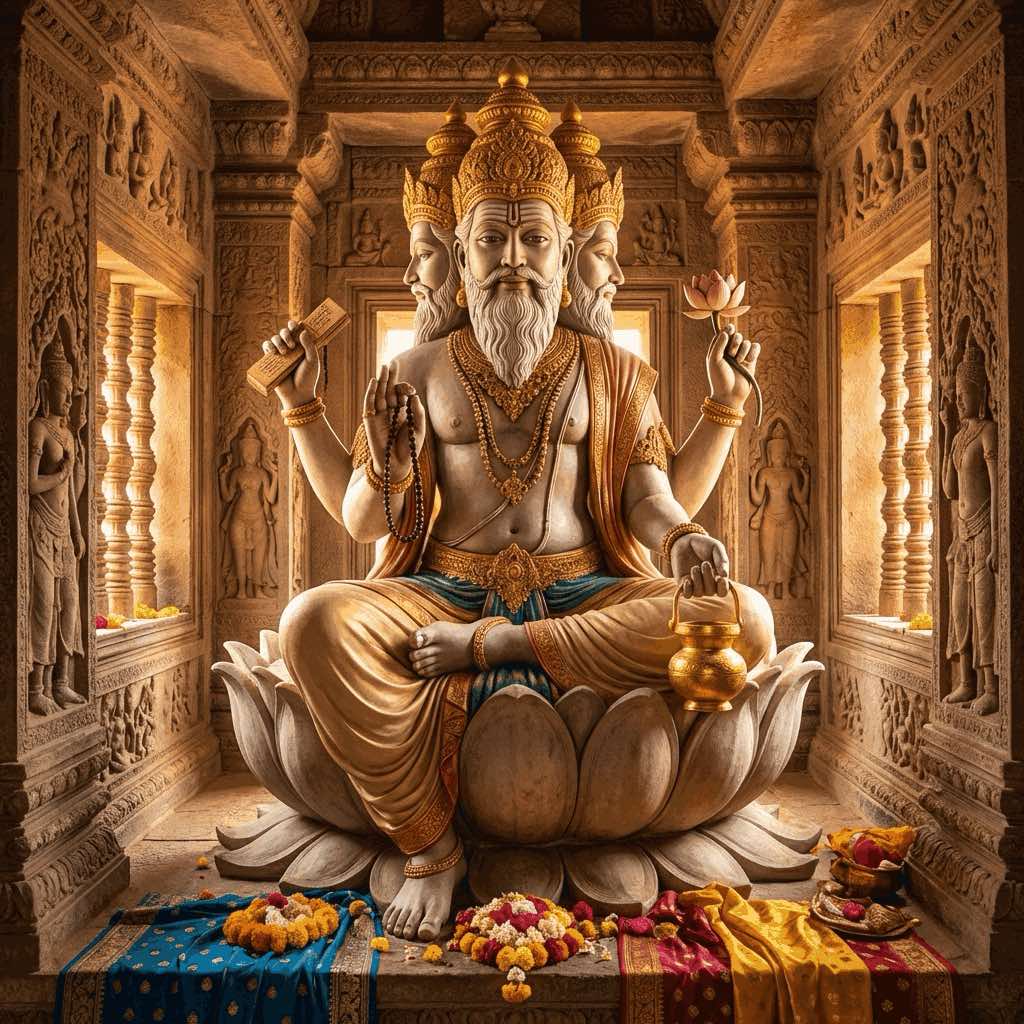
The creator god and first member of the Trimurti. Brahma created the universe and all creatures. Depicted with four heads facing the four directions, representing omniscience.
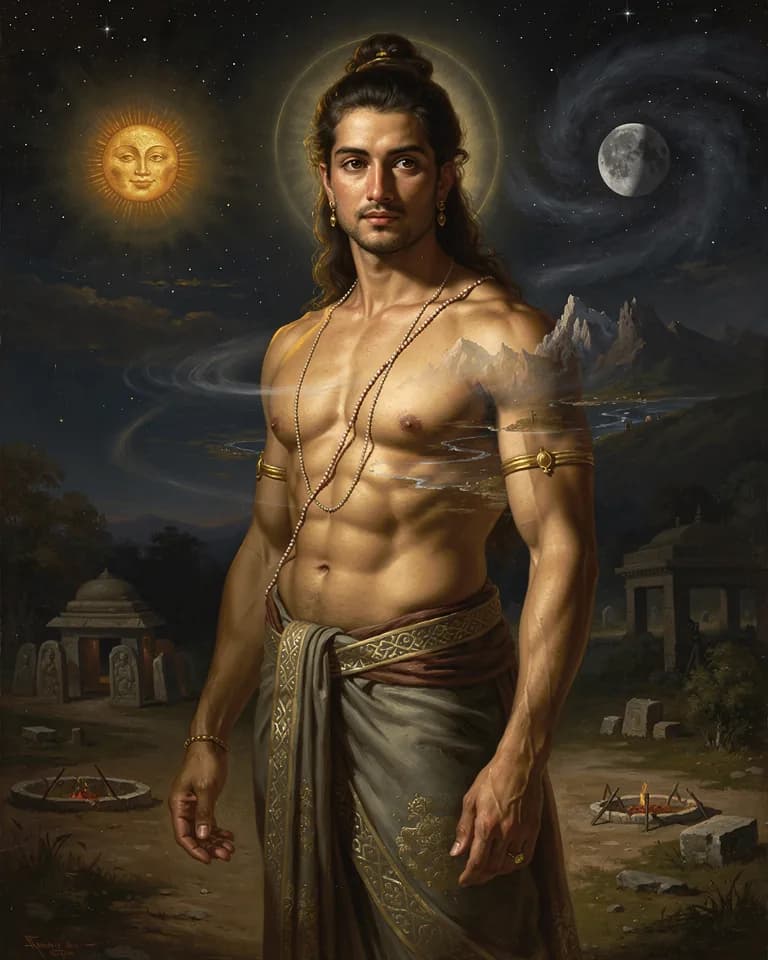
The primordial cosmic being of Rigveda 10.90, the Purusha Sukta, whom the gods sacrificed so that the world could be made from his body: the sun from his eye, the moon from his mind, the sky from his head, the earth from his feet, and the four social classes from his mouth, arms, thighs, and feet.
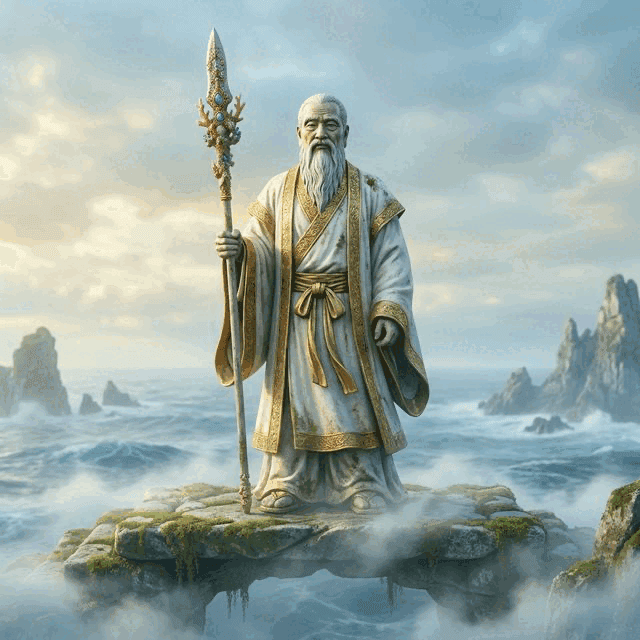
Male primordial deity who, with Izanami, created the Japanese islands and many kami. After Izanami's death, he performed the first purification ritual.
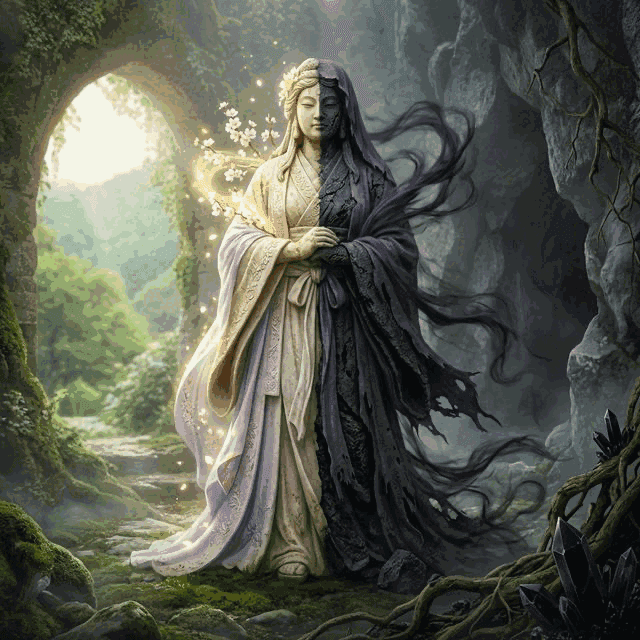
Female primordial deity who created the Japanese islands and kami with Izanagi. After dying in childbirth, she became goddess of death and ruler of Yomi.
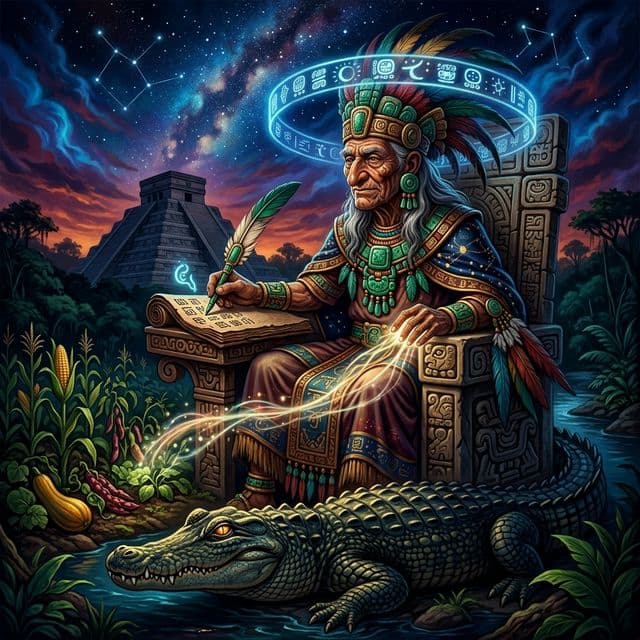
The supreme creator god of the Maya, lord of the heavens and inventor of writing, calendars, and agriculture. Depicted as a wise, aged figure, Itzamna represents cosmic order and benevolent rulership.
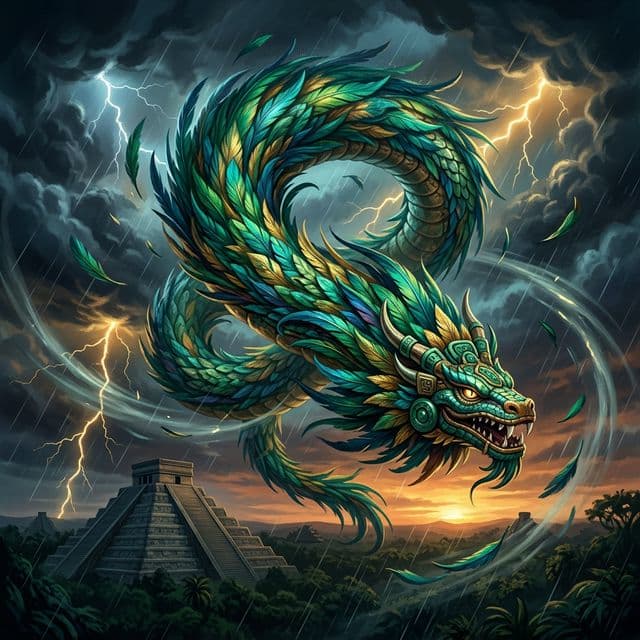
The Maya feathered serpent deity, cognate with the Aztec Quetzalcoatl. Kukulkan represents the union of earth and sky, associated with wind, rain, and the transmission of knowledge to humanity.
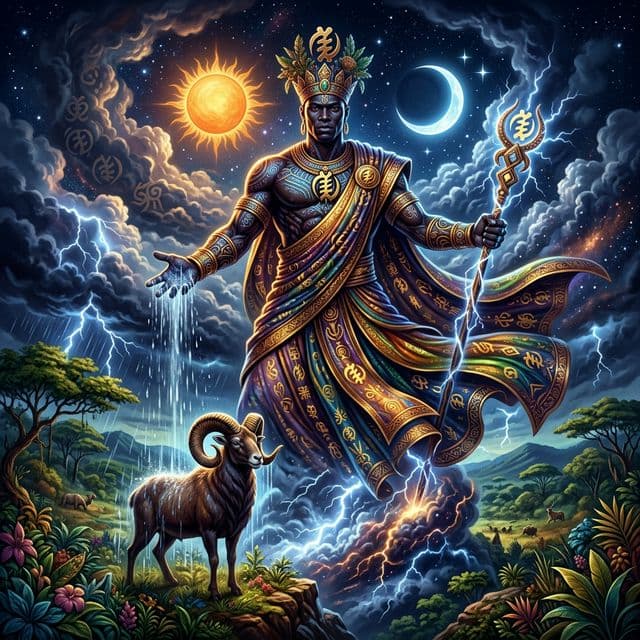
The supreme sky god of the Akan people. Nyame is the creator of all things and source of all life, though he withdrew from direct involvement with humanity.
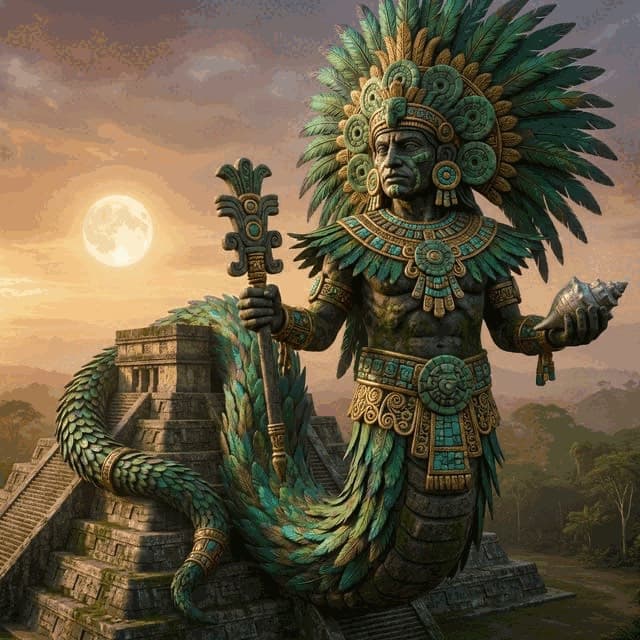
The Feathered Serpent, a creator deity who contributed to the creation of mankind. Patron of priests and inventor of books and the calendar.
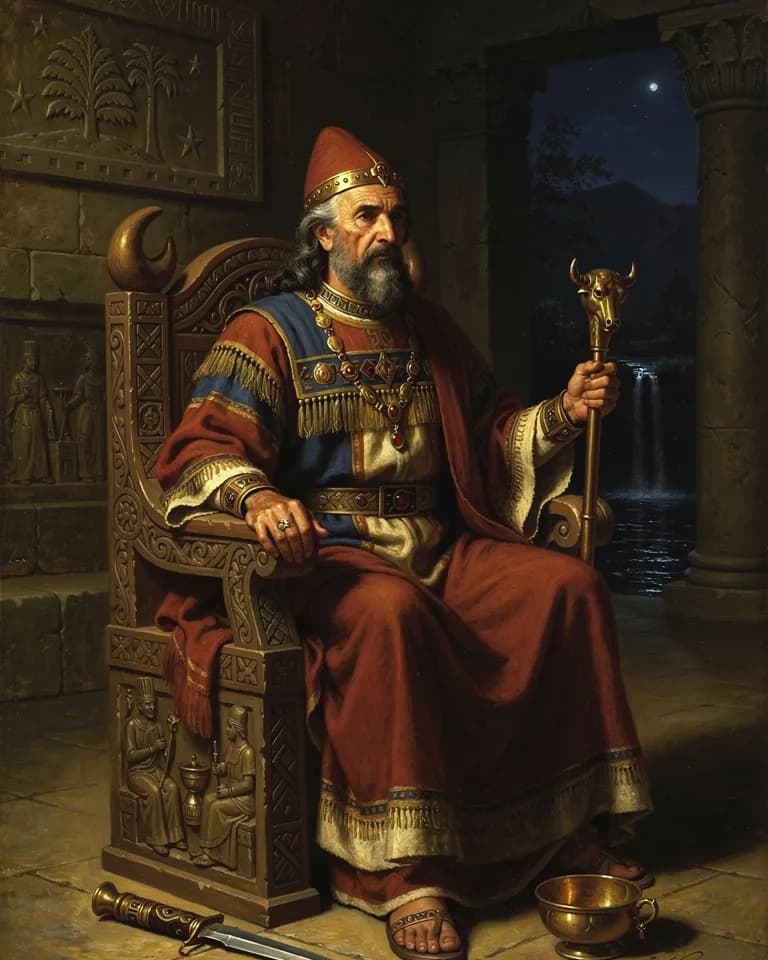
The aged king and father of the gods at Ugarit, 'Bull El', 'Father of Years', who presides over the divine assembly from his dwelling at the source of the two rivers and whose permission every younger god seeks.
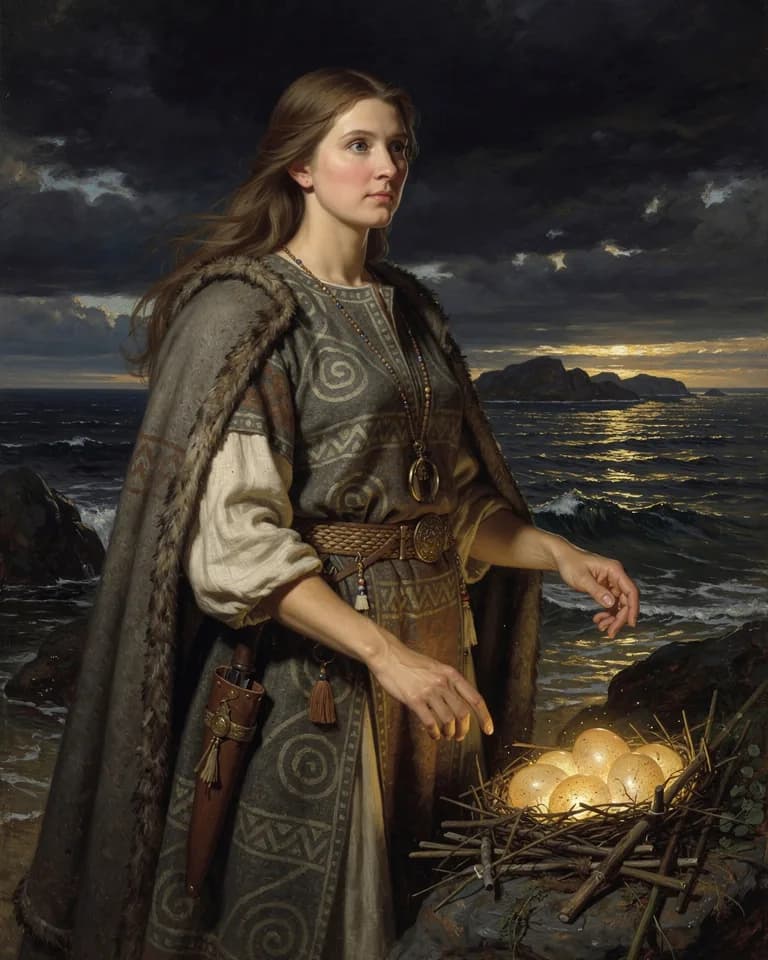
The virgin daughter of the air who, in the Kalevala's first rune, descends to the primeval sea, becomes pregnant by wind and wave, and on whose knee a duck lays the eggs from which earth, sky, sun, moon, and stars are made; mother of Väinämöinen.
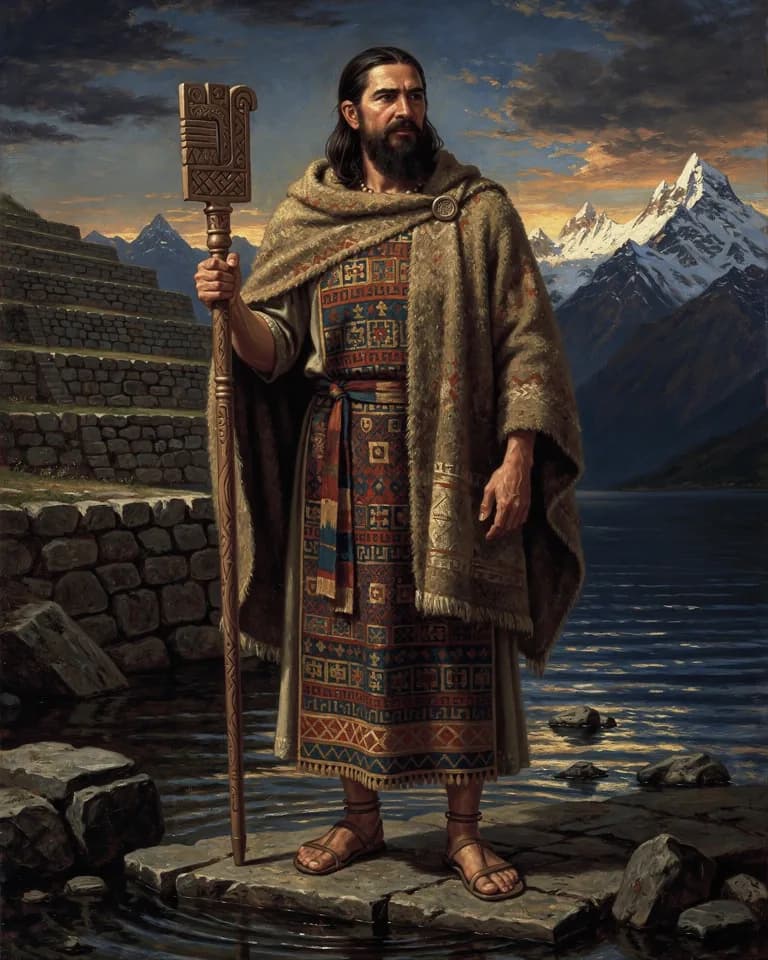
The creator of the Inca state cult, who in Betanzos's account rises from Lake Titicaca, makes the sun, moon, and stars at Tiwanaku, shapes each nation from stone, and finally walks away across the western sea.
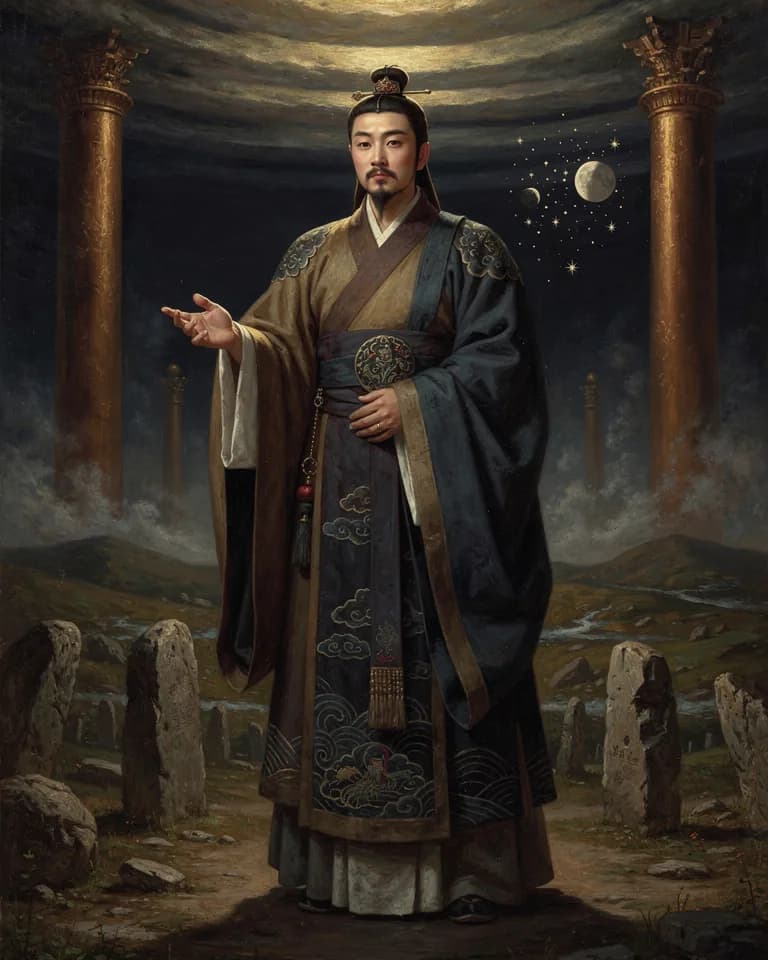
The creator of the world in the Korean shamanic Song of Creation, who separates heaven and earth, props up the sky with copper pillars, makes stars from an extra sun and moon, and creates the first humans, before losing the world to the cheating Seokga.
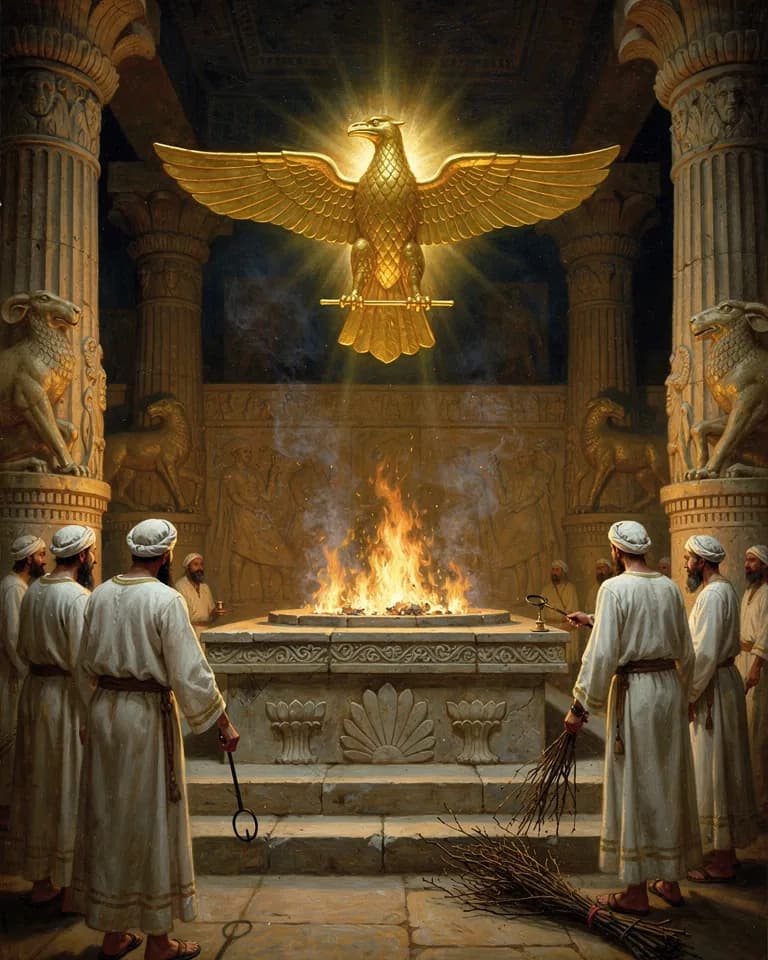
The Wise Lord, uncreated creator of the good world in Zoroastrianism, addressed by Zarathushtra in the Gathas and credited by the Achaemenid kings with their rule; opposed by the Hostile Spirit, Angra Mainyu.
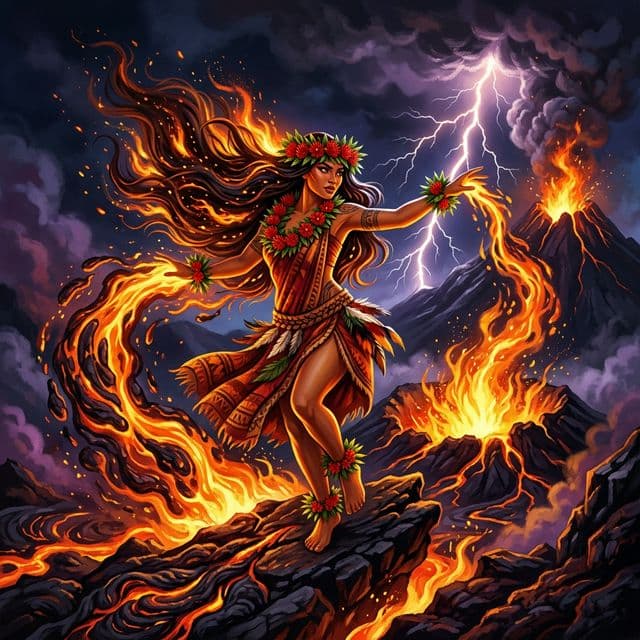
The Hawaiian goddess of volcanoes, fire, and lightning. Pele is a fierce and passionate deity who creates new land through volcanic eruptions and whose temper is as volatile as the lava she commands.
Editorial comparisons recorded on these entries; a shared role does not establish a shared origin.
Brahma (Hindu) and Olodumare (Yoruba)
Both are the remote supreme creator deity of their pantheon, rarely worshipped directly compared to more active gods (Olodumare already lists Brahma)
Compare Brahma and OlodumareQuetzalcoatl (Aztec) and Kukulkan (Mesoamerican)
Kukulkan already lists Quetzalcoatl; the Feathered Serpent is the same deity of wind, wisdom, and creation shared across Mesoamerican cultures
Compare Quetzalcoatl and KukulkanPangu (Chinese) and Purusha (Hindu)
Both are cosmic beings sacrificed to create the world and its various parts
Compare Pangu and PurushaItzamna (Mesoamerican) and Enki (Mesopotamian)
Both are wise, benevolent creator gods associated with knowledge and civilization
Compare Itzamna and EnkiNyame (Akan) and Olodumare (Yoruba)
Both are supreme creator deities who became remote from human affairs
Compare Nyame and OlodumareViracocha (Inca and Andean) and Quetzalcoatl (Aztec)
Both are creator and culture-hero figures remembered as departing over the sea (Viracocha from the Ecuadorian coast in Betanzos, Quetzalcoatl eastward from Tollan), and in both cases colonial writers reshaped the departure into a prophecy of Spanish arrival. The comparison is typological; there is no evidence of contact between the two traditions.
Compare Viracocha and QuetzalcoatlMireuk (Korean) and Pangu (Chinese)
Both are primordial beings who separate a joined heaven and earth at the beginning of the world; the Korean song adds pillars at the earth's corners, recalling Nüwa's repair of the sky.
Compare Mireuk and PanguMireuk (Korean) and Nuwa (Chinese)
Nüwa props up the sky with four pillars (the legs of a great turtle) after it collapses, as Mireuk sets copper pillars at the earth's four corners; Nüwa also creates humans, as Mireuk does from insects on golden and silver trays.
Compare Mireuk and NuwaBuilt from each deity's catalog entry. See every domain side by side on Divine Domains, or browse every cross-pantheon parallel.